Until the mid 1800’s public hangings were the standard execution method across the British Empire, and American courts inherited and repeated British sentencing formulas. The phrase “hung from the neck until dead” was a deliberately specific axiom. It described the method and outcome of an execution, meant to prevent misinterpretation, and to standardize capital punishment. The “until dead” part was added when more than one convict survived hanging, a loophole the courts figured needed closed.
As civilization came to realize that capital punishment, especially public displays, was objectionable and sadistic, states began to look for ways to make executions more acceptable to burgeoning humane sensitivities. Hangings, with their tragic relationship to slavery and vigilante stigma (often producing slow strangulation and botched drops) experienced an era of public revulsion.
. . . . .
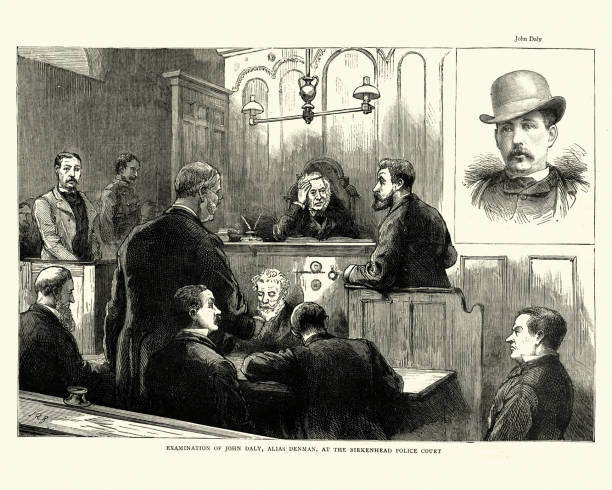
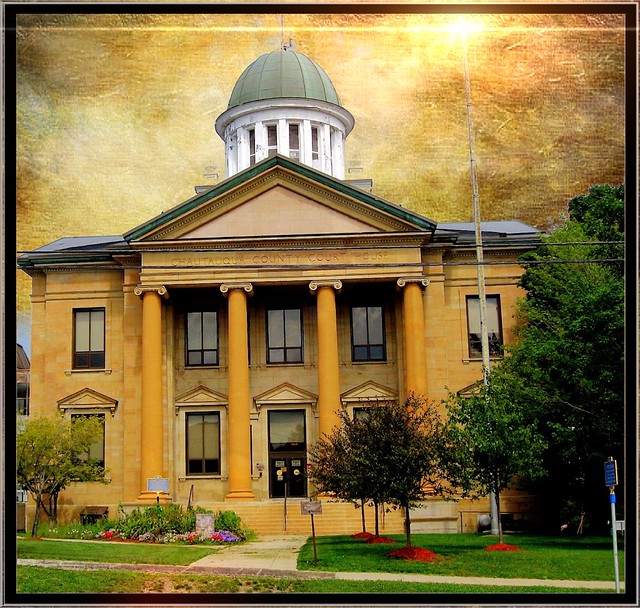
Joseph Damon was charged with murder in a Fredonia, New York in The Court of Oyer and Terminer -what would become the New York State supreme Court. It was the first recorded case of murder argued in Chautauqua County.
The Court of Oyer and Terminer
Charles French, his defense counsel, used a pre-cursor to the insanity defense, arguing that Damon had no sense of what he was doing when he struck his wife with an iron fire poker – the first plea of innocence by reason of insanity in the County.
The defense, a before-it’s-time sophisticated appeal, didn’t work. Damon was found guilty of murder and sentenced to death.
. . . . .
On May 9th, 1835, a New York Statecommission concluded that hanging was inhumane, and the method of execution was outlawed in the state (death by electrocution took its place). But changing a law and enforcing it throughout the state proved a challenge. When Joseph Damion was hanged in the Mayville village square, May 15th, 1835, newspapers, court officers, and state officials were well aware of the six-day-old law. The sheriff at the time had no real guidance from state officials and determined that his duty was to enforce the sentence as written unless the governor intervened. He did not. Despite the popular opinion that public executions were abhorrent, demand for spectacle remained high.
Damon’s case sat right at this intersection of law-making and law- enforcing, making him the last man publicly executed in the New York.
Mayville, New York City Center
The macabre event drew an alarming number of spectators, reports between, 3,000 and 8,000. Gallows were built, and the sheriff prepared for potential chaos, ordering the local militia to appear “completely armed and equipt (sic),” and to “get good music,” meaning to secure a competent military band or fife‑and‑drum corps to help control the crowd. The local newspaper, The Fredonia Censor, called the spectacle “revolting”.
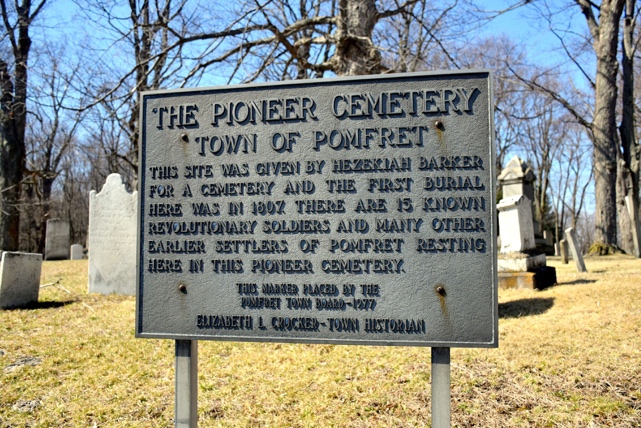
Damon was buried in the Fredonia Pioneer Cemetery, but the story doesn’t end there. Gawkers and vandals frequented the site, enough so that Damon’s brother North Damon guarded the site when he wasn’t stonecutting at the local quarry.
On a night when North wasn’t able to sit vigil, a young doctor and his students secretly exhumed Damon’s body for anatomical study, a practice illegal but not uncommon in the 1830s. Its ultimate fate remains unknown.
. . . . .
The Damon case endures for its shocking brutality in a place where those things simply didn’t happen. It marks, in a single legal case, the limits of medical knowledge, the boundaries of legal responsibility, and the moral cost of public punishment.
Note: The Fredonia Censor attempted to print and keep a verbatim transcript of the trial. There are about 70 pages of the only surviving copy.
The final page is torn away, leaving the ending of the saga fragmentary and controversial.
He moved his family to the town of Pomfret in Chautauqua County where he was eventually excommunication from The Fredonia Presbyterian Church for intemperance and misconduct, behavior considered “un‑Christian”.
Asa French Moved His Family to Chautauqua
. . . . .
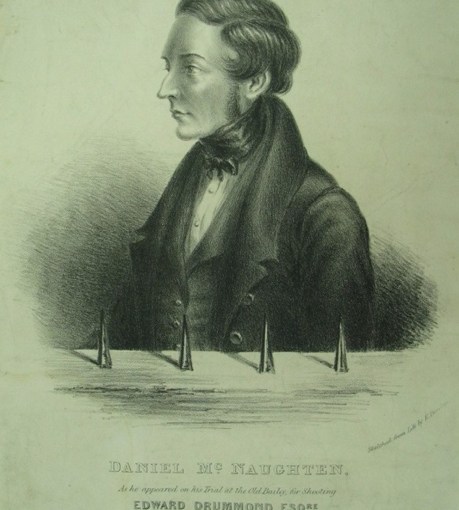
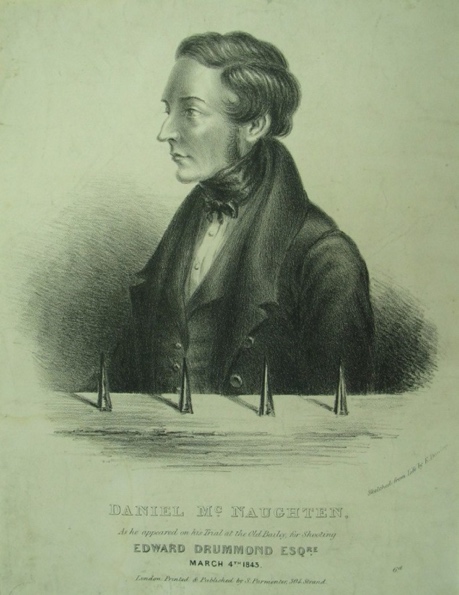
In January 1843, in London, England, a Scottish woodturner named Daniel M’Naghten shot and killed Edward Drummond, the private secretary to Prime Minister Sir Robert Peel. M’Naghten shot Drummond in the back, believing that he was the Prime Minister, serendipitous case of mistaken identity. In his defense a British barrister used a creative, developing legal argument called “the insanity defense” articulated as; “To not know the nature and quality of the act”, or “To know the act, but not know that it was wrong”, summarized as a legal precedent as “the right and wrong test”.
The M’Naghten Rule
Counsel argued that he was innocent of killing Drummond because he was actually trying to kill Peel, which, even for a precedent-setting case, was stretching the limits of the standards of the rule that would be named for M’Naghten (he certainly seemed to know the nature and quality of killing Peel, he just didn’t know precisely what his intended victim looked like).
. . . . .
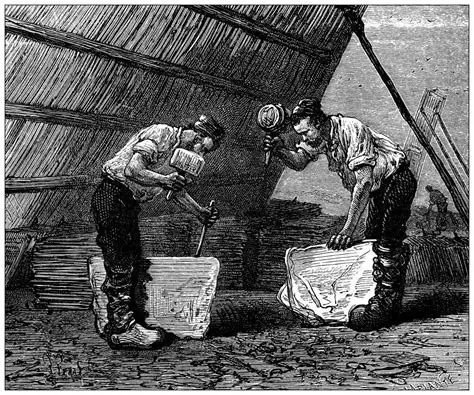
Joseph Damon was a stonecutter in rural Pomfret, Chautauqua County. The Damons were known locally as rough men who worked a quarry near the family home. Joseph was a heavy drinker who complained of frequent migraines, a condition for which a local physician prescribed an unusual remedy: Damon was told to carry port wine with him at all times and drink it as needed. Neighbors remarked that he drank constantly yet rarely appeared drunk.
The Damons Were Stonecutters
In 1834 he lost his mind, at least temporarily, and murdered his wife Almira with an iron fire poker. When discovered, Damon was bloodstained and dazed. He’d called out to his brother, “For God’s sake, come in, I am afraid I have killed my wife”
. . . . .
George French, son of Asa, became one of northern Chautauqua County’s most promising legal minds, despite the instability in his family due to his father’s affliction. George built a reputation for discipline, and civic engagement. By the early 1830s he was practicing law in Fredonia, where he became known for a willingness to take on difficult or precedent‑setting cases.
In 1834, he served as defense counsel for Joseph Damon in what became Chautauqua County’s first recorded insanity plea (nearly nine years before the M’Naghten case that codified the “right and wrong test” into precedent-setting common law). French’s legal strategy was surely informed by his experiences with his father’s behavior, the same actions that got Asa excommunicated from the church. French’s arguments in defense of Damon were eloquent, and sophisticated, drawing on Damon’s long medical history and the questionable treatments he had endured. French bridged law and medical testimony, unusual for rural practices. He became known locally as an attorney willing to push the boundaries of legal reasoning in a rural court system.
. . . . .
Five months after the death of his wife, Damon was brought before the Court of Oyer and Terminer – the high criminal court of the era and a direct predecessor to the modern New York State Supreme Court.
The Court of Oyer and Terminer, Fredonia, New York
But, without the “right and wrong test” standard from the M’Naghten Rule as a precedent, the jury returned a verdict of guilty, and the court ordered that Damon be “hung by the neck until he is dead”.
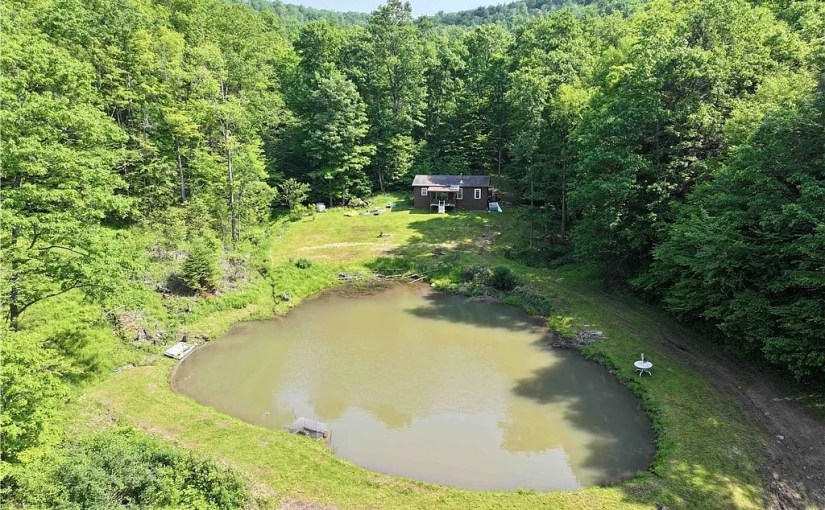
Land that changes hand in quiet offices, papers filed and stowed with no public fanfare. Check.
A culture that values privacy over commerce, tradition over publicity. Check check.
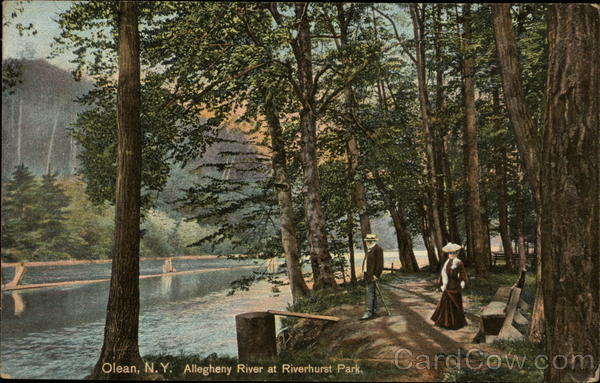
Allegheny River at Riverhurst Park Olean, NY
The Olean–Bayonne Pipeline was built by Standard Oil in the late 1800’s, America’s first long distance pipeline. It ran from Olean, New York, to Bayonne, New Jersey, through the middle of something called the Olean oil‑lease region. It had eleven pump stations approximately twenty-eight miles apart. It moved 50,000 barrels of oil a day.
It was abandoned in 1925, and that pipeline corridor left enough infrastructure to build a small city; construction camps, maintenance shacks and equipment, bunkhouses not on any official maps, known only through oral history and lore. These sites became known as the “lost camps”.
The Doctor’s Camp. A group of Olean-area physicians supposedly bought a secluded piece of land near the Allegheny and built a lodge that doubled as a retreat and a hunting base. The access road was gated, guests were vetted. No signage, no public listing. No patients, no families except on designated weekends, no uninvited guests, no business talk, no emergencies unless someone was actually dying. Fishing, bird hunting, poker, bourbon, and decompressing after 80‑hour weeks.
It was a private escape for professional men who wanted a place where no one could page them, call them, or ask them for a favor. The exact spot varies depending on who tells the story.
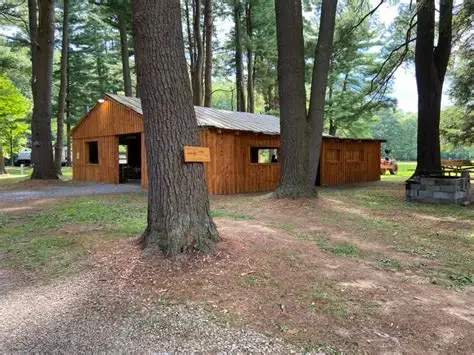
The Five Mile/Rock City/Windfall Camps. These camps flourished from the 1930s through the 1970s, tucked into the hills between Five Mile Road, Rock City Road, and Windfall. Several camps were owned jointly by small groups of Olean businessmen. No fighting, no politics, no bragging, no freeloaders, no showing up drunk, no bringing someone who would embarrass the group. Membership was capped, and vacancies only opened when someone died. New members were voted in, and blackballing was common. Outsiders could drive past the access roads for decades and never see a soul.
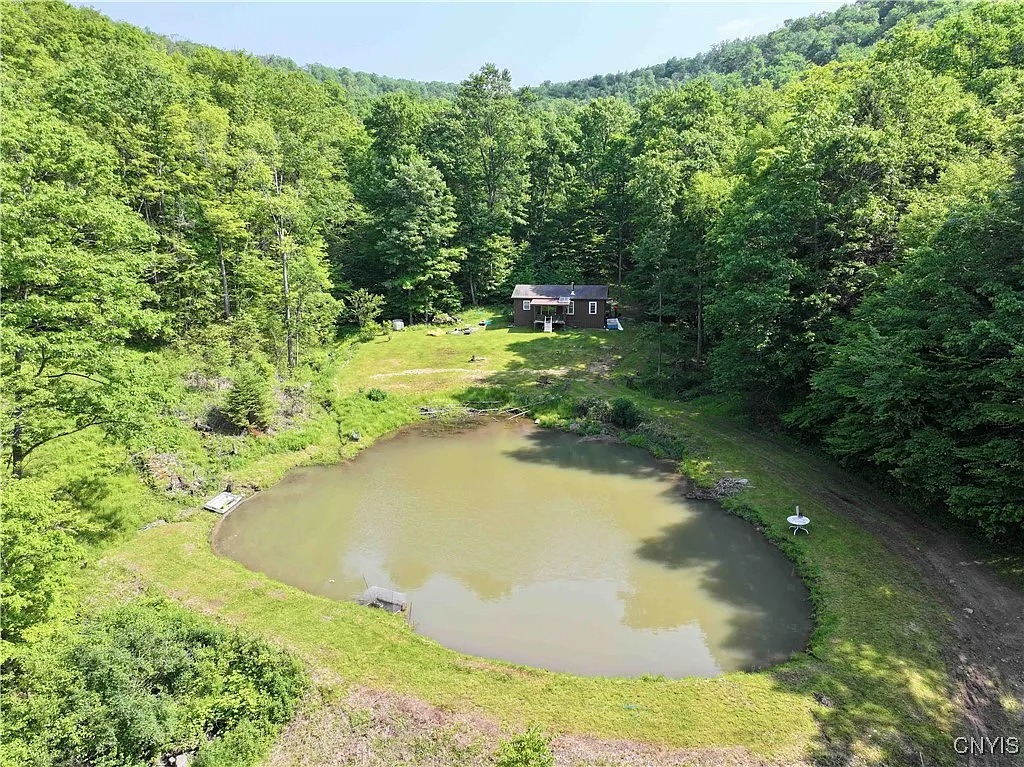
Secluded Camp Site in Olean, NY
The Hinsdale Ridge Catholic Camp. A group of Catholic families from Olean and Allegany supposedly maintained a ridge‑top camp that operated almost like a parish in the woods. Mass was reportedly said there once a year by a priest who was a member.
The Old Reservation Line Camp. This is the most mysterious of the bunch. It wasn’t owned by one group. It was used by Seneca hunters, white lease‑road workers, loggers, and sometimes mixed groups who respected each other’s presence. Don’t bring trouble, don’t disrespect the land, don’t cross the line without knowing whose land you’re on, don’t leave trash, don’t talk too loud about what you saw there. No one ever gave directions; you had to be taken there. It was said to be “neutral ground” where old friendships mattered more than land ownership.
The Lost Pipeline Camps. These camps were most likely forgotten Standard Oil construction camps, or pump‑station satellite camps, and the oldest of the rumored sites. Pipeline construction crews, maintenance men, and lease‑road workers built temporary shacks along the right‑of‑way, structures meant to last a season but were often used for years, rough‑cut buildings of tar paper and lumber, perched near the oil leases and close enough to the pipeline corridor that workers could reach it on foot, an accidental monument to the industrial age that had passed through the foothills. No road signs, no mailbox, no power, only reachable by a rutted track that looked like nothing. Hunters swore they saw lantern lights there in the 1960s, long after the original workers were gone.
Some locals believed the camp was still used once a year for a reunion, but no one could ever prove it.
These weren’t “secret societies, but they were closed circles — groups of men who built something together and kept it within the family. The Allegany foothills are perfect for this kind of lore. It’s the kind of mystery that isn’t solved — it’s inherited.
The Urban Legend is simple, and almost absurd. A man decides to build himself an island. He hauls rocks and fill onto frozen lake during the winter freeze (maybe more than one winter), dumping load after load onto the ice. When spring comes, the ice melts, the rocks sink, and the debris settles into a mound tall enough to crest the waterline. A private perch. A fishing platform. A tiny kingdom.
A Rock Island.
There are things buried in Chautauqua Lake, plenty of things. For instance, the Jamestown Water Works crib was built in 1885, a covered structure to supply Jamestown’s early municipal water system. It was 30 feet square, a tiny artificial island, timber‑framed, stone‑packed, and anchored offshore. It housed the intake pipe that fed the city’s pumps.
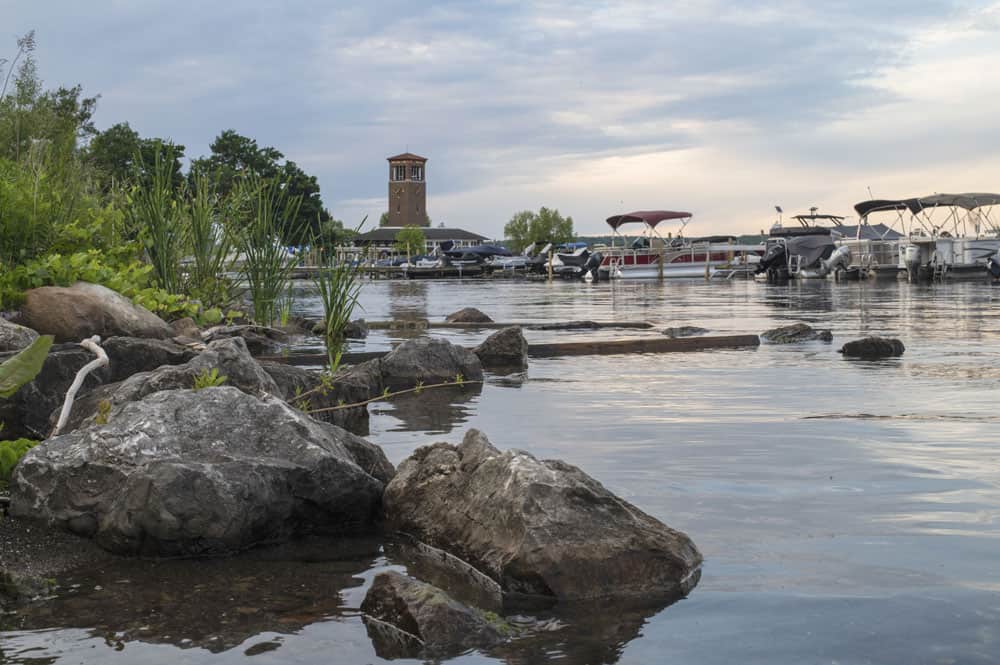
There are old steamboat moorings closer to shore; timber and stone structures used to anchor docks. Old ice-harvest platforms are out there; structures built on the ice that sometimes were left too long after the thaw, collapsed and left debris. Private duck blinds are buried in the shallows, built on pilings or rubble.
Docks and Wood Moorings in Chautauqua Lake
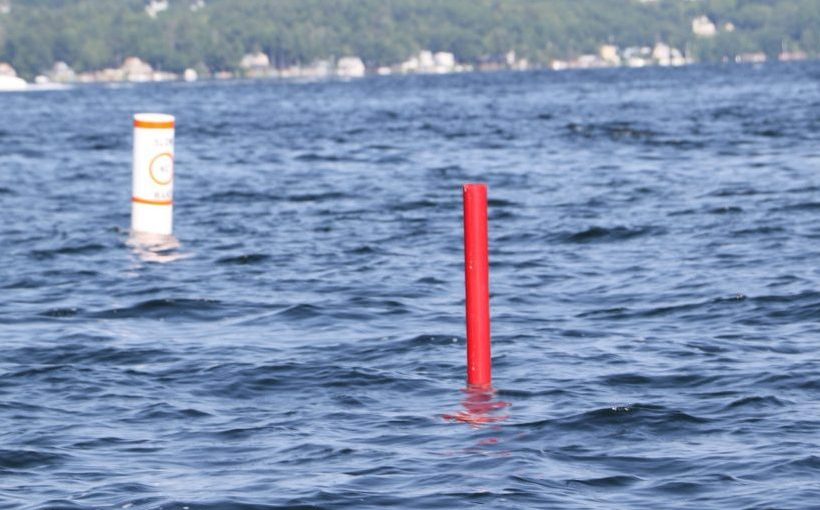
And there’s a Rock Island, an expanse of landfill spread over a few hundred square yards buried in the lower part of Chautauqua Lake that rises abruptly from the basin floor, where the water widens into a shallow, silty bowl. The United States Coast Guard Light List and Notices to Mariners does not map a named structure there, but they do show that the area is bordered by special‑purpose hazard markers. Sonar shows a steep‑sided mound with a flat top. That shape is the giveaway. It is not a natural shoal; the lower lake basin is too uniform, too silty, too geologically uneventful. It is not a collapsed crib; those leave rectangular footprints and predictable debris fields. It is not dredge spoil; dredging produces broad fans that spread with the current. It’s too far from shore to be a duck blind, or fishing perch. And it is not a remnant of the Jamestown Water Works crib, that structure sat further down-lake and was meticulously documented.
It is exactly the kind of footprint a failed island‑builder would leave behind.
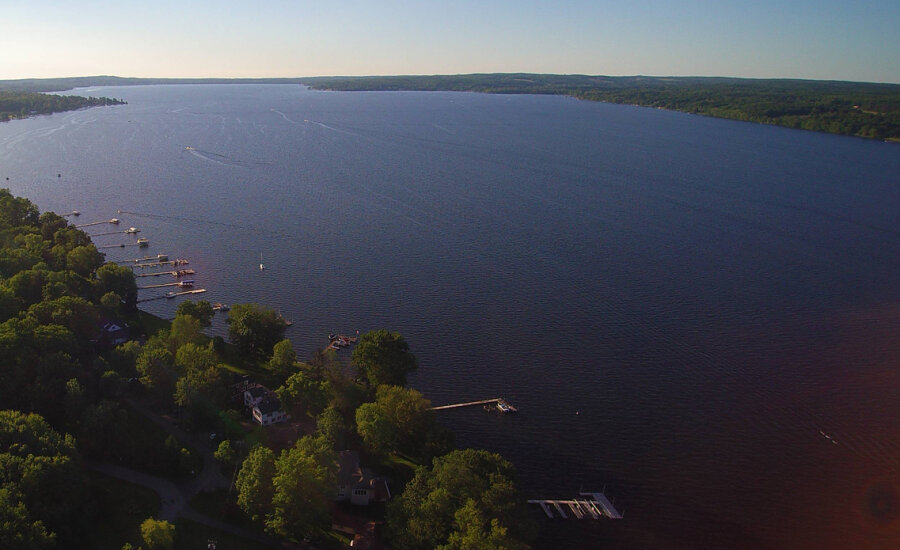
The Southern Basin of Chautauqua Lake
Boaters call it Rock Island, though no island ever broke the surface. It’s a relatively inexplicable phenomenon, a deliberate pile of stone, placed where no official record says stone should be.
The idea of an “Island Builder” is one of those half‑remembered Chautauqua Lake legends. Searches turn up no formal record, newspaper article, or historical entry about anyone successfully (or unsuccessfully) building an island on Chautauqua Lake. No Chautauqua County Historical Society archives mention a man attempting to build a rock island. No Post‑Journal or WKBW coverage (which would absolutely have covered a stunt like that) contains anything about a rock island project. No state, Corps of Engineers, or environmental reports mention any artificial island attempt on the lake, even a small, unauthorized fill would trigger regulatory attention.
The legend doesn’t include a timestamp, but it’s known that in the 1950’s through the 1980’s shoreline owners routinely dumped fieldstone, broken concrete, and construction debris into the shallows to extend their yards or build makeshift fishing perches. These projects were almost always unpermitted, short‑lived, and inevitably destroyed by ice; anything not heavily anchored with engineering rigor is crushed, shifted, or busted up and sent into the Chadakoin canal. Chautauqua Lake’s freeze–thaw cycles would have destroyed a small rock pile in one winter.
Buoys in the Lower Basin of Chautauqua Lake
The legend persists, not because it is proven, but because the lake itself seems to confirm it. The buoys float above a mystery that behaves exactly like the legend says it should. The hazard is real (as more than a few ruined propellers can attest). The mound is real. The absence of records is real.
When she blows it is a geyser of wood, iron, and human flesh spouting from the lake, reaching into the August sky, a China Syndrome meltdown of boiling water and steam that kills between five and eight people (steamboats are like busses, you pay your fare as you board) and ruins many more.
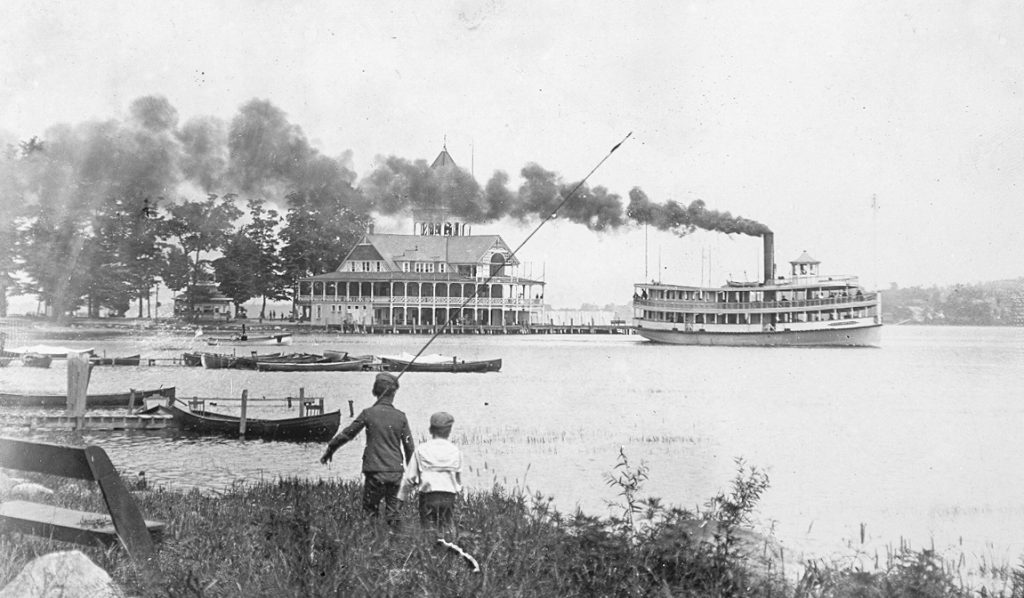
Steamboat service on Chautauqua Lake began as early as 1828. By the 1870s, it had grown into a regular, reliable system of travel, a transportation corridor before it was a recreation and entertainment resource; that designation began in the 1890’s when Celoron became “the Coney Island of Chautauqua”.
The lake WAS the highway in 1871. Roads from Jamestown to Bemus or Stow, on to Mayville, were rutted dirt horse-paths. If you wanted to move any significant quantity of livestock, mail, food, timber, or people, you did it on boats like the City of Buffalo, City of Chicago, City of New York, and City of Erie. Competition was fierce, and companies often upgraded engines, cabins, and décor to attract passengers. Consistency, timely delivery of patrons, keeping to a schedule was important to the lines.
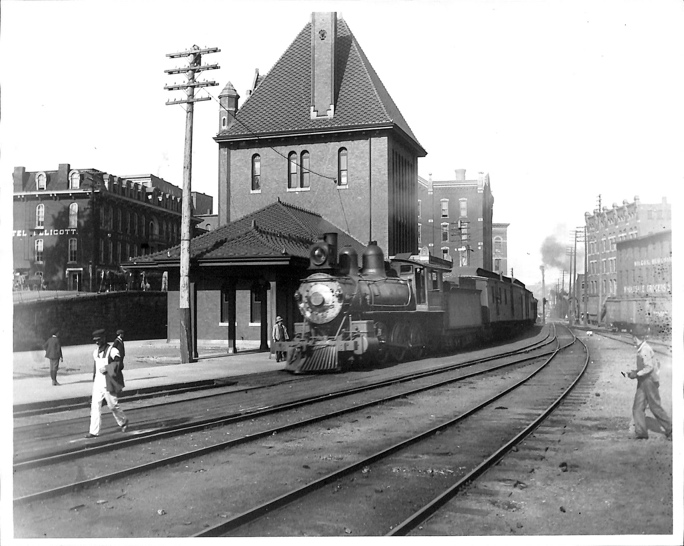
A man steps out of an Atlantic & Great Western Railroad passenger car at the station in Falconer, New York. In 1871, travelers going from Buffalo to Jamestown, ride the “A&GW” on a broad-gauge six-foot line, the only through service connecting Buffalo to the southwest most corner of New York (Buffalo to Hamburg to Gowanda to Dayton to Conewango to Kennedy, to Falconer).
Service on the Buffalo & Jamestown Railroad won’t reach into Jamestown until 1875. Freight interchange that far is limited because of the gauge mismatch, lines going into Jamestown are smaller at 4 foot 8 1/2 inches.
The first direct standard‑gauge rail line into Jamestown
The man hails a carriage to Burtis Bay, named for settler Joseph Burtis -later the area is called Prendergast Point, eventually named Celoron when the city is incorporated in 1896.
The Docks at Celoron, New York
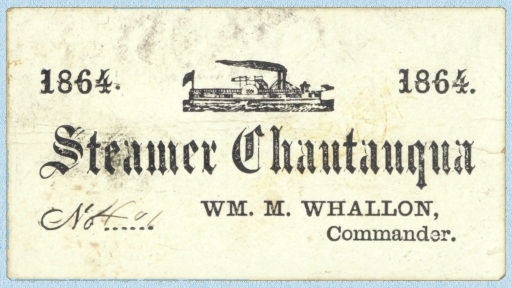
Despite temperatures near ninety degrees, he wears the dark frock coat and light patterned waistcoat of a traveling gentleman, checked trousers with suspenders. He tips his bowler cap to the ladies, checks his pocket watch and hurries to the docks. There he pays his thirty-five cents (an extra five cents for his traveling trunk) and boards the Steamer Chautauqua for a refreshing ride to the upper basin of the lake where he has a farming interest.
The sixteen-foot paddles of the side-wheeler steamer (twelve, five-foot tall buckets built into each) engage and the Chautauqua lurches forward, churning up soot and weeds from the shallow Chadakoin inlet.
A sixteen‑foot wheel on a 120‑foot boat is proportionally large, nearly 14% of the vessel’s total length. That size gives the Chautauqua strong thrust to handle the lake’s shallow, weedy conditions, and good maneuverability for short hops between landings.
It also puts a considerable burden on the boiler that powers the boat.
A young man climbs to the main deck to get some air. He’s just finished feeding the boiler, third load of wood in the last half-hour on orders from the captain. This captain likes speed, likes being ahead of schedule.
It’s too much wood in the young man’s opinion, runs the boiler too hot, but he isn’t about to contradict the captain, this only his second week on the job as boilerman on The Steamer Chautauqua.
The Chautauqua was retrofitted the beginning of summer, 1871, when the Chautauqua Paddle Wheel Company took ownership of her. New paint, new benches for passengers, a new hurricane deck, and a new boiler. New boilers need to be broken in, tested against the haul of the paddle in different conditions, heat levels meticulously maintained and monitored to see how the steamboat reacts and responds. The new boiler on The Chautauqua is no exception.
Except with the summer season here there’s money to be made, people need transportation up and down Chautauqua Lake. They can’t wait -won’t wait- for a boiler to be tested. Sometimes, those concerns outweighed safety protocols, and that could prove to be catastrophic.
As the young, inexperienced (cheap summer labor), boiler boy stands on the deck, sucking in the humid August air, something is happening three decks below.
PART II
Steamboat service on Chautauqua Lake began as early as 1828. By the 1870s, it had grown into a regular, reliable system of travel, a transportation corridor before it was a recreation and tourist resource.
The Steamboat Chautauqua lurches from its moorings in Burtis Bay (ne Celoron) and chugs into the lower basin of Chautauqua Lake. The captain is anxious to make good time and calls down to the boiler room for more power.
The Steamer Chautauqua Loaded for the Trip Up-Lake. To increase speed, the boiler crew throws in a heavy charge of wood. This spikes the furnace temperature. Pressure begins to climb faster than usual.
A gentleman watches a young man spring from the engine level onto the hurricane deck. The teenager sucks air and leans over the rail.
“Hot down there?” The man lights a pipe.
“Yes sir. We’re running a new boiler and the captain wants speed.”
“Makes for a nice breeze.”
“Yes sir,” the young man frowns, gazes at the shoreline. “Speed means a hot boiler though.”
The Chautauqua pulls into the narrows at Bemus Point. Farmers and merchants disembark. Mail bags and crates of produce are unloaded. Seven cords of lumber are dropped off while passengers board for the next leg of the trip to the northern basin of the long lake at Midway.
The Steamer Chautauqua Pulls into the Docks at Bemus Point
The sixteen-foot-tall paddle wheels idle in the shallows. A young man approaches the captain.
“Sir, when we sit still the boiler runs very hot.”
“That’s good lad. Plenty of steam to finish the trip to Mayville. We’ll break our own record! Hold until we depart and load the rest of the wood into her.”
“Aye aye sir.” The boy heads back belowdecks, shaking his head.
A gentleman overhears the conversation, watches the boy return to the boiler. He collects his traveling trunk and moves to the stern.
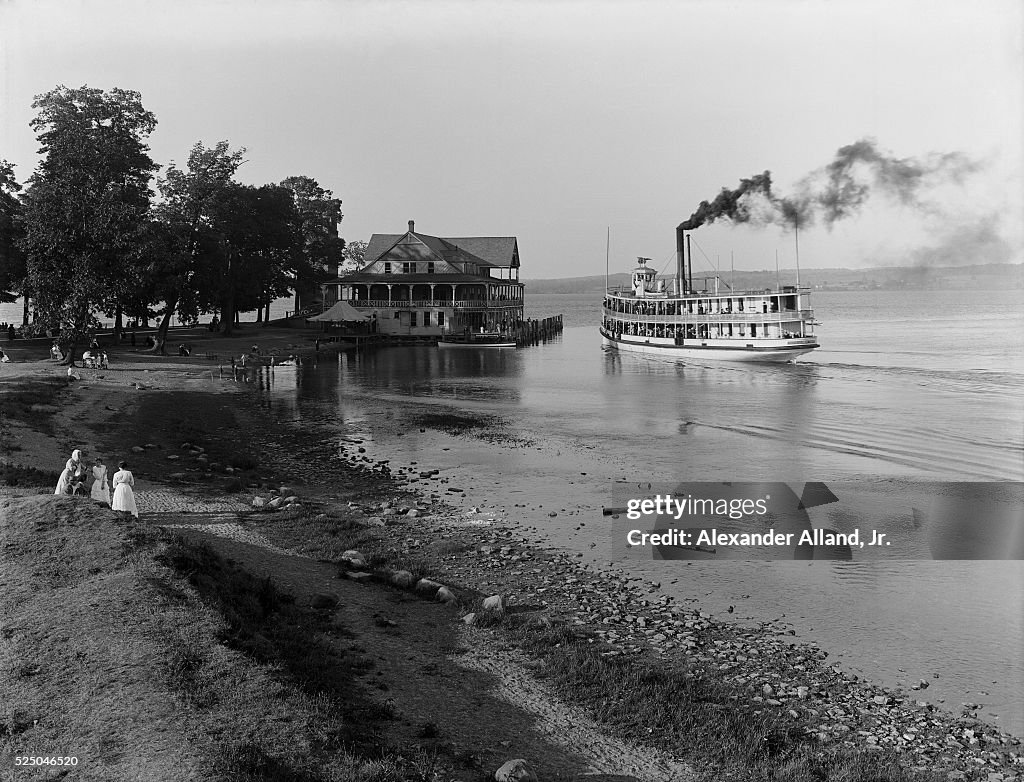
LAKE AND STEAMER, CHAUTAUQUA.PHOTOGRAPH C.1900. (Photo by �� Photo Collection Alexander Alland, Sr./CORBIS/Corbis via Getty Images)
The Steamer Chautauqua Departs Bemus Narrows
The waterline on the new boiler behaves differently than the old one, and the engineer on duty misreads the pressure gauge.When pressure rises to this level, the pump can’t keep up feeding cool lake water into the boiler. The crown sheet, the top of the firebox, overheats.It goes from hot, to red‑hot, to soft. Pressure rises above the boiler’s comfort zone. The overheated crown sheet is now the weakest point in the system.
Pressure spikes as The Chautauqua rounds the tip of Long Point.
A surge of water kicks up from the punishing paddle wheels, splashes onto the red‑hot crown sheet, the hissing can be heard on the main deck. There is an instant of flash‑steam, and the softened crown sheet collapses.
A gentleman at the stern of the Steamer Chautauqua hears a hissing from below-decks. He removes his jacket and waistcoat. He puts his wallet, papers, and pocket-watch in his luggage trunk, hoping it floats.
Just past Prendergast Point with the shoreline sliding by and passengers relaxing on the upper deck, the boiler shell ruptures. A blast of superheated steam, shrapnel, and scalding water rips upward and outward. The explosion makes a violent tearing sound.
Passengers on the upper deck are thrown into the air. The pilot house collapses. The midsection of the boat disintegrates, and a column of steam and smoke shoot straight up like a geyser. The paddlewheel jams. The Chautauqua begins to list immediately.
A gentleman waits a beat, then two. Then he tosses the trunk into Chautauqua Lake and follows it into the warm summer water.
Passengers are thrown into the water where they cling to floating wreckage. The stern stays afloat, but the bow is a splintered ruin.
Nearby fishermen and rowers rush toward the screams. Boats from Long Point reach the wreck within minutes and pull in the burned, the stunned, and the bleeding.
Several passengers never surface.
The wreck settles into the water. The stern remains afloat, typical for wooden steamers. The bow is a shattered ruin. The lake is a boiling, smoking patch of chaos.
Aftermath
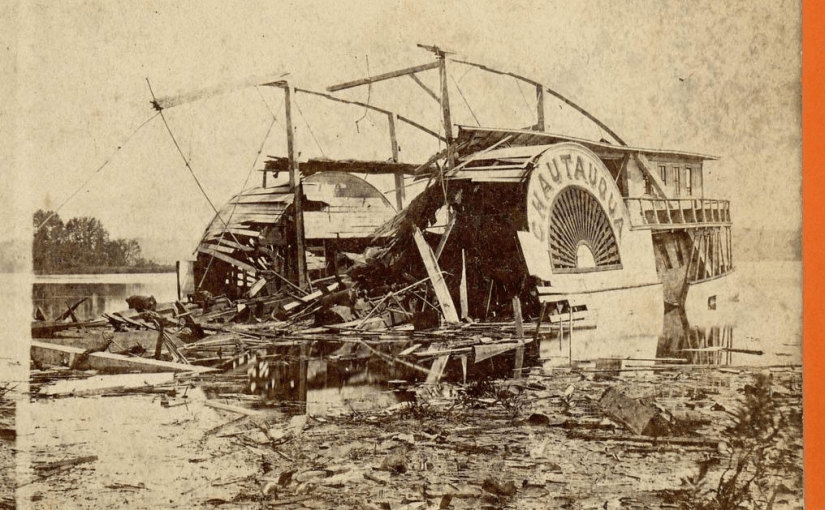
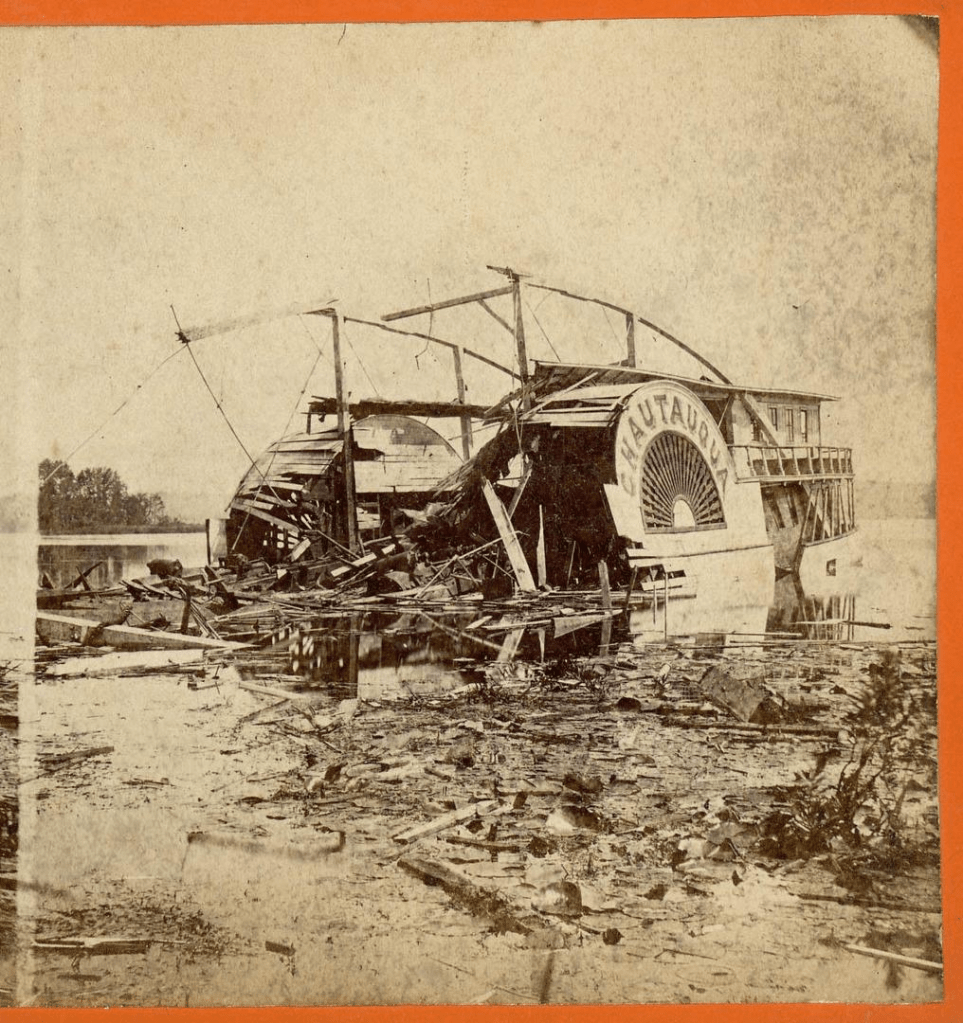
The Chautauqua was towed back toward Mayville. The newspapers called it “the most dreadful calamity ever known upon our lake.”
The Wrecked Steamer Chautauqua
The final toll varies depending on the source, between five and eight dead, many more injured. For a small community in 1871, it was a staggering blow.
The Chautauqua is the only major boiler explosion on the lake’s record.
“In the world of Stones, every landscape is a canvas for adventure. From the soft, shell-strewn sands of beaches to forests blanketed in pine needles and twigs, to the manicured charm of mowed meadows and diverse soil terrains – diversity is our playground. We embrace the unconventional, where slopes, hills, and rugged cliffs become the backdrop for an exhilarating Stones experience.”
Stones Throwing Association Website
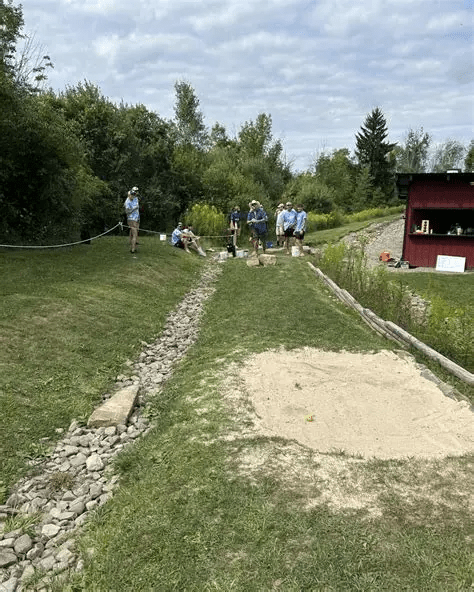
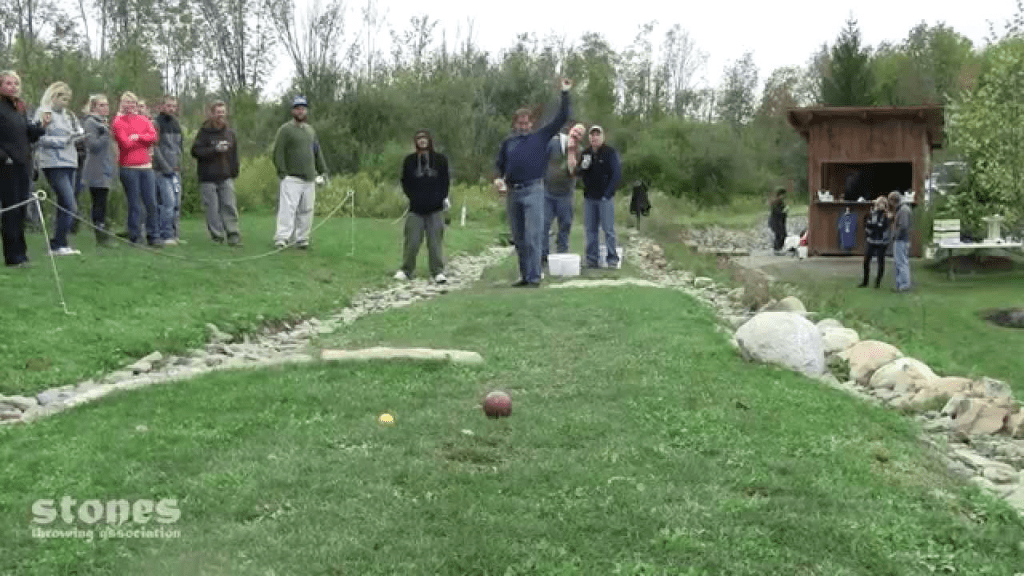
The game of Stones is easy to describe and hard to picture. The nearest recognizable relative is probably bocce; a small ball is set on a fixed piece of earth, and alternating competitors toss heavy baked-clay balls at the target, trying to get closest. But it’s like bocce in the same way shuffleboard is like golf.
So, Stones is more like golf? Not exactly. It has elements of golf, in that there is a fixed course, with fairways and hazards, out of bounds, and management strategies. But it’s more like putt-putt blended with bowling than the golf you know.
Kade Sivak is the COO of the Stones Throwing Association and manages the course located at the Southern Tier Brewery in Lakewood. It’s a unique recreation operation in Chautauqua County. He says about the game, “What I love most about the game is that it’s accessible, it can be played by people of all ages and still have a great time. We’ve had a tournament where we have an eight-year-old partner with an eighty-year-old and they ended up winning a few games and had a great time.”
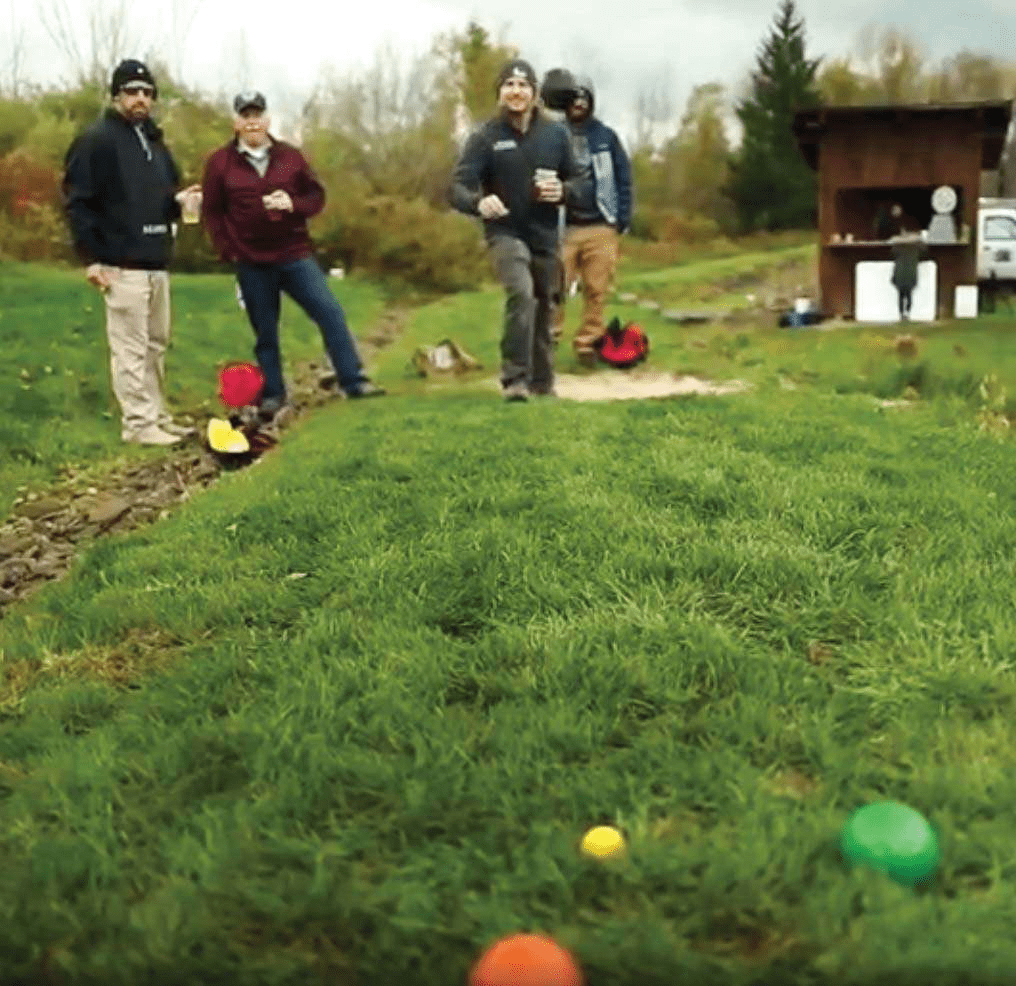
A Stones course is five stretches (holes) that take you through mowed fairways, sand traps, and rough patches, around and through trees and stone fixtures, up and down hills. There are clear boundaries on each stretch (sometimes it’s a pool of water!). You play the five stretches, tossing four stones per round -some stretches remind you of golf par threes, some are longer and remind you of a par five. All stretches score the same, you throw your stones, score the stretch and move onto the next, unique challenge. There are sixteen basic rules of play and etiquette, but like golf (which has only a few rules), it’s the interpretations that are abundant…especially when you take balls of any sort into the wild and toss or hit them around.
There. Simple.
And, in Lakewood, it’s played in a beer garden. What could be better than that?
Kade manages the Southern Tier course called Brewers Hollow. “I manage all events like leagues and tournaments there,” Sivak says. Brewer’s Hollow is the first public stones course ever built, constructed by Sivak Stonemasonry. “They work as a course designer and builder for any new courses at other breweries or businesses that want to enjoy the game of Stones. We encourage people if they ever see a place that could fit a Stones course to check out our website and reach out to us so we can attempt to make that dream come true!”
Brewer’s Hollow is the premier Stones venue in, well, the world. “We’ve hosted hundreds of tournaments as well as leagues every summer and fall that fill up quick, but we are always looking to expand and host more players each night,” Kade says. “We have a world championship every year, with last year’s having a cash prize of $1,000. This year we are attempting to take it to the next level and really give people the best experience at each tournament that is planned out this year.
“STA tournaments and leagues are on the website that vary in competitiveness. As well as a team league called the National Stones League, that includes teams like the Buffalo Mafia, the Jamestown Ironmongers, Chautauqua Armada, and the Pittsburgh Chaos. This team league is peak competition as it is a different approach to the game but takes all the best players and faces them off in 8v8 competition.”
Play at Brewer’s Hollow, like most outdoor sports in the area, follows the weather. Kade continiues, “For casual play we will be opening up May 18th on Southern Tier Public Day where we will be offering each new players first game free as well as have the option to have a skilled player help them learn the game. Then we’re open Wednesday through Sunday until the end of September.
“We’re promoting this year as ‘The Year of Stones’, so if you’ve never played, this would be a good time to come try out the game. It’s easy, fun, and doesn’t take long to play a match. The Stones community is filled with great people that are always willing to help teach new players and it’ll be the best outdoor activity in the area.
Do a quick thought experiment before reading on. Make ice without electricity.
Of all the day-to-day comforts we take for granted, the human ability to create cold might be the most underrated (heat was a piece of cake). Refrigeration, other than via of evaporation and air movement, wasn’t invented until the 1830’s. It wasn’t perfected for another century. There is no reliable data that recorded how many refrigerators were in United States homes prior to 1940, but it wasn’t many (by 1944 they were in about half the households).
If you wanted something cold, it meant ice.
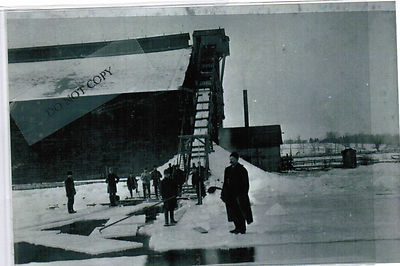
Ice harvest on Chautauqua Lake was a boom business from the 1880’s through the 1910’s; twenty to forty-thousand tons removed from the lake yearly and shipped to ice houses, mostly in Pittsburgh, but west to Cleveland and east to Buffalo as well. Ice was a regional industry that moved tens of thousands of tons of product and employed entire work forces through long winters.
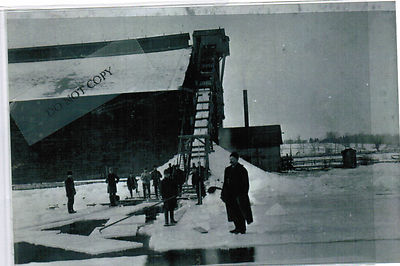
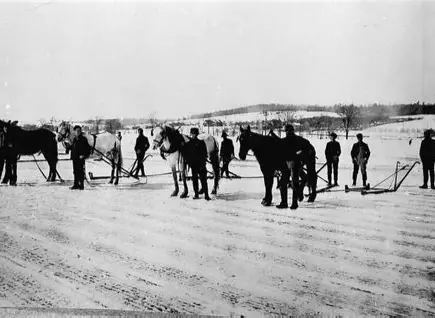
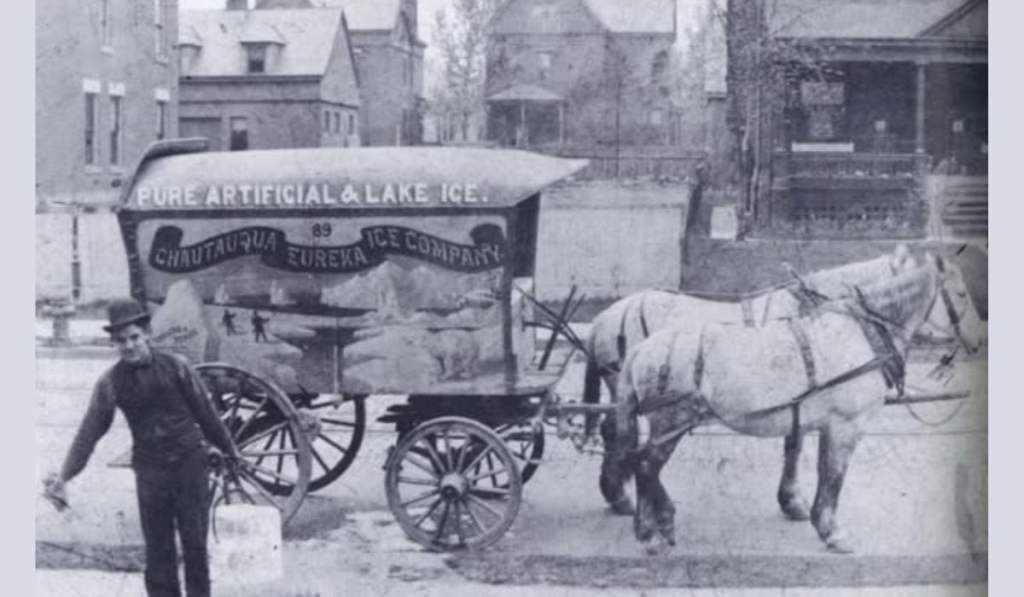
Chautauqua Lake has a low shoreline, easily accessible. The upper basin has a depth best for growing ice. By late January every year crews lay out a cutting schedule, dividing the ice into a grid of blocks twenty-two by thirty-two inches, with a depth of twelve to eighteen inches. Blocks weigh between a hundred-fifty and three-hundred pounds. Giant saws cut up the grids and horse-drawn sleds pull the ice onto shore. Ice is loaded onto wagons and transferred to train stations. The blocks are standardized to maximize storage. A single railcar can carry thirty to forty tons of tightly packed ice, and during the busiest weeks, multiple cars depart daily for industrial centers. Ice from Chautauqua Lake is known throughout the east for its clarity and slow melt rate, qualities that reduce losses during transport and increase its commercial value. A block of Chautauqua ice can last ten to twelve months if stored correctly.
The Celoron Ice Company and facilities in Mayville maintained storage capacity for more than ten-thousand tons, not simply stacks of frozen water, but inventory, revenue, and the wages of hundreds of workers. Families depended on the harvest to bridge the financial gap between fall and spring.
But the industry operated on narrow margins, dependent on the weather. A solid freeze determined whether a year would be profitable. Mild winters, or untimely thaws, could ruin an entire harvest season, which trickled down to all the industry that counted on ice, including service to individual homes. This ice had to last until the next freeze and provide winter wages for ice workers, wages that were comparatively strong for the era—often $1.50 to $2.00 per day when factory work paid closer to $1.00.
Icehouses were feats of practical engineering. The Celoron structure was a massive wooden complex along the shoreline, insulated heavily with sawdust (sawdust was the perfect insulation, a limited conductor of heat, and cheap), it could preserve ice into September. Storage capacity was precise, every cubic foot represented potential income. A fully stocked icehouse could hold a value equivalent to hundreds of thousands of dollars in today’s dollars.
Before rail expansion, natural ice rarely traveled far from its source. Afterward, it became a critical component of food distribution, brewing, and industrial cooling across multiple states. Thousands of tons left the Chautauqua Lake with breweries among the largest consumers.
By the 1920s mechanical refrigeration technology began to offset the ice industry. Prices for natural ice, once $4 to $6 per ton, fell to $1. Profit margins collapsed. Icehouses that had operated for decades closed, buildings were dismantled, equipment was sold for scrap, and workers moved into factories, railroads, and other emerging industries. The transition happened quickly enough that many communities experienced it as a sudden end rather than a gradual decline. Chautauqua County was no exception, but in its halcyon days, frozen water from the lake was a major local business.
In the movies the investigator with a past linked to the killer pours over the decades-old file and finds the one clue that every other detective overlooked. The “AHA” moment. Loose ends are tied up, the mystery is solved. We get to see it happen, watch their eyes go wide as the puzzle pieces slide into place. We’re in on finally solving the murder.
Roll credits.
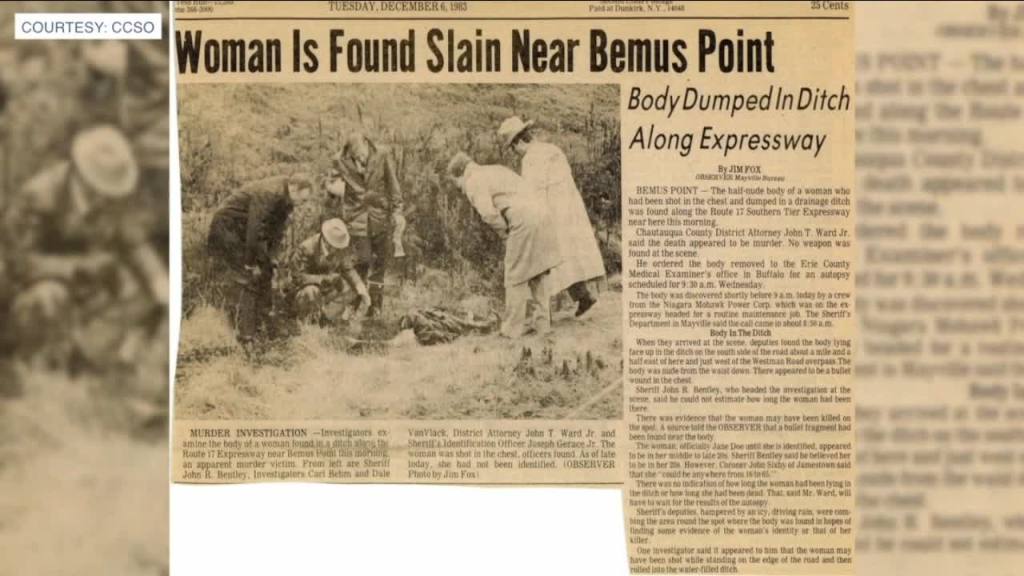
On December 6th, 1983, a woman was discovered by the side of Route 17 in Chautauqua County. The woman was murdered and left in the snow. No identification. No wallet. No name. Nothing.
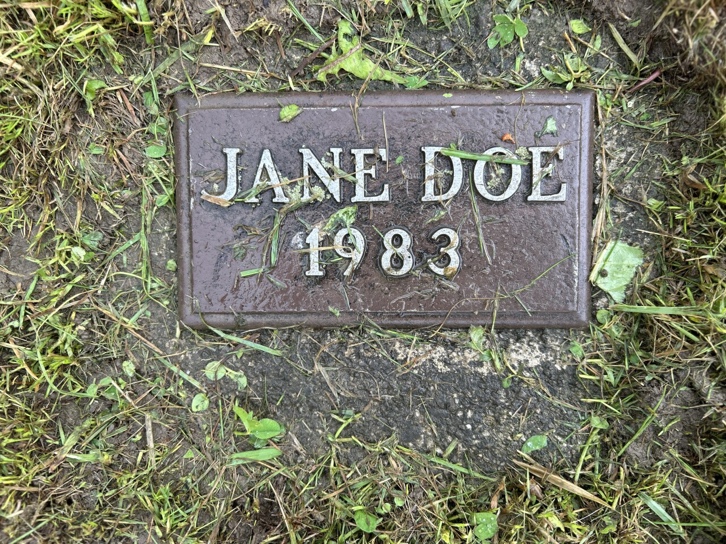
Her place-holder name was Ellery Jane Doe.
Forty years later the murder is still unsolved. Her case is open and cold.
The Chautauqua County Sheriff’s Office has revisited the mysterious case of Ellery Jane Doe periodically in the past four decades. Investigators come and go, technology advances, DNA, on-line access to records, social media. But this case is stubborn, it’s eluded answers and frustrated the professionals looking to end a four-score old secret. No one has uncovered a clue that wasn’t previously considered. No one has overlooked a fact, a piece of evidence. There has been no “AHA” moment.
The early 2000s held promise when DNA technology reshaped cold-case investigations. Samples from the body were re‑tested. Forensics added information. Her clothes were European and expensive. She was from Canada or possibly a Scandinavian country. She had at least one child. She had a tracheotomy at some point in her life, and there was a scar behind her ear that indicated she’d had some sort of surgery. Hospital records turned up nothing. The digital rendering of her face was posted on international media. Profiles were uploaded to national databases.
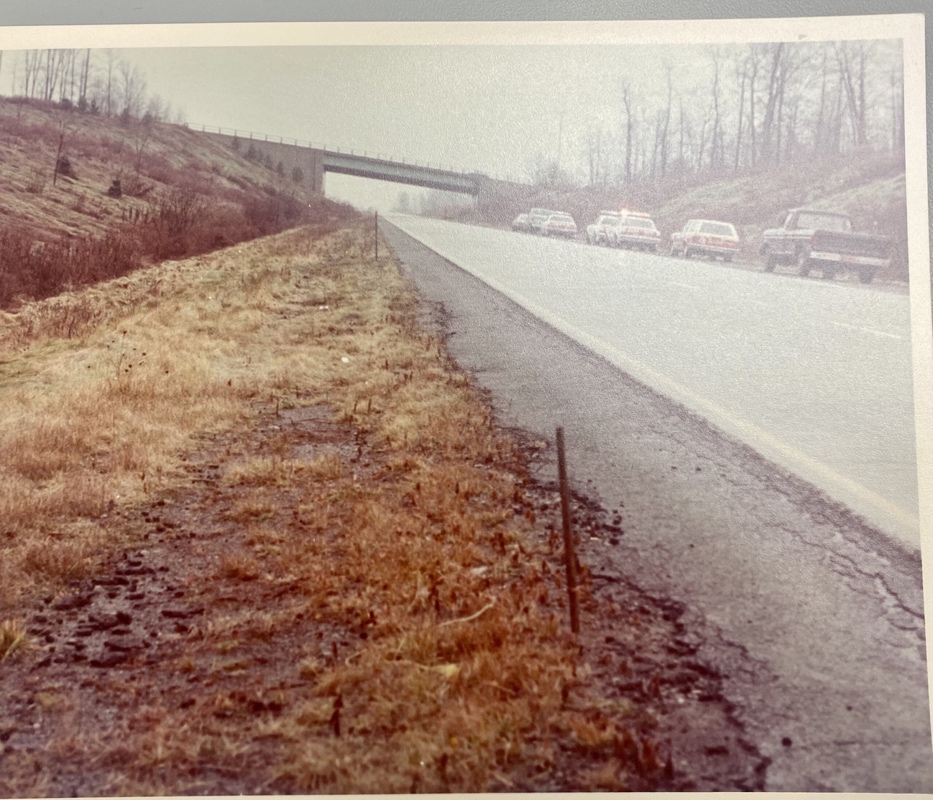
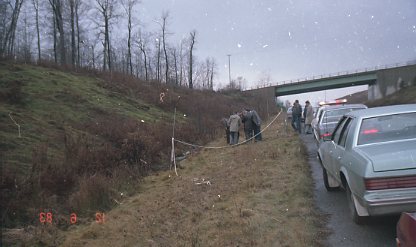
Road Where Ellery Jane Doe was Discovered
Again, nothing. Whoever she was, she left no genetic trail in any official system. Noone has stepped forward to identify her. Not a parent, not a child. Not a friend, a classmate, a distant cousin. Not a coworker who remembers the girl who stopped showing up at a job.
In 2022 the Chautauqua Sheriff’s Office released a new digital reconstruction built with modern imaging tools. The new image was circulated widely online. It sparked a brief surge of attention, but no actionable information emerged. She remains suspended anonymously in the world of the unknown, as if that is her natural state of being.
Jamestown Post Journal Article on Ellery Jane Doe Discovery
The following is a message from The Chautauqua County Sheriff’s Office:
“Investigators continue to actively investigate the December 6, 1983, homicide of a female who was found shot to death along Route 17/Interstate 86 in the Town of Ellery. When the victim could not be identified she was named “Ellery Jane Doe.”
In the ensuing 43 years since her body was found by a utility crew working in the area, “Ellery Jane Doe” remains unidentified. Advanced forensic analysis of Ellery Jane Doe’s DNA, dental work, and fingerprints here in the United States, Canada, and around the globe has not led yet to her identification, or to the identification of any of her family members.
Following a media release by the Chautauqua County Sheriff’s Office in December of 2025 noting the 42nd year anniversary of Ellery Jane Doe’s murder, the Sheriff’s Office received new leads which are currently being investigated.
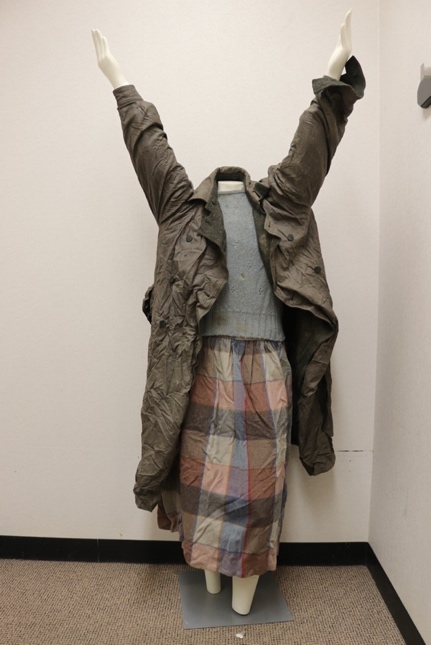
We ask the public to once again look at the forensic artist sketch completed of “Ellery Jane Doe” along with photographs of the clothing she was wearing when her body was found, and a picture of the crime scene. The Chautauqua County Sheriff’s Office would like to speak to anyone who knows the identity of “Ellery Jane Doe” or the person who murdered her.
Anyone with information about this case is asked to please contact the Chautauqua County Sheriff’s Office Criminal Investigations Division at (716) 753-4578, or via email at Tarpley@Sheriff.us.”
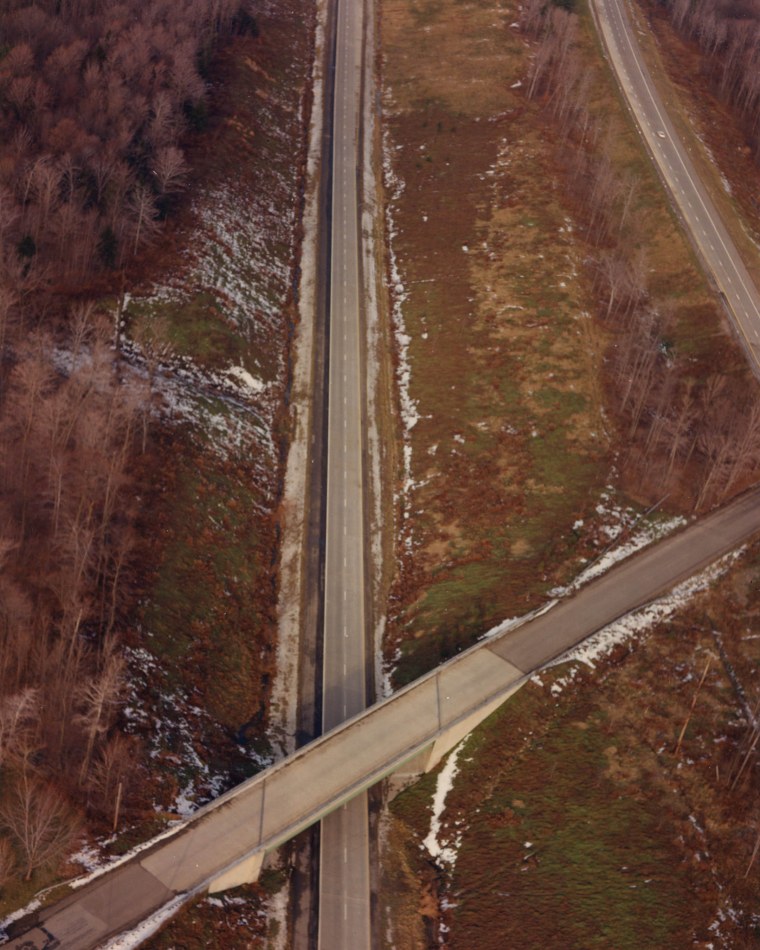
On most any normal day the Niagara Mohawk utilities men would have ignored the dark outline lying against the guardrail just past the bridge, concealed under the recent snowfall. This was along Route 17 in Chautauqua County near the town of Ellery, early winter 1983. But something about this snow-covered bundle didn’t look right. Not a dead deer, not a bag of garbage or abandoned household item. It had the shape of a human.
“Is it a mannequin?” Crew member one.
“Got me.” Crew member two shrugged.
They stopped the truck.
Aerial View Where Ellery Jane Doe was found.
Winter 1983, Chautauqua County was rolling into the high holiday season, Thanksgiving in the sunset and Christmas on the near horizon. Per The Jamestown Post Journal, local fire departments were holding annual elections, the Girl Scout cookie prep season was in full swing. School districts announced education awards and schedules for the 1984–85 school year. The rhythms of the county took on a familiar and peaceful pace.
Until December 6th.
. . . . .
The Niagara Mohawk truck stopped, the crew jumped out and approached slowly. When they brushed away the crusted snow, they uncovered the body of a woman. No purse. No wallet. No vehicle nearby. No name. Just a dead woman in winter clothes by the side of the road with a gunshot wound to the chest.
In a flash, the area was struck by an act of random, unfathomable, bone chilling violence.
. . . . .
That moment in the bucolic life of Southwestern, New York, marked the beginning of Chautauqua County’s longest‑running mystery, a case that has outlived investigators, outlasted technologies, and resisted every attempt to give the woman an identity. She became known as Ellery Jane Doe. No missing‑person report matched her description, not in Chautauqua County, not in the surrounding counties, not in the state. It was as if she had appeared out of nowhere.
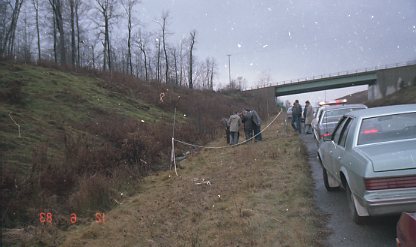
Chautauqua County Sheriff’s Department Investigates the Site Where Ellery Jane Doe Was Found
The early reports were clinical. Female. Possibly in her twenties. Shot once. Clothing unremarkable. No signs of a struggle at the scene. Found on a lonely stretch of highway in the Town of Ellery, suggesting she had been dumped quickly, perhaps in the dark, by someone who knew the road well enough to stop without being seen.
Investigators canvassed truck stops, diners, and motels. They checked bus stations and border crossings. They compared dental records, fingerprints, and composite sketches.
Nothing. The case file grew thicker; the results lead nowhere.
As leads dried up, investigators commissioned facial reconstruction based on her skull, textured clay, neutral expression, photographed against a plain backdrop. The exercise yielded a clay bust that authorities circulated in law-enforcement circles and local media.
Nothing came from the distribution of the picture.
. . . . .
As the years passed, the Ellery Jane Doe case stuck in the collective consciousness of law enforcement in and around Chautauqua County, a grain of sand that never took the shape of a pearl. The woman who was murdered so brutally, so mysteriously became a quiet presence whenever her case was revived, her file reviewed.
The county has experienced and digested gun violence and murder before and after Ellery Jane Doe. But the randomness, the lack of context, the callous discarding of a deceased body by the side of a road was, and is to this day, deeply unsettling. Atrocity has a way of permeating every place in the world, but understanding and interpreting motive and the mechanics of violence, the why’s and the how’s, has a way of settling anxiety and fear, of getting us to accept it as possible. “Sure, that’s why that happened.”
Violence without context is alarming and disquieting. The not-knowing reels us in, it includes us. Randomness leaches accountability and inserts us into the narrative that says, I can avoid tragedy if I control what I do and where I go, and who I see.
Or can I?
The Ellery Jane Doe case has motive and reason and accountability. We just don’t know what that is.
The Erasure of The Town of Elko, Cattaraugus County
They stood to the side, each waiting his turn in this muddy, rainy, sad place. They shook their heads absently, involuntarily, in mute objection, careful not to make eye contact with the others loitering at the rusted cast-iron fence encircling the graveyard. They stood in quiet witness as their ancestors were exhumed, loaded onto a truck, and swept from their not-so-final-after-all resting place. There was a hum of sadness, dampened by helplessness, fury, and simple confusion.
Eminent Domain. It’s an unapologetic, legally convenient sledgehammer. It’s a piece of paper that’s handed to you, at your front door, from an official in a sharp suit, white collar, and soft hat. It’s a thief in the night. A cudgel. It’s a bulldozer ripping up your house, your white picket fence, your vegetable garden, and your heart.
It’s what you get when you’re in the way.
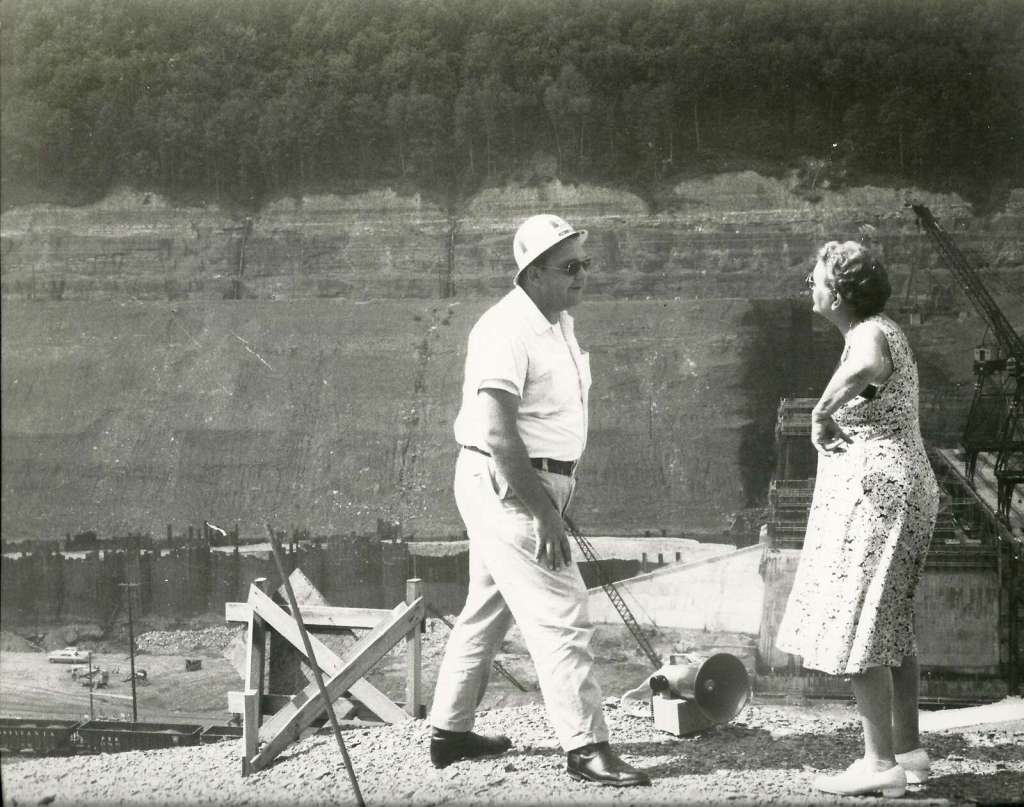
A Citizen of The Allegheny Valley Confronts a Kinzua Dam Project Worker
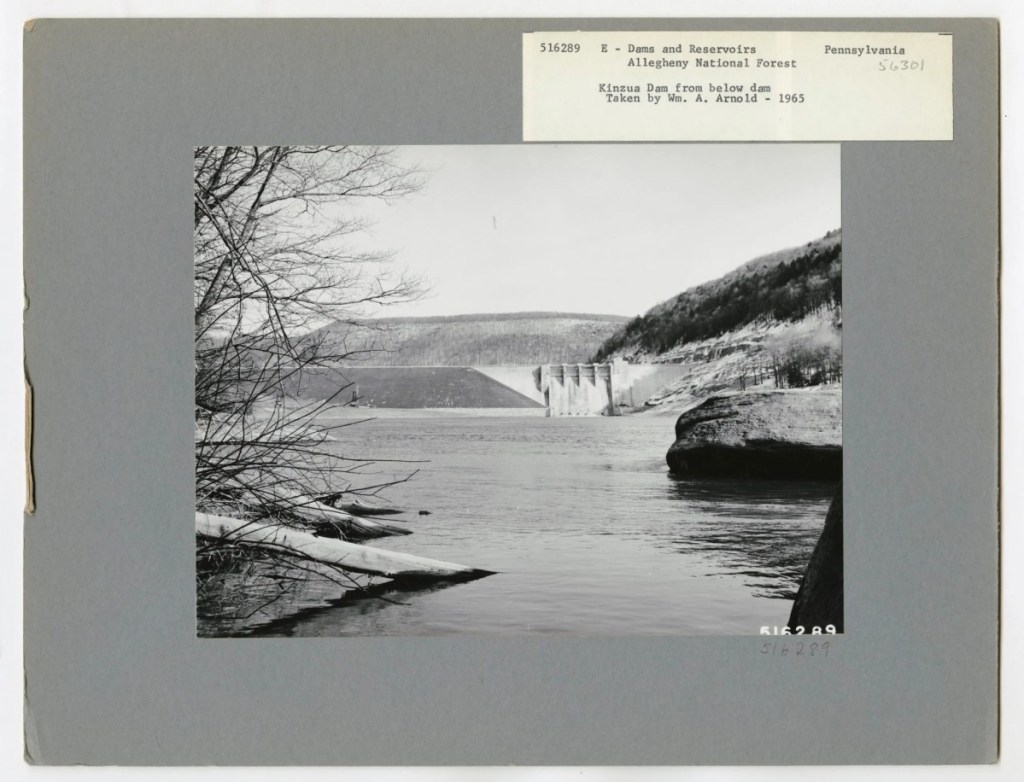
The Allegheny River valley had been inhabited for centuries by the Seneca Indians, then European settlers. It was a rural oasis filled with orchards, hunting grounds, fishing spots, family farms, small towns with hardware stores and churches. Then the Kinzua Dam was built, the water rose, and those places were entombed beneath a lake. The local knowledge disappeared; a populated landscape became a memory.
Before the flooding began, the Army Corps of Engineers conducted surveys to locate every known cemetery and individual grave that would be destroyed when the dam went into operation. They worked with non-native families, churches, and the Seneca Nation to identify descendants and next of kin. Grave markers were cataloged, photographed, and mapped. Headstones were moved when possible; otherwise, new markers were provided.
Licensed funeral directors and contracted crews carried out the mass disinterment. Remains were placed in new caskets or containers to be moved. Personal items buried with individuals were reinterred unless families requested otherwise. Families were given the option to choose a new burial location if they wished.
What else were they supposed to do?
Public memory focuses on the Seneca displacement and their fight with the government for the right to keep their land above water, all the way to the Supreme Court. They appealed directly to President Kennedy.
But a dam doesn’t discriminate. The non-natives, citizens of Elko, Kinzua, and Morrison, had no ground to stand on when the government came calling with their pieces of paper, no one advocated for them, no treaty protected their rights to keep their land, to leave their people buried in the place they wanted. The Kinzua project drowned a valley that had sustained people for generations. It demonstrated how easily federal priorities, in this case Cold War flood control, could override local lives.
Public Outcry over the Controversial Construction of The Kinzua Dam
Elko residents in particular suffered. The town was declared uninhabitable by decree, its government dissolved. Property deeds were voided. Houses were condemned, bought out, or bulldozed. People who had expected to pass their land to their children instead watched surveyors mark it for destruction. Entire neighborhoods were boxed up and scattered across Cattaraugus County and beyond. Even the name Elko was removed from maps, as if it had never existed.
This is not a tale from early American homesteaders. It happened in 1960. It happened in Cattaraugus Conty. It happened to people our parents and grandparents might have known. It happened to roads in Elko that led to and from the post office, the grocery store. To neighborhoods that hosted block parties and garage sales, to church picnics, to BINGO, to the park with its gazebo and summer bands and ice cream. To roads that brought Christmas carolers, where you walked your dog, strolled under streetlamps and caught fireflies.
By 1965 all those roads ended in water.
Forever Ain’t What it Used to Be. George Washington and The Kinzua Dam
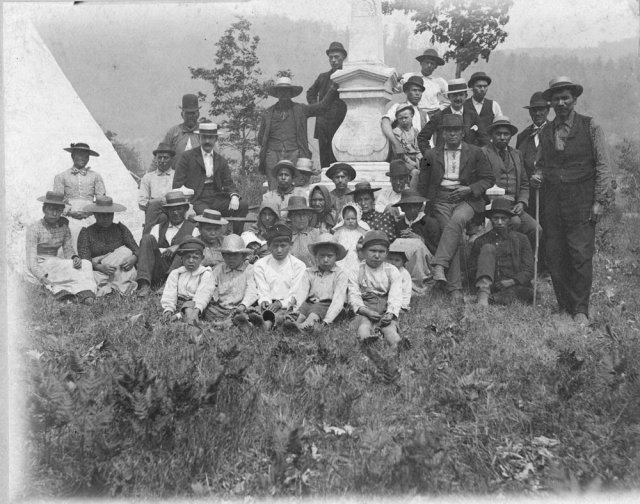
The Senecas hold a Day Of Remembrance every year to honor the spirits of those who passed during that time, and to make sure that such a tragedy never happens again.
The non-natives of the Allegheny Valley hold no such ceremony.






 Bill Burk's collective writing...and some other stuff.