ICE ICE BABY

Do a quick thought experiment before reading on.
Make ice without electricity.

Of all the day-to-day comforts we take for granted, the human ability to create cold might be the most underrated (heat was a piece of cake). Refrigeration, other than via of evaporation and air movement, wasn’t invented until the 1830’s. It wasn’t perfected for another century. There is no reliable data that recorded how many refrigerators were in United States homes prior to 1940, but it wasn’t many (by 1944 they were in about half the households).

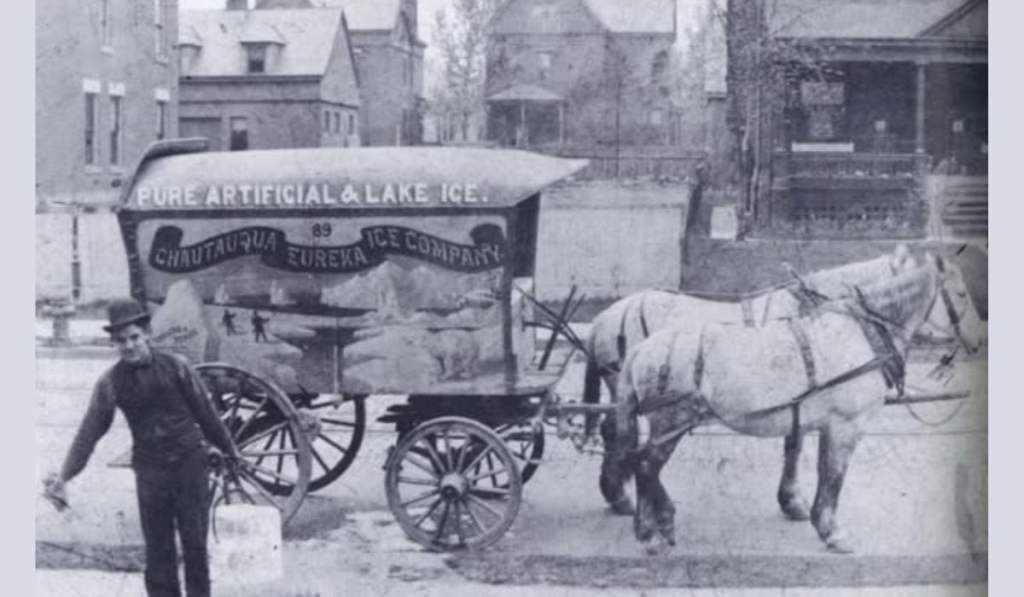
If you wanted something cold, it meant ice.

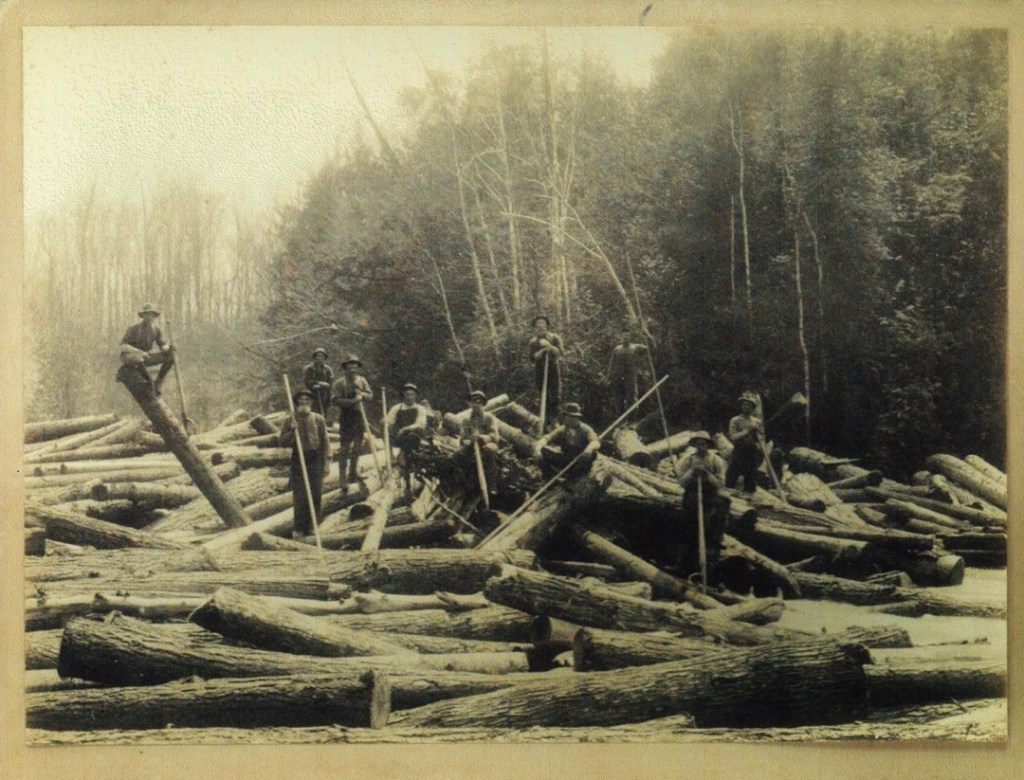
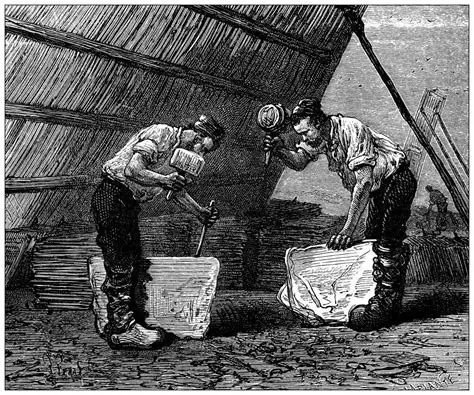
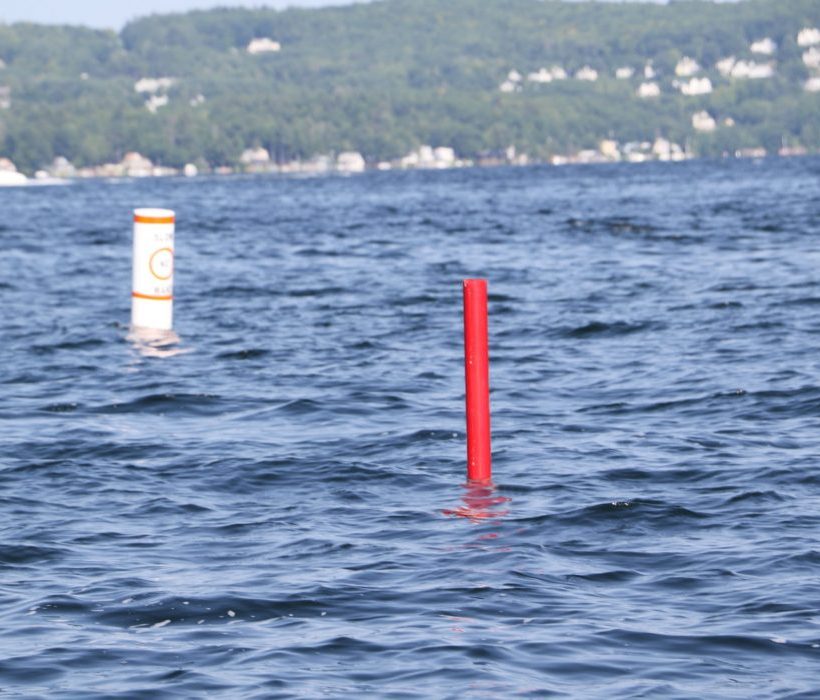
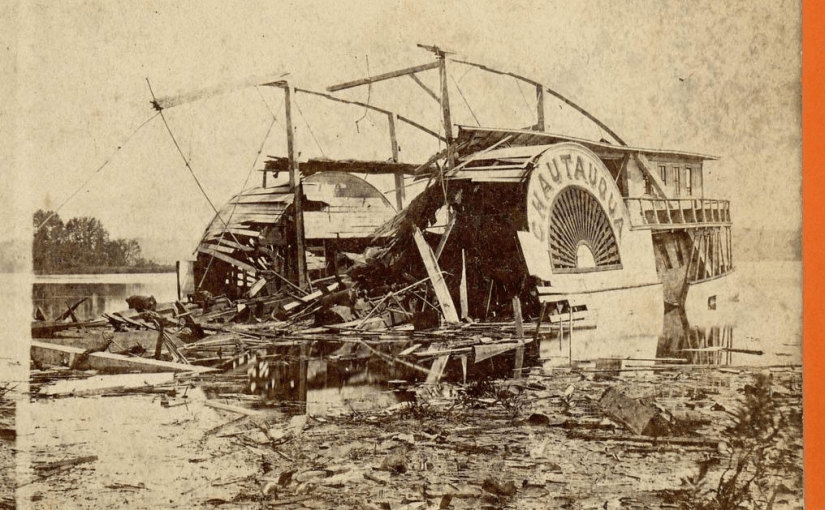
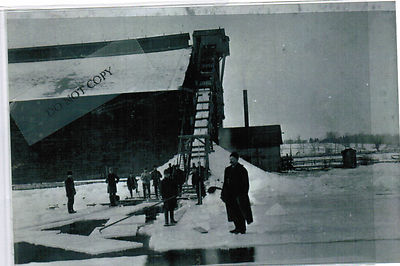
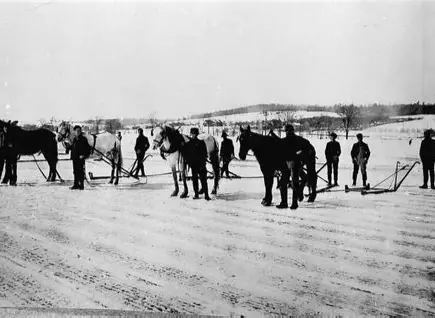
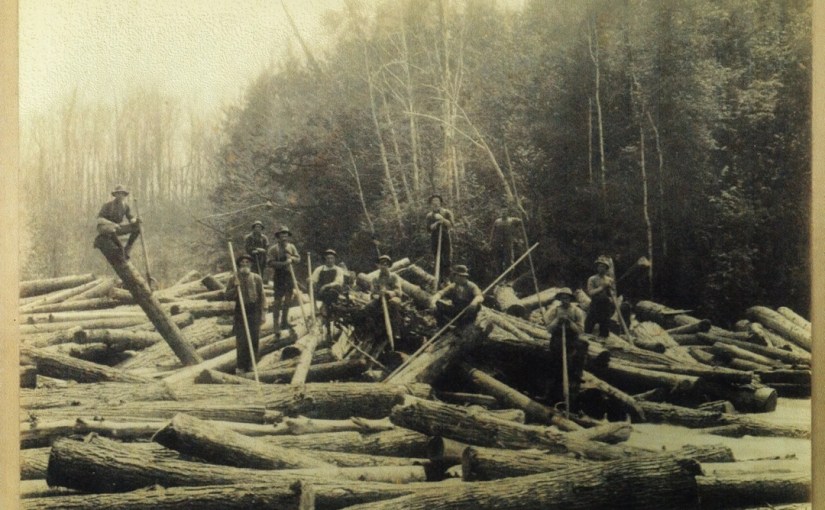
Ice harvest on Chautauqua Lake was a boom business from the 1880’s through the 1910’s; twenty to forty-thousand tons removed from the lake yearly and shipped to ice houses, mostly in Pittsburgh, but west to Cleveland and east to Buffalo as well. Ice was a regional industry that moved tens of thousands of tons of product and employed entire work forces through long winters.

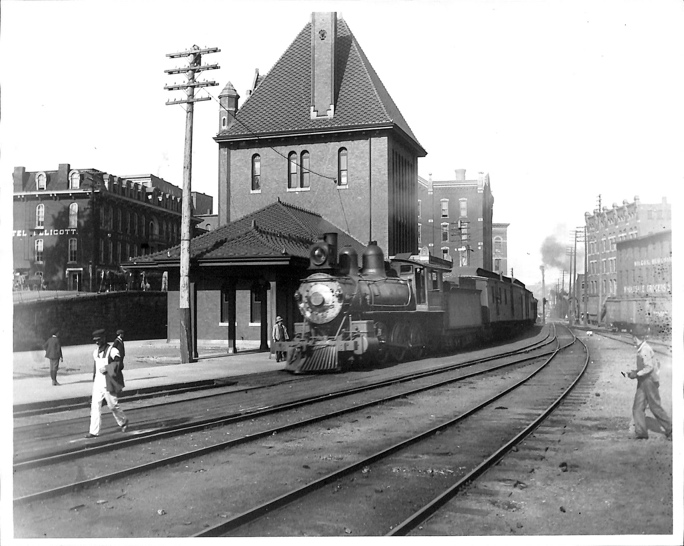
Chautauqua Lake has a low shoreline, easily accessible. The upper basin has a depth best for growing ice. By late January every year crews lay out a cutting schedule, dividing the ice into a grid of blocks twenty-two by thirty-two inches, with a depth of twelve to eighteen inches. Blocks weigh between a hundred-fifty and three-hundred pounds. Giant saws cut up the grids and horse-drawn sleds pull the ice onto shore. Ice is loaded onto wagons and transferred to train stations.       The blocks are standardized to maximize storage. A single railcar can carry thirty to forty tons of tightly packed ice, and during the busiest weeks, multiple cars depart daily for industrial centers. Ice from Chautauqua Lake is known throughout the east for its clarity and slow melt rate, qualities that reduce losses during transport and increase its commercial value. A block of Chautauqua ice can last ten to twelve months if stored correctly.

The Celoron Ice Company and facilities in Mayville maintained storage capacity for more than ten-thousand tons, not simply stacks of frozen water, but inventory, revenue, and the wages of hundreds of workers. Families depended on the harvest to bridge the financial gap between fall and spring.

But the industry operated on narrow margins, dependent on the weather. A solid freeze determined whether a year would be profitable. Mild winters, or untimely thaws, could ruin an entire harvest season, which trickled down to all the industry that counted on ice, including service to individual homes. This ice had to last until the next freeze and provide winter wages for ice workers, wages that were comparatively strong for the era—often $1.50 to $2.00 per day when factory work paid closer to $1.00.

Icehouses were feats of practical engineering. The Celoron structure was a massive wooden complex along the shoreline, insulated heavily with sawdust (sawdust was the perfect insulation, a limited conductor of heat, and cheap), it could preserve ice into September. Storage capacity was precise, every cubic foot represented potential income. A fully stocked icehouse could hold a value equivalent to hundreds of thousands of dollars in today’s dollars.

Before rail expansion, natural ice rarely traveled far from its source. Afterward, it became a critical component of food distribution, brewing, and industrial cooling across multiple states. Thousands of tons left the Chautauqua Lake with breweries among the largest consumers.

By the 1920s mechanical refrigeration technology began to offset the ice industry. Prices for natural ice, once $4 to $6 per ton, fell to $1. Profit margins collapsed. Icehouses that had operated for decades closed, buildings were dismantled, equipment was sold for scrap, and workers moved into factories, railroads, and other emerging industries. The transition happened quickly enough that many communities experienced it as a sudden end rather than a gradual decline. Chautauqua County was no exception, but in its halcyon days, frozen water from the lake was a major local business.

The Mysterious Case of Ellery Jane Doe PART II

Ellery Jane Doe

Part II

Chautauqua’s Enduring Mystery

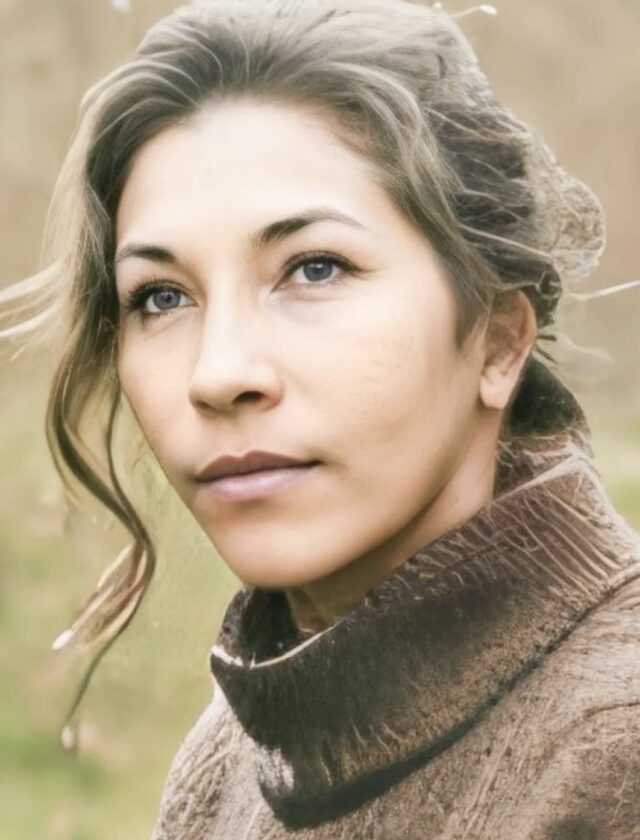
Digital Rendering of Ellery Jane Doe circa 2022

In the movies the investigator with a past linked to the killer pours over the decades-old file and finds the one clue that every other detective overlooked. The “AHA” moment. Loose ends are tied up, the mystery is solved. We get to see it happen, watch their eyes go wide as the puzzle pieces slide into place. We’re in on finally solving the murder.

Roll credits.

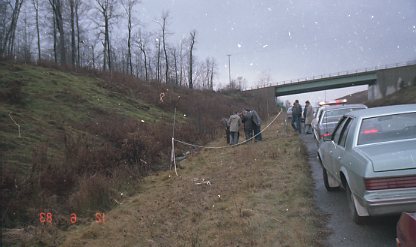
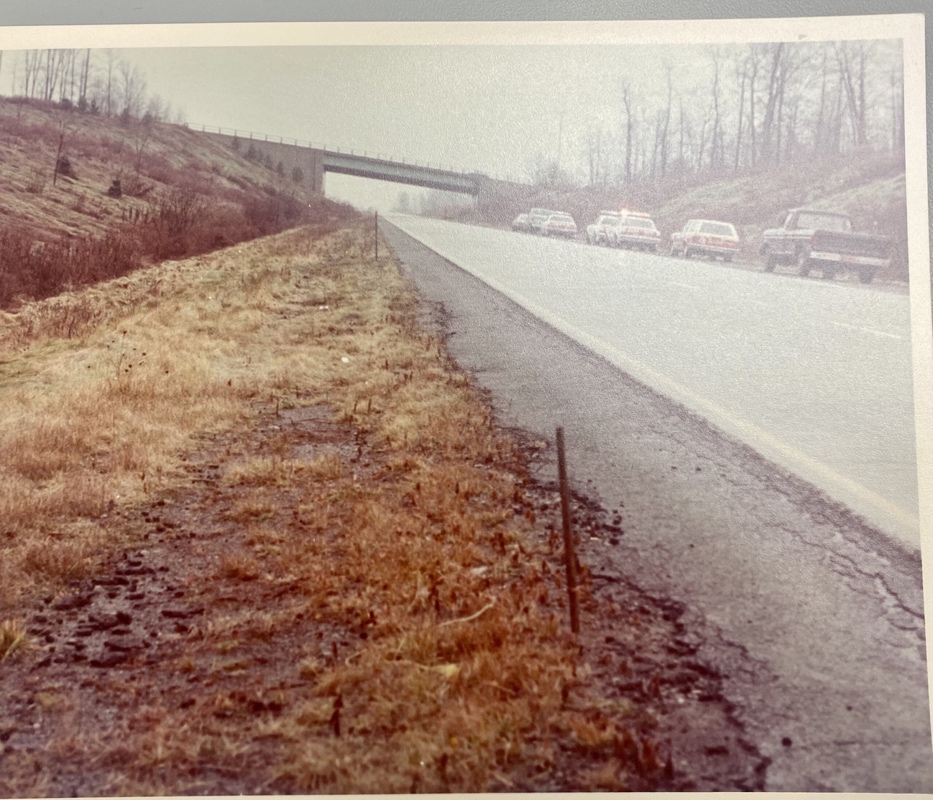
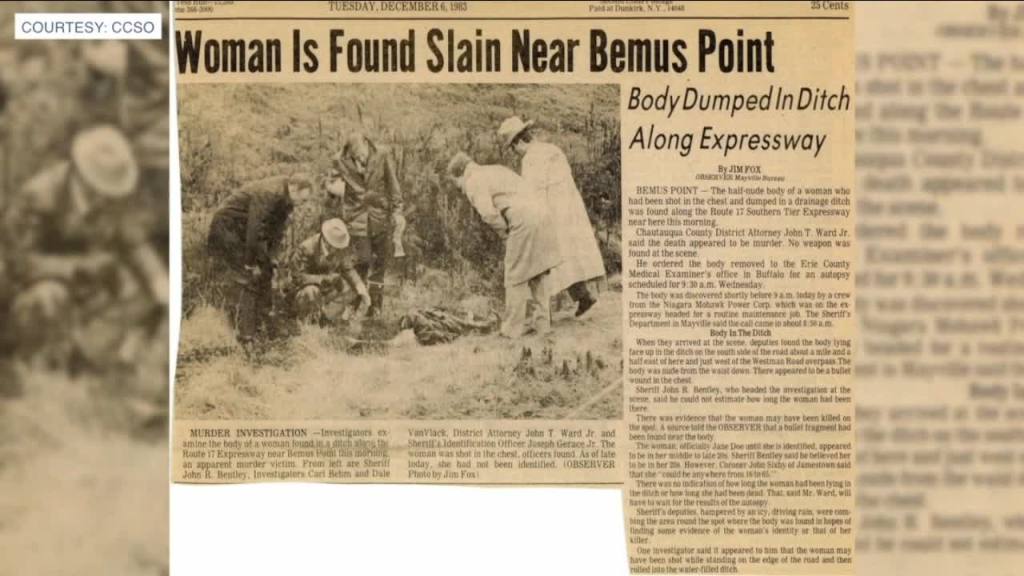
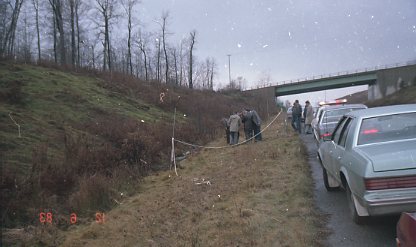
On December 6th, 1983, a woman was discovered by the side of Route 17 in Chautauqua County. The woman was murdered and left in the snow. No identification. No wallet. No name. Nothing.

     Her place-holder name was Ellery Jane Doe.

Forty years later the murder is still unsolved. Her case is open and cold.

The Chautauqua County Sheriff’s Office has revisited the mysterious case of Ellery Jane Doe periodically in the past four decades. Investigators come and go, technology advances, DNA, on-line access to records, social media. But this case is stubborn, it’s eluded answers and frustrated the professionals looking to end a four-score old secret. No one has uncovered a clue that wasn’t previously considered. No one has overlooked a fact, a piece of evidence. There has been no “AHA” moment.

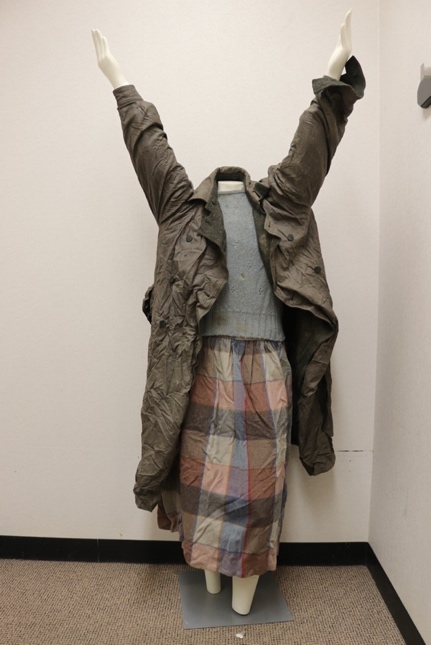
The early 2000s held promise when DNA technology reshaped cold-case investigations. Samples from the body were re‑tested. Forensics added information. Her clothes were European and expensive. She was from Canada or possibly a Scandinavian country. She had at least one child. She had a tracheotomy at some point in her life, and there was a scar behind her ear that indicated she’d had some sort of surgery. Hospital records turned up nothing. The digital rendering of her face was posted on international media.  Profiles were uploaded to national databases.

Road Where Ellery Jane Doe was Discovered

Again, nothing. Whoever she was, she left no genetic trail in any official system. Noone has stepped forward to identify her. Not a parent, not a child. Not a friend, a classmate, a distant cousin. Not a coworker who remembers the girl who stopped showing up at a job.

In 2022 the Chautauqua Sheriff’s Office released a new digital reconstruction built with modern imaging tools. The new image was circulated widely online. It sparked a brief surge of attention, but no actionable information emerged. She remains suspended anonymously in the world of the unknown, as if that is her natural state of being.

Jamestown Post Journal Article on Ellery Jane Doe Discovery

There is now a Facebook page dedicated to Ellery Jane Doe (https://www.facebook.com/search/top/?q=Ellery%20Jane%20Doe), and investigators continue to seek answers.

The following is a message from The Chautauqua County Sheriff’s Office:

“Investigators continue to actively investigate the December 6, 1983, homicide of a female who was found shot to death along Route 17/Interstate 86 in the Town of Ellery. When the victim could not be identified she was named “Ellery Jane Doe.”

In the ensuing 43 years since her body was found by a utility crew working in the area, “Ellery Jane Doe” remains unidentified. Advanced forensic analysis of Ellery Jane Doe’s DNA, dental work, and fingerprints here in the United States, Canada, and around the globe has not led yet to her identification, or to the identification of any of her family members.

Following a media release by the Chautauqua County Sheriff’s Office in December of 2025 noting the 42nd year anniversary of Ellery Jane Doe’s murder, the Sheriff’s Office received new leads which are currently being investigated. 

We ask the public to once again look at the forensic artist sketch completed of “Ellery Jane Doe” along with photographs of the clothing she was wearing when her body was found, and a picture of the crime scene. The Chautauqua County Sheriff’s Office would like to speak to anyone who knows the identity of “Ellery Jane Doe” or the person who murdered her.  


Anyone with information about this case is asked to please contact the Chautauqua County Sheriff’s Office Criminal Investigations Division at (716) 753-4578, or via email at Tarpley@Sheriff.us.”

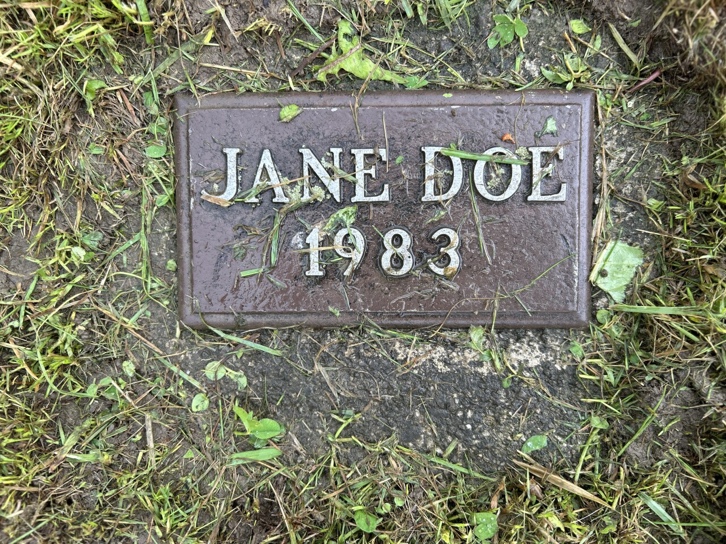
Gravesite Dedicated to The Mystery Woman

The Mysterious Case of Ellery Jane Doe

The Woman With No Name:

The Ellery Jane Doe Case: PART I

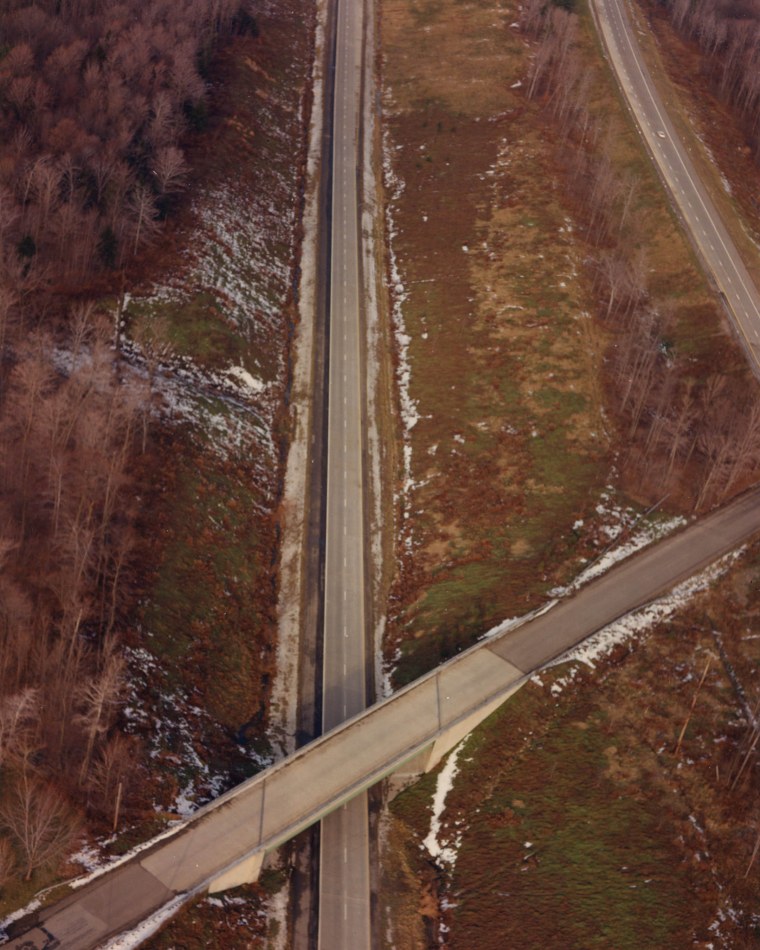
On most any normal day the Niagara Mohawk utilities men would have ignored the dark outline lying against the guardrail just past the bridge, concealed under the recent snowfall. This was along Route 17 in Chautauqua County near the town of Ellery, early winter 1983. But something about this snow-covered bundle didn’t look right. Not a dead deer, not a bag of garbage or abandoned household item. It had the shape of a human.

“Is it a mannequin?” Crew member one.

“Got me.” Crew member two shrugged.

They stopped the truck.

Aerial View Where Ellery Jane Doe was found.

Winter 1983, Chautauqua County was rolling into the high holiday season, Thanksgiving in the sunset and Christmas on the near horizon. Per The Jamestown Post Journal, local fire departments were holding annual elections, the Girl Scout cookie prep season was in full swing. School districts announced education awards and schedules for the 1984–85 school year. The rhythms of the county took on a familiar and peaceful pace.

Until December 6th.

.  .  .  .  .

The Niagara Mohawk truck stopped, the crew jumped out and approached slowly. When they brushed away the crusted snow, they uncovered the body of a woman. No purse. No wallet. No vehicle nearby. No name. Just a dead woman in winter clothes by the side of the road with a gunshot wound to the chest.

In a flash, the area was struck by an act of random, unfathomable, bone chilling violence.

.  .  .  .  .

That moment in the bucolic life of Southwestern, New York, marked the beginning of Chautauqua County’s longest‑running mystery, a case that has outlived investigators, outlasted technologies, and resisted every attempt to give the woman an identity. She became known as Ellery Jane Doe. No missing‑person report matched her description, not in Chautauqua County, not in the surrounding counties, not in the state. It was as if she had appeared out of nowhere.

Chautauqua County Sheriff’s Department Investigates the Site Where Ellery Jane Doe Was Found

The early reports were clinical. Female. Possibly in her twenties. Shot once. Clothing unremarkable. No signs of a struggle at the scene. Found on a lonely stretch of highway in the Town of Ellery, suggesting she had been dumped quickly, perhaps in the dark, by someone who knew the road well enough to stop without being seen.

Investigators canvassed truck stops, diners, and motels. They checked bus stations and border crossings. They compared dental records, fingerprints, and composite sketches.

Nothing. The case file grew thicker; the results lead nowhere.

As leads dried up, investigators commissioned facial reconstruction based on her skull, textured clay, neutral expression, photographed against a plain backdrop. The exercise yielded a clay bust that authorities circulated in law-enforcement circles and local media.

Nothing came from the distribution of the picture.

.  .  .  .  .

As the years passed, the Ellery Jane Doe case stuck in the collective consciousness of law enforcement in and around Chautauqua County, a grain of sand that never took the shape of a pearl. The woman who was murdered so brutally, so mysteriously became a quiet presence whenever her case was revived, her file reviewed.

The county has experienced and digested gun violence and murder before and after Ellery Jane Doe. But the randomness, the lack of context, the callous discarding of a deceased body by the side of a road was, and is to this day, deeply unsettling. Atrocity has a way of permeating every place in the world, but understanding and interpreting motive and the mechanics of violence, the why’s and the how’s, has a way of settling anxiety and fear, of getting us to accept it as possible. “Sure, that’s why that happened.”

Violence without context is alarming and disquieting. The not-knowing reels us in, it includes us. Randomness leaches accountability and inserts us into the narrative that says, I can avoid tragedy if I control what I do and where I go, and who I see.

Or can I?
The Ellery Jane Doe case has motive and reason and accountability. We just don’t know what that is.

Clothing Found on Ellery Jane Doe

ELKO AND THE KINZUA DAM PROJECT

 PART II

The Erasure of The Town of Elko, Cattaraugus County

They stood to the side, each waiting his turn in this muddy, rainy, sad place. They shook their heads absently, involuntarily, in mute objection, careful not to make eye contact with the others loitering at the rusted cast-iron fence encircling the graveyard. They stood in quiet witness as their ancestors were exhumed, loaded onto a truck, and swept from their not-so-final-after-all resting place. There was a hum of sadness, dampened by helplessness, fury, and simple confusion.

Eminent Domain. It’s an unapologetic, legally convenient sledgehammer. It’s a piece of paper that’s handed to you, at your front door, from an official in a sharp suit, white collar, and soft hat. It’s a thief in the night. A cudgel. It’s a bulldozer ripping up your house, your white picket fence, your vegetable garden, and your heart.

It’s what you get when you’re in the way.

A Citizen of The Allegheny Valley Confronts a Kinzua Dam Project Worker

The Allegheny River valley had been inhabited for centuries by the Seneca Indians, then European settlers. It was a rural oasis filled with orchards, hunting grounds, fishing spots, family farms, small towns with hardware stores and churches. Then the Kinzua Dam was built, the water rose, and those places were entombed beneath a lake. The local knowledge disappeared; a populated landscape became a memory.

      Before the flooding began, the Army Corps of Engineers conducted surveys to locate every known cemetery and individual grave that would be destroyed when the dam went into operation. They worked with non-native families, churches, and the Seneca Nation to identify descendants and next of kin. Grave markers were cataloged, photographed, and mapped. Headstones were moved when possible; otherwise, new markers were provided.

Licensed funeral directors and contracted crews carried out the mass disinterment. Remains were placed in new caskets or containers to be moved. Personal items buried with individuals were reinterred unless families requested otherwise. Families were given the option to choose a new burial location if they wished.

     What else were they supposed to do?

Public memory focuses on the Seneca displacement and their fight with the government for the right to keep their land above water, all the way to the Supreme Court. They appealed directly to President Kennedy.

     But a dam doesn’t discriminate. The non-natives, citizens of Elko, Kinzua, and Morrison, had no ground to stand on when the government came calling with their pieces of paper, no one advocated for them, no treaty protected their rights to keep their land, to leave their people buried in the place they wanted. The Kinzua project drowned a valley that had sustained people for generations. It demonstrated how easily federal priorities, in this case Cold War flood control, could override local lives.

Public Outcry over the Controversial Construction of The Kinzua Dam

     Elko residents in particular suffered. The town was declared uninhabitable by decree, its government dissolved. Property deeds were voided. Houses were condemned, bought out, or bulldozed. People who had expected to pass their land to their children instead watched surveyors mark it for destruction. Entire neighborhoods were boxed up and scattered across Cattaraugus County and beyond. Even the name Elko was removed from maps, as if it had never existed.

This is not a tale from early American homesteaders. It happened in 1960. It happened in Cattaraugus Conty. It happened to people our parents and grandparents might have known. It happened to roads in Elko that led to and from the post office, the grocery store. To neighborhoods that hosted block parties and garage sales, to church picnics, to BINGO, to the park with its gazebo and summer bands and ice cream. To roads that brought Christmas carolers, where you walked your dog, strolled under streetlamps and caught fireflies.

By 1965 all those roads ended in water.

Forever Ain’t What it Used to Be. George Washington and The Kinzua Dam

The Senecas hold a Day Of Remembrance every year to honor the spirits of those who passed during that time, and to make sure that such a tragedy never happens again.

     The non-natives of the Allegheny Valley hold no such ceremony.

JOHNNY CASH AND THE KINZUA DAM PROJECT

Today is Johnny Cash’s Birthday 2/26/26

I wrote a piece for THE VILLAGER MAGAZINE (find it here: https://thevillagerny.com/) aboout The Kinzua Dam Project and Johnny Cash’s song “As Long as the Grass Shall Grow.”

Doing the research for the article I contacted Mark Stielper, the historian at THE JOHNNY CASH MUSEUM.

Mark sent me the letter below…it doesn’t have much to do with Kinzua Dam, but it is a nice historical look into Cash and his involvement with the Seneca Nation.

Enjoy the read.

Bill,

Your piece is about Kinzua, not Cash, but I will give you a brief narrative of the latter, and you can cull at your discretion.

Peter La Farge wrote “The Senecas” (the original title of “As Long As…”) in 1962. He was a folk singer and activist. One of his haunts (and where he would die in 1965 at age 33) was Greenwich Village, the scene of his intersection with Johnny Cash. Both men recorded for Columbia Records and, pivotally, they discovered that each had Indian heritage. (They were both mistaken in this understanding of their respective lineages, but at the time, it was a powerful self-identity.)

La Farge’s first album for Columbia was called “Ira Hayes” and Other Ballads (Author note: “The Ballad of Ira Hayes” was successfully covered by Cash and Bob Dylan). It wasn’t really a protest album, but he soon assumed the role of spokesman for Native issues. He was abrasive, caustic, loud and generally unpleasant, which did not serve him or the cause well, and he fell out of favor with his fellow protesters (most of whom were into the civil rights arena anyway and found Indian matters passe).

But La Farge and Cash were birds of a feather, “Indians in the white man’s camp,” as it were. The two fed off each other, but Cash grew more prominent and influential, particularly after his huge hits, “Ring of Fire” and “Understand Your Man.” He became obsessed with the stories of Ira Hayes and the Seneca chief, Cornplanter, via La Farge’s accounts. Cash actually visited Kinzua–he would go on these on location missions frequently–and put “As Long As the Grass Shall Grow” as the first track on side one of the Bitter Tears album.

Now, historical accuracy must trump fanciful legends. It is not true that Columbia refused to release the song. It was 1) not a new song and there was no reason to hide it and 2) as pointed out, it had prominent placement on the album. 

Although “The Ballad of Ira Hayes” was the single release, Cash remained committed to the Seneca song, often pairing the two in performances, including on his network TV show. The line, “Cornplanter, can you swim?” would be a biting counterpart to “the ditch where Ira died” in personalizing the legacies of the two Indians in a way that La Farge’s scattered screeds could not.

Let me know how I can help you deliver on your mission.

CHAUTAUQUA BRIDGE

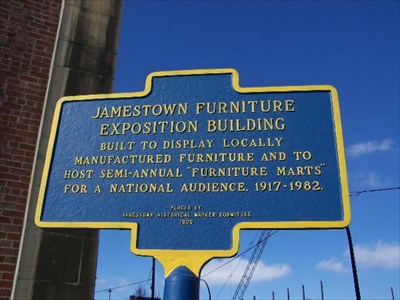
In October of 1982, 726 athletes lined up in Bemus Point with the goal of crossing the lake and back. The lake was much too cold for a swim. The Bemus Pint Ferry was not an option for a Fall 10K race. Fortunately, these runners had a fresh path, brand spanking new pavement, the Chautauqua County Veterans Memorial Bridge.

There was a time when getting from the southern part of Chautauqua Lake to the upper lake was a logistical chore, Mayville to Jamestown was a journey, more than a grocery run. Routes 394 and 430 wrapped the lake, picturesque to be sure, but cumbersome for anyone in a hurry. This was prior to 1982. A drive from Jamestown to Long Point State Park was a common trip, fifteen miles or so up the north side of the lake.

If you then wanted to tour the southwestern coast, Stowe, Chautauqua Institution, or points south, you had one of three options:

  1. Circumnavigate the lake, back through Jamestown, or north around Mayville.
  2. Drive into Bemus, hope to catch the ferry.
    1. The ferry had to be running that day.
    1. The ferry had to be on your side, ready to go to the other side.
    1. You had to be the one of the first ten or so cars in line.

For an intrastate trip through New York, from the west to east you used the I-90 corridor along Lake Erie, all southern cities, Jamestown, Olean, Corning, and east, were accessible by backroads only. What is now Route I86 as a developed interstate highway wasn’t a priority because of that pesky lake blocking any straight run west to east.

That changed in 1982 with the building of the Chautauqua County Veterans Memorial Bridge.

That Fall 10K race in Bemus, launching the opening of the first non-stop vehicle option for getting from one side of the lake to the other, was forty-two years ago, a long time for a bridge. Now it’s in need of a facelift. Or in lieu of a cosmetic revival, some body work.

Enter New York State Department of Transportation and their checkbook.

The state has earmarked $78 million for renovations and structural work on the Chautauqua County Veteran’s Bridge. Another $4.7 million for the local success routes to the bridge off routes 430 and 394. Work began on the main part of the 3,790-foot main span last summer (2023). It’s expected to be completed fall of 2026.

New York State DOT Commissioner Marie Therese-Dominguez was in Chautauqua recently to oversee the start of the project. “It’s going to enhance safety, it’s going to ease travel and it going to extend the service life of these bridges by another 40 years,” she said.

The work being done probably won’t show itself to the casual observer -new bridge joints, fresh decks, bearings, and repaired steel. The roadway will be resurfaced. On and off ramps will have new barriers.

The noticeable part will be the closures and re-routing of traffic to get the job completed. The plan is to work one set of lanes at a time, and only close the entire bridge for short periods during nighttime. Local officials are of course asking people to be patient with the process and disruptions in traffic.

Commissioner Therese-Dominguez says, “It’s going to take a lot of patience but in the end, I think it’s going to be well worth it.”

Governor Hochul released a statement saying, “To ensure that our communities and our economy in all regions of the state continue to grow and prosper, New York state is making investments to strengthen and harden our infrastructure to meet and exceed the challenges of the 21st Century.”

State Sen. George Borrello, R-Irving, thanked Hochul for recognizing the importance of the bridge and the need to bolster the structure. “She is no stranger to Chautauqua County, no stranger to Chautauqua Lake and she knows the importance of it,” he said. “I want to truly thank her for investing in infrastructure around Chautauqua County, particular, this major, major investment in this bridge over Chautauqua Lake.”

Mason Winfield’s

SPIRIT WAY PROJECT

© MASON WINFIELD 2023 SPIRIT WAY PROJECT 2023:

The paranormal expert/examiner/medium/TV personality steps boldly into the house/barn/cellar/church, the one that locals say is haunted, the site that bumps in the night. An audio-visual crew follows diligently. They pack equipment designed to detect the undetectable, to record the mysteries within; a ghostly apparition, a supernatural aura, a sixth sense.

And…CUT

PRINT

Mason Winfield has a deep and abiding interest in the paranormal. It’s been his life work (as evidenced by his vitae on his website http://www.masonwinfield.com). He’s a lecturer, author, storyteller, scientist. He is not, by his own reconning, a “ghost-hunter.” If there’s a profession that informs and directs his attention and talents, it’s probably best described as “Truth Seeker”.     

He believes it’s time for the industry to innovate, to broaden its influence. “If there’s a possible way to the truth, you have to take it, don’t you?” he says.

To accomplish this, Winfield seeks to employ a field of multidisciplinary professionals, people different in cultural and thematic sensibilities, to explore ancient spaces, areas of the northeastern United States that have universally experienced what he calls “EHE”, Exceptional Human Experiences. “Why do people say they see the thigs in the paces they do?” Winfield asks.    

It’s a query he hopes to answer with The Spirit Way Project.

Designed like the popular European group The Dragon Project, The Spirit Way uses the resources of scientific and paranormal disciplines to research the undeniably interesting and real world of EHE.

Winfield says, “The reality-TV paranormal industry typically studies buildings no more than a century-old–as though haunted sites are sensational and rare, no more original ones can be found, and paranormal sightings occur only indoors. It also barrages us with two perspectives, either intuitive–psychic–insights or surveillance ghost-hunting, as though using electronic and digital instruments as a glorified Ouija board is some objective avenue to the truth–and no other avenues of insight are available.”

Differentiating from the television shows you night have seen, The Spirit Way is basically a two-fold approach to supernatural investigation; using ancient resources to identify sites of EHE that have survived and inspired humans for centuries (think Native American history and collective consciousness), and to coordinate with any and every discipline to develop a coherent and multi-faceted theory of those experiences. So far, the group has employed:

A Feng-Shui Master, an Algonquin Elder, an African-American psychic medium, an author/researcher/paranormalist, a psychologist, two master dowsers, local scholars, historians, anthropologists, geologists, First Nations leaders, aerial surveillance experts, and team of paranormal investigators.

The goal of the team is to examine sites of reported Exceptional Human Experiences through the disciplines of geometry, shape (symbolic form), geology (earth-energies), archaeo-astronomy (an awareness of sunrises, moonrises, equinoxes, and solstices), and alignments across broad stretches of landscape to suggest codes if not messages.

“It’s been a challenge. There are no upstate surveys of supernatural events; national, but not local. All anyone can agree on is that these monuments had sacred function–and that, like Stonehenge and the Great Pyramid and a worldwide league of others, they are paranormal sites. In their proximity, people report exceptional experiences. Just like a haunted house–though vastly grander and more profound–these ancient American sacred sites get a lot of ghost stories.”

Winfield lives in East Aurora, and understands the newer supernatural phenomenon in Western, New York. Along with his partner, and co-founder of The Spirit Way project, Algonquin Elder Michael Bastine, who Winfield calls one of the best teachers in the world on the subject of native supernatural history, the goal is to broaden the scope of their studies to the ancient world.

“The ancient monuments of the British Isles have been preserved and studied,” Winfield says,” We want to start a new model of north American haunted sites, ancient places, not buildings, hut rather the outdoor sites, real study from different perspectives.”

The Spirit Way will start with a program of fifteen YouTube episodes in New York State.

Winfield concludes, “There is more to the paranormal. The Spirit Way Project (SWP) believes it’s time for a revolution. We think the public thirsts it.”

The Princess Chautauqua

She knelt by the water, where the tip of Long Point State Park reaches out into Chautauqua Lake. In the small hills behind the peninsula, up where what is now Ellery Center, fires burned, screams and whoops echoed up and down the bluff. This was the end, the dying gasp of a people, of an identity, of her tribe. Anyone who survived the slaughter would be taken into slavery by the marauders.

She was trapped on this narrow spit of land. She could swim across the narrows to the other side of the lake, but there was really no escape, they’d be waiting by the time she reached shore. She couldn’t go back the way she came, there was only one path that led to the opening of the point.

She waded into the shallows.

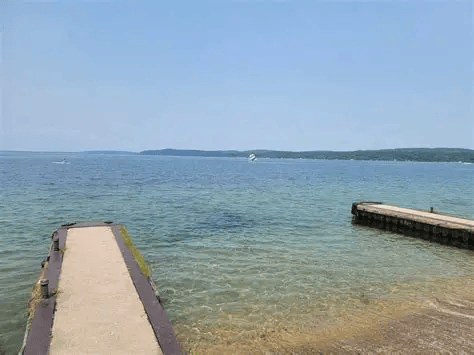
In a world where information is ubiquitous, literally at the tip of the finger in quantity, it’s amazing that the word Chautauqua doesn’t have an authentic, agreed-upon translation. An etymological search will tell you it has Haudenosaunee origins -Haudenosaunee being another name for the Iroquois nation- describing something “tied in the middle”, like a bag, or a pair of shoes by the laces, the general shape of Lake Chautauqua with its northern and southern basins separated by the narrows at Bemus Point and Stow. That crossing is measured in yards, while the widest places, both north and south are around two miles from shore to shore (the lake itself is about seventeen miles end to end). Chautauqua can also refer to everything from indigenous lands in Colorado, to a cultural and educational movement from the late 1800s. That’s a wide swath of interpretation for a single word.

     What’s known is that the Erie Indians who occupied our current borders, the original Chautauqua Lakers, were wiped out of existence (along with no fewer than eight other native tribes), by the French and the Iroquois Nation in the Beaver Wars, massacred or taken hostage by the martial factions. Before the people of Europe settled here, the bucolic landscape we know as Chautauqua County saw a fair share of carnage and bloodshed.

     The speed with which the Iroquois engulfed regional Indian communities meant that no one had time to do an extensive study of the Erie language, and their native tongue died with them. What’s left are loose translations adopted from leftover Iroquois dialect, hence the word Chautauqua has renditions sweeping from the above mentioned “bag tied in the middle” to the vastly different “place where fish are taken.”

Then there’s the romantic, tragic myth of the Erie Indian Princess.

Legend has it her name was Chautauqua. Chat was a French supplied nickname for the Erie people, meaning “cat”, and Taquan which means “spiritually aware and prone to self-sacrifice”. When her people chose to fight the Iroquois rather than surrender, fool’s errand for the agrarian, mostly peaceful Erie tribe, they were destroyed by the fierce and combinative nation, eradicated as a show of force to discourage other tribes from resisting.

Wikipedia says: The Iroquois League was known for adopting captives and refugees into their tribes. Any surviving Erie were absorbed by other Iroquoian tribes, particularly families of the Seneca, the westernmost of the Five Nations. Susquehannock families may also have adopted some Erie, as the tribes had shared the hunting grounds of the Allegheny Plateau and Amerindian paths that passed through the gaps of the Allegheny. The members of remnant tribes living among the Iroquois gradually assimilated to the majority cultures, losing their independent tribal identities.

The Erie Indian people simply went away, and with them any coherent, stipulatory meaning of the word Chautauqua.

The Erie Princess Chautauqua waded deeper into cool waters off Long Point. She looked back at the land she knew, her birthplace and home. She pictured the faces of her family, her father, mother, brave brothers, and sisters. All gone now. She knew they wouldn’t survive the slaughter. There was nothing left for her but to commit the ultimate act of Indian royalty, the last great measure. 

     As the Iroquois warriors (along with French and Haitian mercenaries) approached from land, she turned and walked into the depths of the lake. In an act of defiance and sacrifice she drown herself. And thereby christened the body of water Chautauqua.

Ellicottville, N.Y; An Abolitionist Story

In 1836, the formation of the Cattaraugus County Anti-Slavery Society in Ellicottville marked a bold stand against slavery, reflecting growing abolitionist sentiment in rural western New York.

Ellicottville circa 1879

In 1836 Ellicottville was as a bona fide town in the state of New York, and recognized as the county seat of Cattaraugus County. It has a population of approximately 635 people, pioneers who carved the small burgh out of the wilderness, buying up acreage from the infamous Holland Land Company starting in 1815. The citizens are industrious and self-sufficient. The town boasts a hotel, a school, a church and a tannery. By the 1870s, Ellicottville will have everything a thriving community needs including stores, banks, and professionals like doctors and lawyers.

The citizens are also socially broadminded with foresight and a progressive resolve that makes them distinctive for such a small community. In 1835 the community opened The Ellicottville Female Seminary, one of the first religious schools for women in the United States, a radical cause célèbres that marked Ellicottville as a pocket of liberal activism in southwestern New York.

The Ellicottville School

In the Spring of 1836, a small group of Ellicottville citizens met in the refectory of St. John’s Episcopal Church on the public square. St. John’s was the first Episcopal in Cattaraugus County, a sterling example of early Gothic Revival Church Architecture, uncommon in this region.

     They arrived to hear a lecture from abolitionist speaker Huntington Lyman. He was there on behalf of northern abolitionists, specifically American Anti-Slavery Society, to speak about the evils of slavery. The meeting wasn’t without controversy. Lyman’s talks stirred strong emotions within the burgeoning community.

Lyman studied at Lane Seminary, where he joined the Lane Rebels, a group of students who left the seminary in protest after being banned from discussing slavery. He graduated from Oberlin Seminary in 1836, a hub for progressive thought and abolitionist activism. From there he began his lecture tour, stopping in Ellicottville in April of that year.

Huntington Lyman

Abolitionist sentiment was growing in the North. Organizations like the American Anti-Slavery Society, founded in 1833, were distributing pamphlets, organizing lectures, and flooding Congress with petitions demanding the end of slavery. This was met with fierce resistance from pro-slavery politicians and citizens, especially in the South. This was, after all, the precursor to the bloody Civil War. Slavery was obviously deeply entrenched in the southern United States, and even though it wasn’t a known practice in Ellicottville, it was still legal. At the 1836 meetings some Ellicottville residents supported Lyman, others viewed his presence with trepidation and skepticism, as a threat to public peace. Local debate was intense. The Ellicottville Republican called his lectures “exciting and dangerous,” but Lyman himself was described as a “disturber of the peace”.

     More meetings, more lectures were scheduled, and Lyman persisted. After a few weeks of attracting only a handful of people, a larger gathering was held at the local schoolhouse on April 23, 1836. It was at this assembly, amid heated discussion and public tension, that the Cattaraugus County Anti-Slavery Society was officially formed.

     The impetus and mission of Society was not only to broadcast a very public ethical stance on the practice of slavery, but to communicate and coordinate with the Underground Railroad that passed through the Buffalo-Niagara region.

It is a credible achievement that the people of Ellicottville had the moral capacity to embrace the anti-slavery movement even in small towns far from the political spotlight in big cities like Philadelphia and Chicago. The residents felt compelled to take a moral stand. Their actions reflected a growing awareness that slavery was not just a Southern issue, it was a national one, and silence was complicity.

This article and others can be found published in The Villager Magazine at https://thevillagerny.com/

THE POINT CHAUTATQUA GOLF SITE PROJECT

“I tell ya, country clubs and cemeteries are the biggest waste of prime real estate.”

Al Czervic

It was inevitable, like the waves that lap against the back of seventh green. The land is just too beautiful, just too perfect, just too valuable.

The Chautauqua Point Golf Course, at 5678 East Lake Road in Dewittville sold recently, the second time in just over two years. In February of 2022 The Chautauqua Lake Development LLC of Springville purchased the property for just over a million dollars. They re-listed the property and this past July 2023, The 1200 Group of Buffalo bought the three parcels that made up the golf course for $2.2 million (along with other East Lake Road real estate belonging to the James K. Webb Living Trust, and Webb’s Harbor Restaurant and Bowling Lanes, Inc.).

The 1200 Group is led by Bill Paladino, son of Carl Paladino the ubiquitous Buffalo developer and politician.

The first sale brought to an end a century-long run for the local recreational treasure. With origins dating to 1907, or 1914, depending on which source you reference, the course was the oldest in the county, predating it’s younger, more famous and broader brother from across the lake, The Chautauqua Golf Club by at least ten years. The history of the golf course is a little muddy, but it’s generally agreed that the land was obtained by Henry Clay Fownes, designer of Oakmont Country Club in Pittsburgh, ostensibly to cater to Pittsburgh and Cleveland golfers looking to work on their game while summering on the lake. Oakmont, established in 1903, is regarded as the oldest top-ranked golf course in the United States, and has hosted 20 national golf championships; the U.S, Open is scheduled there in 2025; Chautauqua Point, overlooking the northern basin of the lake had some impressive pedigree. There is a rumor that the famed golf architect Donald Ross had a hand in designing the course, but there’s no indication from The Ross Society that this was the case (he did help design The Chautauqua Golf Club, so it’s possible he took a swing by the point to take a look). The course evolved over the years  into a 9-hole gem, the only golf course that touches the lake, though condominium development over the years squeezed that lakefront border down to a few precious feet directly behind the seventh green.

The weather-dependence and uncertainty of making a golf course profitable, especially in this climate, finally gave way to the economics of developing prime real estate into a more profitable venture; East Lake Road on the lake side land is simply too valuable to leave unused under snow for five months a year. The course has been closed since the sale in 2022, the repurposing of the land unavoidable.

Tom Fox is the Director of Development for the Ellicott Development Company. He is heading up the group looking to turn the old Point Chautauqua Golf Course into a housing community. The project, tentatively called Sunset View at Point Chautauqua, has three distinct sections including single family homes, town houses, and condominium-style residential units.

Ellicott Development Company is out of Buffalo and stands as a prominent figure in Buffalo’s real estate sector. Founded in 1975 by William Paladino, this company has played a pivotal role in transforming Buffalo’s urban landscape through a strategic blend of development, redevelopment, and management. With a focus on enhancing both commercial and residential properties, Ellicott Development has significantly influenced the city’s economic and architectural evolution.

     Ellicott Development Company’s origins are deeply intertwined with the historical development of Buffalo, New York. Established during a period when Buffalo was grappling with economic challenges and urban decay, the company emerged as a beacon of revitalization. The founder, William Paladino, envisioned a future where Buffalo’s historic structures could be repurposed to meet contemporary needs while preserving their architectural integrity. This vision has guided the company’s projects and strategy over the decades.

Mr. Fox recently hosted a meeting for the community. I followed up with Mr. Fox recently on his reaction to that meeting, and how the project will develop in the future.

Q: Your initial meeting with the community got mixed reviews. Some of the locals seemed against the development. Is that how you saw it?

Tom Fox (TF): We were happy to see a big turnout at the recent informational meeting we held on Sunset View.  In our experience, active community interest and input results in a better project.  There were many valid concerns that were raised, many of which will be reflected in revised and more developed plans as we further pursue the required approvals to move the project forward.  Despite a general sense of negativity in the feedback at the meeting, we’ve heard a great deal of positive response as well since that time from those in support and with great interest in the success of our project.  Our vision is to redevelop the property in a way that thoughtfully weaves into the existing community surrounding the former golf course property.

Q: That property served well as a golf course. How do you see it as a housing development?

TF: With its dynamic topography, the property has the benefit of incredible lake views including an orientation to the sunset, hence the development naming.  Sunset View will offer a range of high-quality housing options in an amenity-rich resort-style environment that will be home to year-round residents and weekend vacationers alike.

Q: What are your next steps?

TF: Pending receipt of the necessary approvals, which we will continue to pursue following the mentioned plan revisions, we hope to start work on the initial phase of Sunset View next year.  Completion of all project phases will be guided by market demand.  We anticipate that the completion of all project phases could take several years.

Q: How do people find out more?

TF: Here is our project website, where we have project information posted along a video presentation and an opportunity for those interested to reach out with comments and questions…. Sunset View CLC – A Chautauqua Lake Community

To be sure, though there will continue to be a constituency that will miss the rolling fairways, pristine green space, and quaint clubhouse that was the legendary Chautauqua Point Golf Course.