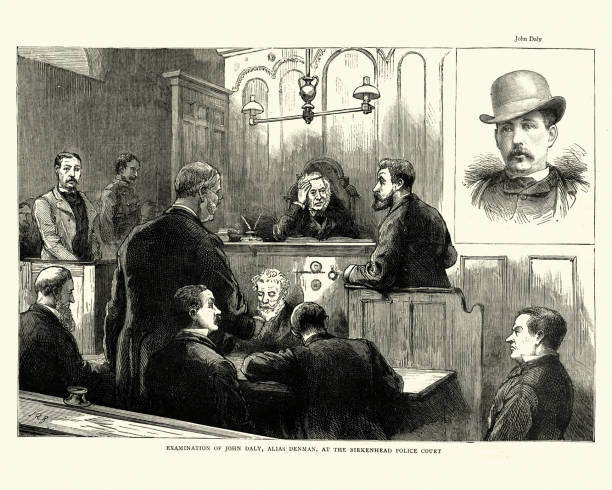
PART II
Until the mid 1800’s public hangings were the standard execution method across the British Empire, and American courts inherited and repeated British sentencing formulas. The phrase “hung from the neck until dead” was a deliberately specific axiom. It described the method and outcome of an execution, meant to prevent misinterpretation, and to standardize capital punishment. The “until dead” part was added when more than one convict survived hanging, a loophole the courts figured needed closed.
As civilization came to realize that capital punishment, especially public displays, was objectionable and sadistic, states began to look for ways to make executions more acceptable to burgeoning humane sensitivities. Hangings, with their tragic relationship to slavery and vigilante stigma (often producing slow strangulation and botched drops) experienced an era of public revulsion.
. . . . .
Joseph Damon was charged with murder in a Fredonia, New York in The Court of Oyer and Terminer -what would become the New York State supreme Court. It was the first recorded case of murder argued in Chautauqua County.
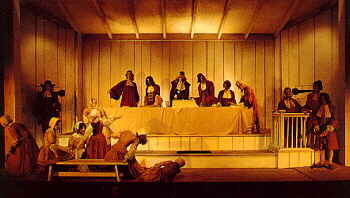
The Court of Oyer and Terminer
Charles French, his defense counsel, used a pre-cursor to the insanity defense, arguing that Damon had no sense of what he was doing when he struck his wife with an iron fire poker – the first plea of innocence by reason of insanity in the County.
The defense, a before-it’s-time sophisticated appeal, didn’t work. Damon was found guilty of murder and sentenced to death.
. . . . .
On May 9th, 1835, a New York Statecommission concluded that hanging was inhumane, and the method of execution was outlawed in the state (death by electrocution took its place). But changing a law and enforcing it throughout the state proved a challenge. When Joseph Damion was hanged in the Mayville village square, May 15th, 1835, newspapers, court officers, and state officials were well aware of the six-day-old law. The sheriff at the time had no real guidance from state officials and determined that his duty was to enforce the sentence as written unless the governor intervened. He did not. Despite the popular opinion that public executions were abhorrent, demand for spectacle remained high.
Damon’s case sat right at this intersection of law-making and law- enforcing, making him the last man publicly executed in the New York.
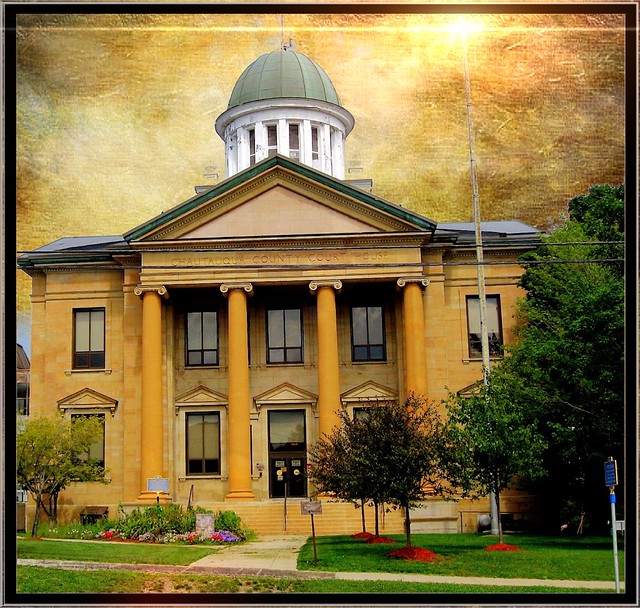
Mayville, New York City Center
The macabre event drew an alarming number of spectators, reports between, 3,000 and 8,000. Gallows were built, and the sheriff prepared for potential chaos, ordering the local militia to appear “completely armed and equipt (sic),” and to “get good music,” meaning to secure a competent military band or fife‑and‑drum corps to help control the crowd. The local newspaper, The Fredonia Censor, called the spectacle “revolting”.
Damon was buried in the Fredonia Pioneer Cemetery, but the story doesn’t end there. Gawkers and vandals frequented the site, enough so that Damon’s brother North Damon guarded the site when he wasn’t stonecutting at the local quarry.
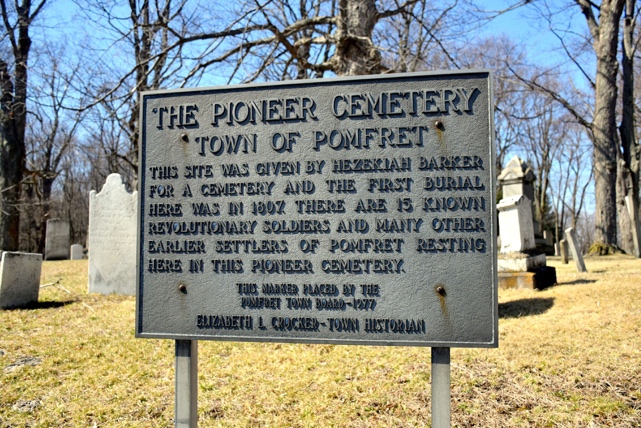
On a night when North wasn’t able to sit vigil, a young doctor and his students secretly exhumed Damon’s body for anatomical study, a practice illegal but not uncommon in the 1830s. Its ultimate fate remains unknown.
. . . . .
The Damon case endures for its shocking brutality in a place where those things simply didn’t happen. It marks, in a single legal case, the limits of medical knowledge, the boundaries of legal responsibility, and the moral cost of public punishment.
Note: The Fredonia Censor attempted to print and keep a verbatim transcript of the trial. There are about 70 pages of the only surviving copy.
The final page is torn away, leaving the ending of the saga fragmentary and controversial.

