CHAUTAUQUA BRIDGE

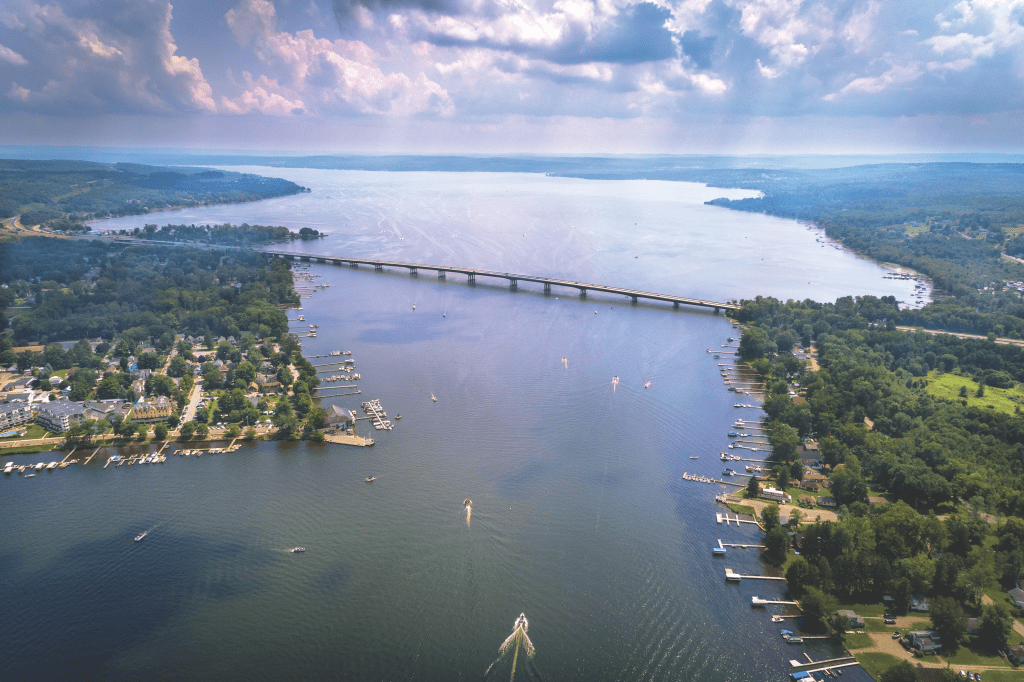
In October of 1982, 726 athletes lined up in Bemus Point with the goal of crossing the lake and back. The lake was much too cold for a swim. The Bemus Pint Ferry was not an option for a Fall 10K race. Fortunately, these runners had a fresh path, brand spanking new pavement, the Chautauqua County Veterans Memorial Bridge.

There was a time when getting from the southern part of Chautauqua Lake to the upper lake was a logistical chore, Mayville to Jamestown was a journey, more than a grocery run. Routes 394 and 430 wrapped the lake, picturesque to be sure, but cumbersome for anyone in a hurry. This was prior to 1982. A drive from Jamestown to Long Point State Park was a common trip, fifteen miles or so up the north side of the lake.

If you then wanted to tour the southwestern coast, Stowe, Chautauqua Institution, or points south, you had one of three options:

  1. Circumnavigate the lake, back through Jamestown, or north around Mayville.
  2. Drive into Bemus, hope to catch the ferry.
    1. The ferry had to be running that day.
    1. The ferry had to be on your side, ready to go to the other side.
    1. You had to be the one of the first ten or so cars in line.

For an intrastate trip through New York, from the west to east you used the I-90 corridor along Lake Erie, all southern cities, Jamestown, Olean, Corning, and east, were accessible by backroads only. What is now Route I86 as a developed interstate highway wasn’t a priority because of that pesky lake blocking any straight run west to east.

That changed in 1982 with the building of the Chautauqua County Veterans Memorial Bridge.

That Fall 10K race in Bemus, launching the opening of the first non-stop vehicle option for getting from one side of the lake to the other, was forty-two years ago, a long time for a bridge. Now it’s in need of a facelift. Or in lieu of a cosmetic revival, some body work.

Enter New York State Department of Transportation and their checkbook.

The state has earmarked $78 million for renovations and structural work on the Chautauqua County Veteran’s Bridge. Another $4.7 million for the local success routes to the bridge off routes 430 and 394. Work began on the main part of the 3,790-foot main span last summer (2023). It’s expected to be completed fall of 2026.

New York State DOT Commissioner Marie Therese-Dominguez was in Chautauqua recently to oversee the start of the project. “It’s going to enhance safety, it’s going to ease travel and it going to extend the service life of these bridges by another 40 years,” she said.

The work being done probably won’t show itself to the casual observer -new bridge joints, fresh decks, bearings, and repaired steel. The roadway will be resurfaced. On and off ramps will have new barriers.

The noticeable part will be the closures and re-routing of traffic to get the job completed. The plan is to work one set of lanes at a time, and only close the entire bridge for short periods during nighttime. Local officials are of course asking people to be patient with the process and disruptions in traffic.

Commissioner Therese-Dominguez says, “It’s going to take a lot of patience but in the end, I think it’s going to be well worth it.”

Governor Hochul released a statement saying, “To ensure that our communities and our economy in all regions of the state continue to grow and prosper, New York state is making investments to strengthen and harden our infrastructure to meet and exceed the challenges of the 21st Century.”

State Sen. George Borrello, R-Irving, thanked Hochul for recognizing the importance of the bridge and the need to bolster the structure. “She is no stranger to Chautauqua County, no stranger to Chautauqua Lake and she knows the importance of it,” he said. “I want to truly thank her for investing in infrastructure around Chautauqua County, particular, this major, major investment in this bridge over Chautauqua Lake.”

Mason Winfield’s

SPIRIT WAY PROJECT

© MASON WINFIELD 2023 SPIRIT WAY PROJECT 2023:

The paranormal expert/examiner/medium/TV personality steps boldly into the house/barn/cellar/church, the one that locals say is haunted, the site that bumps in the night. An audio-visual crew follows diligently. They pack equipment designed to detect the undetectable, to record the mysteries within; a ghostly apparition, a supernatural aura, a sixth sense.

And…CUT

PRINT

Mason Winfield has a deep and abiding interest in the paranormal. It’s been his life work (as evidenced by his vitae on his website http://www.masonwinfield.com). He’s a lecturer, author, storyteller, scientist. He is not, by his own reconning, a “ghost-hunter.” If there’s a profession that informs and directs his attention and talents, it’s probably best described as “Truth Seeker”.     

He believes it’s time for the industry to innovate, to broaden its influence. “If there’s a possible way to the truth, you have to take it, don’t you?” he says.

To accomplish this, Winfield seeks to employ a field of multidisciplinary professionals, people different in cultural and thematic sensibilities, to explore ancient spaces, areas of the northeastern United States that have universally experienced what he calls “EHE”, Exceptional Human Experiences. “Why do people say they see the thigs in the paces they do?” Winfield asks.    

It’s a query he hopes to answer with The Spirit Way Project.

Designed like the popular European group The Dragon Project, The Spirit Way uses the resources of scientific and paranormal disciplines to research the undeniably interesting and real world of EHE.

Winfield says, “The reality-TV paranormal industry typically studies buildings no more than a century-old–as though haunted sites are sensational and rare, no more original ones can be found, and paranormal sightings occur only indoors. It also barrages us with two perspectives, either intuitive–psychic–insights or surveillance ghost-hunting, as though using electronic and digital instruments as a glorified Ouija board is some objective avenue to the truth–and no other avenues of insight are available.”

Differentiating from the television shows you night have seen, The Spirit Way is basically a two-fold approach to supernatural investigation; using ancient resources to identify sites of EHE that have survived and inspired humans for centuries (think Native American history and collective consciousness), and to coordinate with any and every discipline to develop a coherent and multi-faceted theory of those experiences. So far, the group has employed:

A Feng-Shui Master, an Algonquin Elder, an African-American psychic medium, an author/researcher/paranormalist, a psychologist, two master dowsers, local scholars, historians, anthropologists, geologists, First Nations leaders, aerial surveillance experts, and team of paranormal investigators.

The goal of the team is to examine sites of reported Exceptional Human Experiences through the disciplines of geometry, shape (symbolic form), geology (earth-energies), archaeo-astronomy (an awareness of sunrises, moonrises, equinoxes, and solstices), and alignments across broad stretches of landscape to suggest codes if not messages.

“It’s been a challenge. There are no upstate surveys of supernatural events; national, but not local. All anyone can agree on is that these monuments had sacred function–and that, like Stonehenge and the Great Pyramid and a worldwide league of others, they are paranormal sites. In their proximity, people report exceptional experiences. Just like a haunted house–though vastly grander and more profound–these ancient American sacred sites get a lot of ghost stories.”

Winfield lives in East Aurora, and understands the newer supernatural phenomenon in Western, New York. Along with his partner, and co-founder of The Spirit Way project, Algonquin Elder Michael Bastine, who Winfield calls one of the best teachers in the world on the subject of native supernatural history, the goal is to broaden the scope of their studies to the ancient world.

“The ancient monuments of the British Isles have been preserved and studied,” Winfield says,” We want to start a new model of north American haunted sites, ancient places, not buildings, hut rather the outdoor sites, real study from different perspectives.”

The Spirit Way will start with a program of fifteen YouTube episodes in New York State.

Winfield concludes, “There is more to the paranormal. The Spirit Way Project (SWP) believes it’s time for a revolution. We think the public thirsts it.”

Home of Lucy Hosts The Babe!

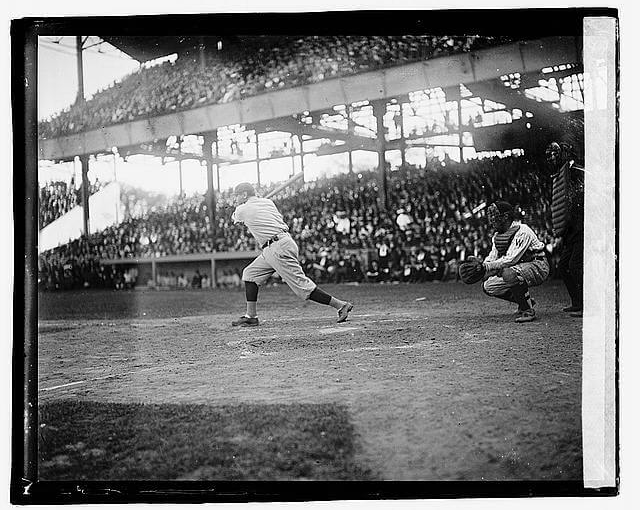
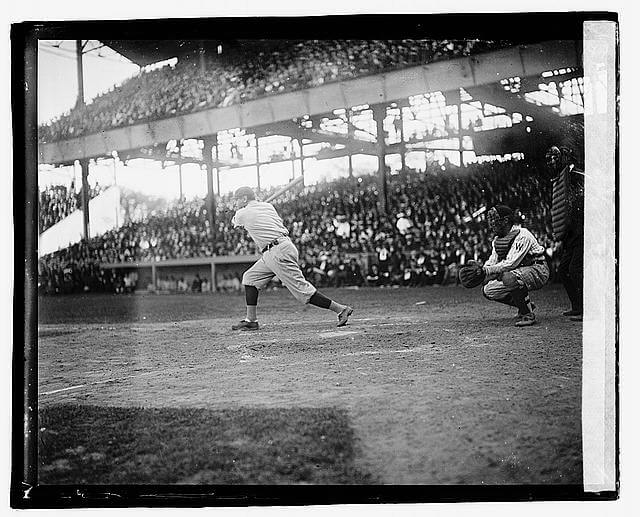
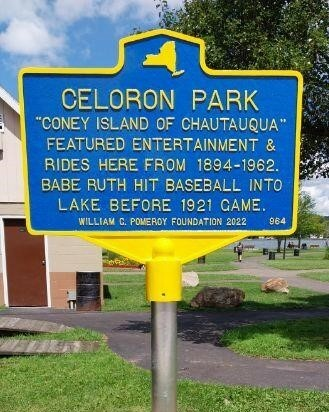
The little league baseball field at Celoron Park sits by the Chadakoin River that drains Chautauqua Lake on its southern end. Hit a baseball far enough into right field there and it could theoretically, eventually, spit out in the Gulf of Mexico some eleven-hundred miles downstream. The field is built for little league players, shortened base paths and pitcher’s mound. It’s also, as legend has it, where Babe Ruth once stood and hit a baseball into the Chadakoin River, some five hundred feet from home plate.

Except that isn’t exactly the place. The Babe belted the celebrated ball, but not quite where kids hit baseballs today. And he only did it in batting practice, not in an actual game.

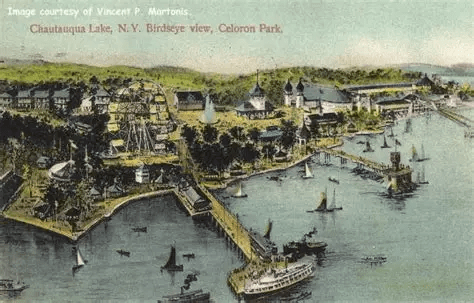
Jump in your car, drive to the village of Celoron. Take the low roads, close to the water. From the west, you’ll trace the southern basin of Chautauqua Lake along Lakeside Drive, rounding onto Jackson Avenue. Keep your eyes and imagination open, lay all this land bare, take out the lakefront houses on Longview Road, take out Ellicott Shore Apartments. Take out the streets, take out the trees. Turn those acres into a vast island of green grass. Now put up a grandstand and a backstop, place bases ninety feet apart in a square, a mound sixty-feet, six-inches from the plate. Here you have Celoron baseball park circa 1921, when The Babe came to town.

When travel was more cumbersome than it is today, Western New York emerged as a convenient stop between Cleveland, Erie, and Buffalo. Celoron Park opened in 1895 and featured, at various times four major hotels and fifteen rooming houses, a bathhouse three stories tall with three toboggan slides, a barber shop, a hundred and fifty dressing rooms, a bowling alley, billiards rooms, shooting gallery, ice-cream parlor, an auditorium with Turkish spires five stories high that seated almost nine thousand. In the winter the floors were flooded for ice skating. A Theaterextended over the water and hosted dances, stage performances and vaudeville acts. The Phoenix Wheel, the world’s largest Ferris wheel, was ten stories tall with twelve cages, able to hold 168 thrilled passengers. The wooden Greyhound Roller Coaster hadthree loops and six-thousand lights.

George Maltby is the Celoron Park supervisor in 1921. He’s small, maybe 5’5”, wispy and fidgety, in charge of programming. He’s known locally for his bright attire, belted high-waisted jacket with wide lapels, narrow trousers, bright white suspenders, herringbone fedora, and deep red sideburns and mustache. He is the man most responsible for the headline in the Jamestown Morning Post October 18th; Babe Ruth To Play Here, and below that, Home Run King, Bob Meusel And Piercy In Exhibition Game At Celoron Tuesday. It is a big undertaking to bring an attraction of this size and importance to Celoron, but Mr. Maltby, after posting a big guarantee decided to take a chance. Celoron Park will be filled to capacity, packed with men in double-breasted vests and single-breasted jackets, boys in knickers and flat hats, women in flapper dresses, drape hats, and bobbed hair. Horses, carriages and Model T’s clog the street. The ten-story Ferris wheel towers over the exhibition, patrons with vintage folding Kodak cameras ride to the top and record the spectacle, 1920’s version of a drone fly-by. The bustle is electric, dampened only by a light rain, muffling voices and footprints. Steamboats unload more Roaring 20’s characters at a huge public dock.

The game is anti-climactic compared to the spectacle and the memories. The big man does indeed hit a ball into the lake, but it’s during batting practice. A young boy retrieves the ball, keeping it from the thousand-mile journey to salt water.

Celoron today is a moderate lake-side city, roads lightly traveled, simple commerce and functional government buildings replace the epic bounty of Celoron Park. But the lake and the Chadakoin are the same as that day in 1921, with newer water; the steadfast shores, the current flow and shape of the outlet are fixed.

And if you listen close, the waters whisper of great days past, confident in its pedigree. If it could talk it might tell a story about the days when Celoron Park ruled the world of entertainment, and that day in October almost a century ago, when the Sultan of Swat stormed its shores.

Mars Inc. And Culture Wars

A cultural question of stereotypes and branding for you.

A while ago Quaker Oats and Mars Inc. rebranded their two most iconic brands, Aunt Jemima, and Uncle Ben in direct response to the 2020 George Floyd choking tragedy. The legacies of those brands are both widely considered to be Antebellum representations of slavery (calling freed slaves aunt and uncle was a way to avoid having to call them Mr. or Mrs.). The trademark pictures evoke vision of blacks as servants, Jemima in a scarf, Ben in a bow tie. Removing those characters from public consumption, can be considered a reasonable reaction.

It doesn’t seem complicated, but it is. The topic is incredibly nuanced. But I do believe the discourse surrounding the controversy can raise some pointed questions for reasonable discussion. My thoughts, admittedly brief in the lines I here, are these.

-Does the statute of limitations run out on racial stereotypes? I have a solid sense that those icons have historically dubious implications. But my children don’t. Their children won’t. To them, the characters on the box mean pancakes and something they don’t like for dinner (rice); they are vague pictures on packaging that triggers the idea of quality. Do we who know the story have an obligation to relate what those icons might mean? To what end?

-Is racism, or bigotry a deeply personal thing, or can it be the purview of another person or body politic. Can you outsource offense? Isn’t that a mild form of bigotry in itself?

     What if bigotry against me (in my case, think ageism) doesn’t bother me but offends others. In that case, what do I owe my station (my old brothers and sisters)? Should I pre-empt intolerance that might some day affect me? Do I need to get involved? If so, when, and for whom? Do I owe that feeling of offense to other groups that are discriminated against?

-The Aunt Jemima and Uncle Ben’s brands (along with others like Cream of Wheat, and Mrs. Butterworth’s), have for years been accused of using racial stereotypes to sell food. It shouldn’t have taken Floyd’s murder, caught on camera, for Quaker Oats to decide their brand were racially nuanced.

     I assume multi-billion-dollar corporations follow paths of least resistance for the sale of their products; they rarely set cultural or moral ideals, they follow them in the market. Changing the logo on a brand, and claiming it has something to do with a social contract, while possibly coincidentally true, isn’t a driving force for such a business transaction as the sale of food product. Quaker Oats and Mars, Inc. didn’t change logos because those icons had basic racial overtones. They changed because they believed it would sell more syrup and oats to more people (or at least that they’d sell the same amount and get some publicity and social credit in the balance).

     But what if the face of that brand doesn’t believe that the brand they represent is a racial offense, or that at least a discussion about it is warranted?

     The family of the Lillian Richard, who portrayed Aunt Jemima, has a different take. While they support the Black Lives Matter movement that generated the brand change, they would still like to celebrate the idea that their ancestor played an important part of history.

     “All of the people in my family are happy and proud of Aunt Lillian and what she accomplished,” says Vera Harris, Richard’s niece. “Erasing my Aunt Lillian Richard would erase a part of history.”

     In the case of Quaker Oats, the Harris family has an idea that would satisfy a desire to maintain the legacy of their aunt, and to deliver a message of education and reverence to the women who came before her. They suggest a commemorative box to recognize the many women who portrayed Aunt Jemima over the years. A box that would include a photo of her aunt dressed as Aunt Jemima with the scarf, along with a photo of Richard looking like herself to show people a complete picture.

Seems like asking the people involved is a good place to start.

The Princess Chautauqua

She knelt by the water, where the tip of Long Point State Park reaches out into Chautauqua Lake. In the small hills behind the peninsula, up where what is now Ellery Center, fires burned, screams and whoops echoed up and down the bluff. This was the end, the dying gasp of a people, of an identity, of her tribe. Anyone who survived the slaughter would be taken into slavery by the marauders.

She was trapped on this narrow spit of land. She could swim across the narrows to the other side of the lake, but there was really no escape, they’d be waiting by the time she reached shore. She couldn’t go back the way she came, there was only one path that led to the opening of the point.

She waded into the shallows.

In a world where information is ubiquitous, literally at the tip of the finger in quantity, it’s amazing that the word Chautauqua doesn’t have an authentic, agreed-upon translation. An etymological search will tell you it has Haudenosaunee origins -Haudenosaunee being another name for the Iroquois nation- describing something “tied in the middle”, like a bag, or a pair of shoes by the laces, the general shape of Lake Chautauqua with its northern and southern basins separated by the narrows at Bemus Point and Stow. That crossing is measured in yards, while the widest places, both north and south are around two miles from shore to shore (the lake itself is about seventeen miles end to end). Chautauqua can also refer to everything from indigenous lands in Colorado, to a cultural and educational movement from the late 1800s. That’s a wide swath of interpretation for a single word.
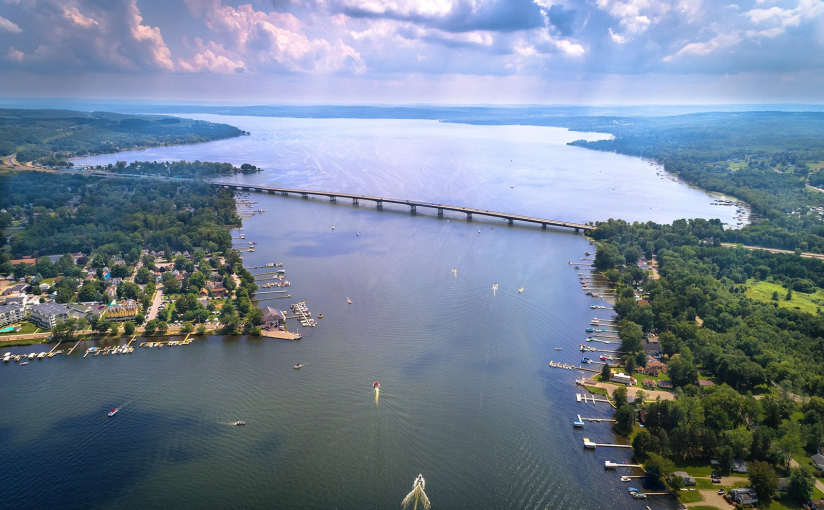
     What’s known is that the Erie Indians who occupied our current borders, the original Chautauqua Lakers, were wiped out of existence (along with no fewer than eight other native tribes), by the French and the Iroquois Nation in the Beaver Wars, massacred or taken hostage by the martial factions. Before the people of Europe settled here, the bucolic landscape we know as Chautauqua County saw a fair share of carnage and bloodshed.

     The speed with which the Iroquois engulfed regional Indian communities meant that no one had time to do an extensive study of the Erie language, and their native tongue died with them. What’s left are loose translations adopted from leftover Iroquois dialect, hence the word Chautauqua has renditions sweeping from the above mentioned “bag tied in the middle” to the vastly different “place where fish are taken.”

Then there’s the romantic, tragic myth of the Erie Indian Princess.

Legend has it her name was Chautauqua. Chat was a French supplied nickname for the Erie people, meaning “cat”, and Taquan which means “spiritually aware and prone to self-sacrifice”. When her people chose to fight the Iroquois rather than surrender, fool’s errand for the agrarian, mostly peaceful Erie tribe, they were destroyed by the fierce and combinative nation, eradicated as a show of force to discourage other tribes from resisting.

Wikipedia says: The Iroquois League was known for adopting captives and refugees into their tribes. Any surviving Erie were absorbed by other Iroquoian tribes, particularly families of the Seneca, the westernmost of the Five Nations. Susquehannock families may also have adopted some Erie, as the tribes had shared the hunting grounds of the Allegheny Plateau and Amerindian paths that passed through the gaps of the Allegheny. The members of remnant tribes living among the Iroquois gradually assimilated to the majority cultures, losing their independent tribal identities.

The Erie Indian people simply went away, and with them any coherent, stipulatory meaning of the word Chautauqua.

The Erie Princess Chautauqua waded deeper into cool waters off Long Point. She looked back at the land she knew, her birthplace and home. She pictured the faces of her family, her father, mother, brave brothers, and sisters. All gone now. She knew they wouldn’t survive the slaughter. There was nothing left for her but to commit the ultimate act of Indian royalty, the last great measure. 

     As the Iroquois warriors (along with French and Haitian mercenaries) approached from land, she turned and walked into the depths of the lake. In an act of defiance and sacrifice she drown herself. And thereby christened the body of water Chautauqua.

Chautuaqua Lake Sailing Challenges

Printed in The Villager May 2024

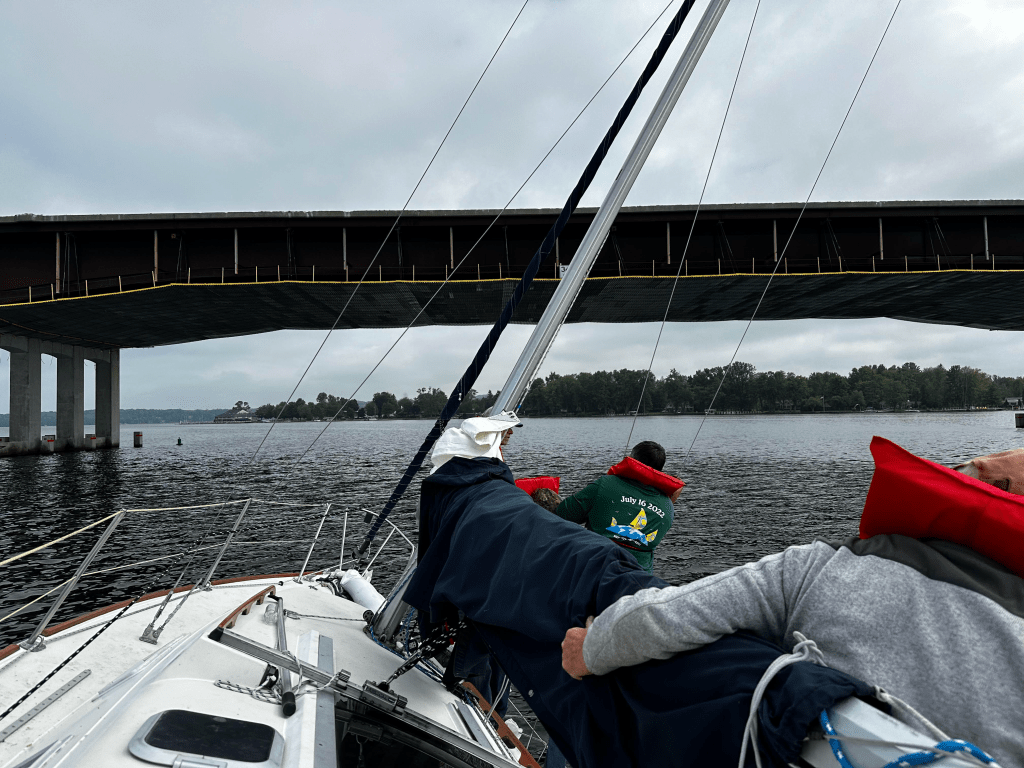
Were you passing on I-86 across the Chautauqua Memorial bridge last Monday morning, you would have been challenged to keep your vehicle between the narrow cement barriers that funnel traffic from the work being done on the overpass. In the water, the scene looked like the run-up to a catastrophe.

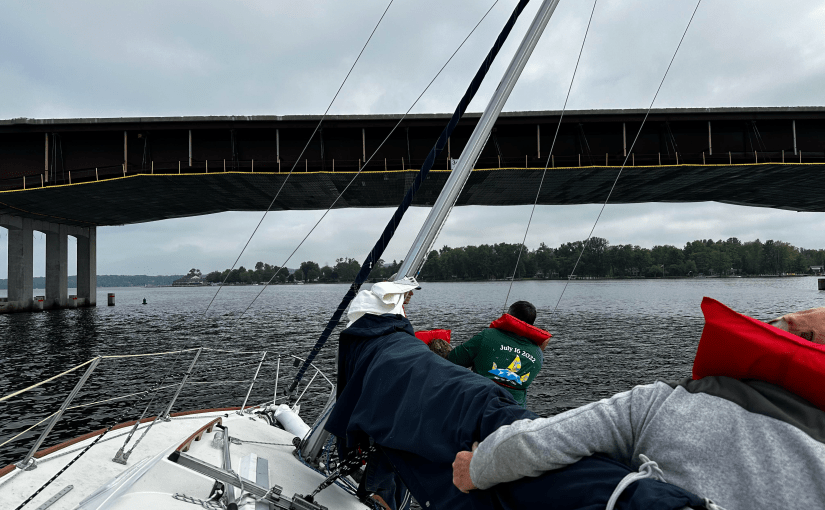
A large sailboat, named Trumpeter, sails stowed, steamed toward the center underpass, the highest point of passage under the bridge. The boat listed precariously to the starboard. If you weren’t familiar with the design of sailboats, their ability to heel at severe angles balancing tall masts with underwater keel and rudder, you’d be forgiven for believing you were about to witness the capsizing of the vessel.

But Trumpeter was under complete control by her captain, Greg Swan, principal owner of Ready About Sailing, the marina and boat sale business based in Celoron. She was tipped on her side intentionally, using 1,100 pounds of sandbags and four hearty shipmates to pass under the bridge whose clearance has now been reduced to 34’8” from its original 40’2”.
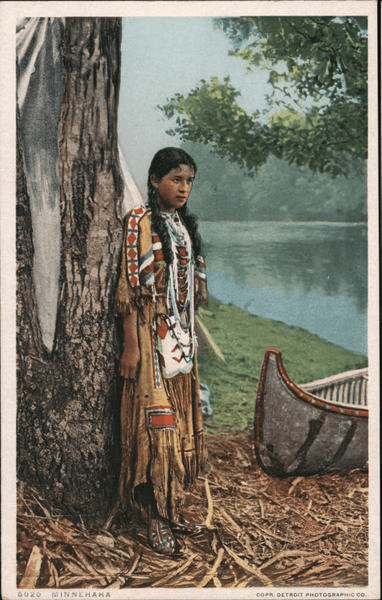
“Most of the twenty or so larger sailboats on Lake Chautauqua are stored at Ready About Sailing marina in Celoron during the winter,” Greg says. “In the Spring, we launch the boats, raise the masts, and then the boats are transported to the north basin where they are moored or docked for the summer. These sailors have always enjoyed free passage beneath the bridge.”

Deadheading sailboats from one basin of the lake to the other used to be a relatively easy process. Not anymore.

“The bottom line here is that the engineers that designed the bridge reconstruction project apparently failed to do their due diligence when deciding how the safety netting would be erected under the bridge to catch anything that might otherwise fall into the lake. They apparently did not consider sailboats during the design phase.”

The safety netting has lowered the clearance under the bridge by nearly 5 ½ feet. A sailboat that once had six feet of room under the bridge at flood level, now has less than one. And it will take some brilliant and daring seamanship to get from one side to the other until that clearance is lifted, which, according to New York State, won’t happen until the bridge is completed, a two-to-three-year period if every single thing goes according to plan.
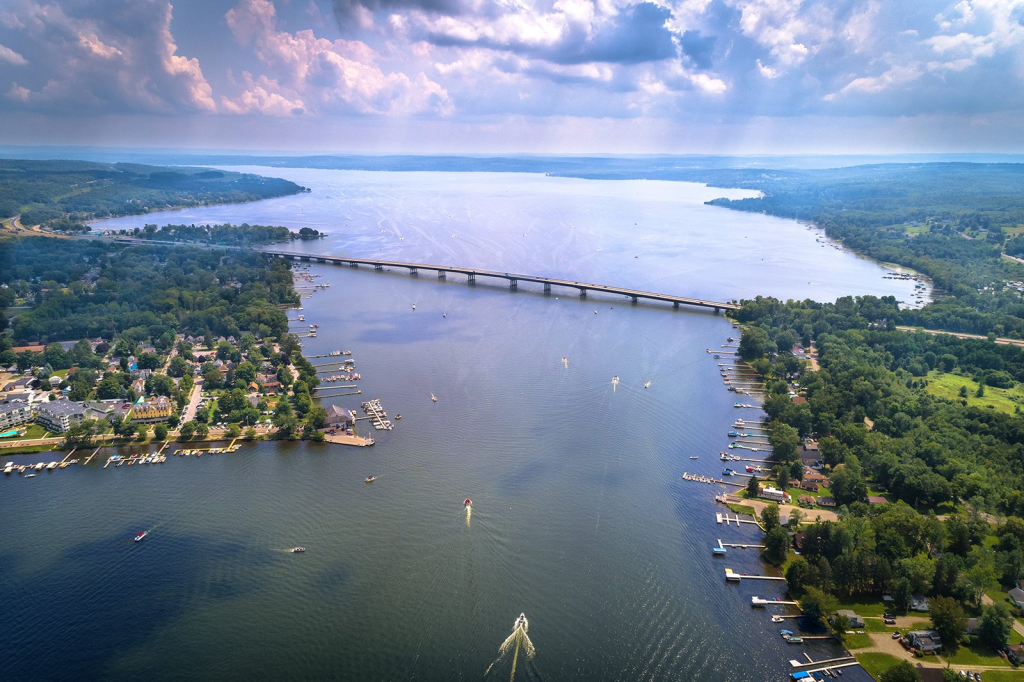
Greg says,” What we are left with is an obstruction to sailing the full length of the lake for the duration of the bridge project.”

In order to transport his larger sailboat, Greg had to be creative and rely on his considerable boating skills to get Trumpeter to the north basin mooring. This was with the lake about two feet below flood level. A higher lake level or more wave and wind action would make the maneuver nearly impossible. “You’ve essentially taken half the lake away for use from these size boats,” Greg says.
     There are twenty or so such sailing vessels he knows of that use the lake (well, now, half the lake). “The obstruction at the bridge has already caused multiple long-time Lake Chautauqua sailors to decide to sell their boats and give up the sport. This is tragic, especially since it could have been prevented if the right questions were asked to the right people before starting construction.”

The netting was a multi-million-dollar part of the overall bridge project, a necessary safety design to keep boaters safe from inevitable falling debris. Greg contacted the Department of Transportation in Buffalo to look for a solution. They were receptive, empathetic, but no help. “As the netting system was designed, there would be no way to remove the netting from even a single span to allow for sailboats to pass. And, the DOT has decided that it would be too expensive to retrofit.”

The NYS DOT was contacted for clarification. Here is the response from Susan Surdej, Assistant to Regional Director and Regional Public Information Officer for New York State Department of Transportation, Region 5:

The bridges carrying Interstate 86 over Chautauqua Lake are 100 percent safe for motorists.  Out of an abundance of caution, the Department is re-evaluating plans for the safest, most efficient removal of concrete from the bridges carrying Interstate 86 over Chautauqua Lake. Occasional overnight closures are expected with a project of this size, but there are currently no plans for long-term closures. NYSDOT will keep the public apprised on any changes in the construction schedule once the evaluation is complete. 

There was no response addressing the sailboat issue.

Ellicottville, N.Y; An Abolitionist Story

In 1836, the formation of the Cattaraugus County Anti-Slavery Society in Ellicottville marked a bold stand against slavery, reflecting growing abolitionist sentiment in rural western New York.

Ellicottville circa 1879

In 1836 Ellicottville was as a bona fide town in the state of New York, and recognized as the county seat of Cattaraugus County. It has a population of approximately 635 people, pioneers who carved the small burgh out of the wilderness, buying up acreage from the infamous Holland Land Company starting in 1815. The citizens are industrious and self-sufficient. The town boasts a hotel, a school, a church and a tannery. By the 1870s, Ellicottville will have everything a thriving community needs including stores, banks, and professionals like doctors and lawyers.

The citizens are also socially broadminded with foresight and a progressive resolve that makes them distinctive for such a small community. In 1835 the community opened The Ellicottville Female Seminary, one of the first religious schools for women in the United States, a radical cause célèbres that marked Ellicottville as a pocket of liberal activism in southwestern New York.

The Ellicottville School

In the Spring of 1836, a small group of Ellicottville citizens met in the refectory of St. John’s Episcopal Church on the public square. St. John’s was the first Episcopal in Cattaraugus County, a sterling example of early Gothic Revival Church Architecture, uncommon in this region.

     They arrived to hear a lecture from abolitionist speaker Huntington Lyman. He was there on behalf of northern abolitionists, specifically American Anti-Slavery Society, to speak about the evils of slavery. The meeting wasn’t without controversy. Lyman’s talks stirred strong emotions within the burgeoning community.

Lyman studied at Lane Seminary, where he joined the Lane Rebels, a group of students who left the seminary in protest after being banned from discussing slavery. He graduated from Oberlin Seminary in 1836, a hub for progressive thought and abolitionist activism. From there he began his lecture tour, stopping in Ellicottville in April of that year.

Huntington Lyman

Abolitionist sentiment was growing in the North. Organizations like the American Anti-Slavery Society, founded in 1833, were distributing pamphlets, organizing lectures, and flooding Congress with petitions demanding the end of slavery. This was met with fierce resistance from pro-slavery politicians and citizens, especially in the South. This was, after all, the precursor to the bloody Civil War. Slavery was obviously deeply entrenched in the southern United States, and even though it wasn’t a known practice in Ellicottville, it was still legal. At the 1836 meetings some Ellicottville residents supported Lyman, others viewed his presence with trepidation and skepticism, as a threat to public peace. Local debate was intense. The Ellicottville Republican called his lectures “exciting and dangerous,” but Lyman himself was described as a “disturber of the peace”.

     More meetings, more lectures were scheduled, and Lyman persisted. After a few weeks of attracting only a handful of people, a larger gathering was held at the local schoolhouse on April 23, 1836. It was at this assembly, amid heated discussion and public tension, that the Cattaraugus County Anti-Slavery Society was officially formed.

     The impetus and mission of Society was not only to broadcast a very public ethical stance on the practice of slavery, but to communicate and coordinate with the Underground Railroad that passed through the Buffalo-Niagara region.

It is a credible achievement that the people of Ellicottville had the moral capacity to embrace the anti-slavery movement even in small towns far from the political spotlight in big cities like Philadelphia and Chicago. The residents felt compelled to take a moral stand. Their actions reflected a growing awareness that slavery was not just a Southern issue, it was a national one, and silence was complicity.

This article and others can be found published in The Villager Magazine at https://thevillagerny.com/

THE POINT CHAUTATQUA GOLF SITE PROJECT

“I tell ya, country clubs and cemeteries are the biggest waste of prime real estate.”

Al Czervic

It was inevitable, like the waves that lap against the back of seventh green. The land is just too beautiful, just too perfect, just too valuable.

The Chautauqua Point Golf Course, at 5678 East Lake Road in Dewittville sold recently, the second time in just over two years. In February of 2022 The Chautauqua Lake Development LLC of Springville purchased the property for just over a million dollars. They re-listed the property and this past July 2023, The 1200 Group of Buffalo bought the three parcels that made up the golf course for $2.2 million (along with other East Lake Road real estate belonging to the James K. Webb Living Trust, and Webb’s Harbor Restaurant and Bowling Lanes, Inc.).

The 1200 Group is led by Bill Paladino, son of Carl Paladino the ubiquitous Buffalo developer and politician.

The first sale brought to an end a century-long run for the local recreational treasure. With origins dating to 1907, or 1914, depending on which source you reference, the course was the oldest in the county, predating it’s younger, more famous and broader brother from across the lake, The Chautauqua Golf Club by at least ten years. The history of the golf course is a little muddy, but it’s generally agreed that the land was obtained by Henry Clay Fownes, designer of Oakmont Country Club in Pittsburgh, ostensibly to cater to Pittsburgh and Cleveland golfers looking to work on their game while summering on the lake. Oakmont, established in 1903, is regarded as the oldest top-ranked golf course in the United States, and has hosted 20 national golf championships; the U.S, Open is scheduled there in 2025; Chautauqua Point, overlooking the northern basin of the lake had some impressive pedigree. There is a rumor that the famed golf architect Donald Ross had a hand in designing the course, but there’s no indication from The Ross Society that this was the case (he did help design The Chautauqua Golf Club, so it’s possible he took a swing by the point to take a look). The course evolved over the years  into a 9-hole gem, the only golf course that touches the lake, though condominium development over the years squeezed that lakefront border down to a few precious feet directly behind the seventh green.

The weather-dependence and uncertainty of making a golf course profitable, especially in this climate, finally gave way to the economics of developing prime real estate into a more profitable venture; East Lake Road on the lake side land is simply too valuable to leave unused under snow for five months a year. The course has been closed since the sale in 2022, the repurposing of the land unavoidable.

Tom Fox is the Director of Development for the Ellicott Development Company. He is heading up the group looking to turn the old Point Chautauqua Golf Course into a housing community. The project, tentatively called Sunset View at Point Chautauqua, has three distinct sections including single family homes, town houses, and condominium-style residential units.

Ellicott Development Company is out of Buffalo and stands as a prominent figure in Buffalo’s real estate sector. Founded in 1975 by William Paladino, this company has played a pivotal role in transforming Buffalo’s urban landscape through a strategic blend of development, redevelopment, and management. With a focus on enhancing both commercial and residential properties, Ellicott Development has significantly influenced the city’s economic and architectural evolution.

     Ellicott Development Company’s origins are deeply intertwined with the historical development of Buffalo, New York. Established during a period when Buffalo was grappling with economic challenges and urban decay, the company emerged as a beacon of revitalization. The founder, William Paladino, envisioned a future where Buffalo’s historic structures could be repurposed to meet contemporary needs while preserving their architectural integrity. This vision has guided the company’s projects and strategy over the decades.

Mr. Fox recently hosted a meeting for the community. I followed up with Mr. Fox recently on his reaction to that meeting, and how the project will develop in the future.

Q: Your initial meeting with the community got mixed reviews. Some of the locals seemed against the development. Is that how you saw it?

Tom Fox (TF): We were happy to see a big turnout at the recent informational meeting we held on Sunset View.  In our experience, active community interest and input results in a better project.  There were many valid concerns that were raised, many of which will be reflected in revised and more developed plans as we further pursue the required approvals to move the project forward.  Despite a general sense of negativity in the feedback at the meeting, we’ve heard a great deal of positive response as well since that time from those in support and with great interest in the success of our project.  Our vision is to redevelop the property in a way that thoughtfully weaves into the existing community surrounding the former golf course property.

Q: That property served well as a golf course. How do you see it as a housing development?

TF: With its dynamic topography, the property has the benefit of incredible lake views including an orientation to the sunset, hence the development naming.  Sunset View will offer a range of high-quality housing options in an amenity-rich resort-style environment that will be home to year-round residents and weekend vacationers alike.

Q: What are your next steps?

TF: Pending receipt of the necessary approvals, which we will continue to pursue following the mentioned plan revisions, we hope to start work on the initial phase of Sunset View next year.  Completion of all project phases will be guided by market demand.  We anticipate that the completion of all project phases could take several years.

Q: How do people find out more?

TF: Here is our project website, where we have project information posted along a video presentation and an opportunity for those interested to reach out with comments and questions…. Sunset View CLC – A Chautauqua Lake Community

To be sure, though there will continue to be a constituency that will miss the rolling fairways, pristine green space, and quaint clubhouse that was the legendary Chautauqua Point Golf Course.

MISSED OPPORTUNITY

Seventy-five is a whole lot of years.

So was fifty.

In the year 2000 I was the director of athletics at Jamestown Community College. I replaced Greg Fish who ran the department for like a hundred years before me.

Big shoes to fill (figuratively, trust me).

With the help of a lot of college personnel (including assistant AD Kathy Stedman), Jim Riggs of the Post Journal, and some long-timers in the JCC admin building, we created the first ever Hall of Fame for Jayhawk Athletics. We did it on the 50th Anniuversary of the college, established in 1950.  It’s one of the achievements at the college, as a Jayhawk, that I’m most proud of. The event we put together was comprehensive, a day that featured a barbeque, events for the fifty top athletes and their families, fans and guests, a picnic, a beer tent, and commemorative items. JCC maintenance set uip the event in the 100 Acre Lot just off main campus, they built a stage for the top 50 Jayhawks athletes of all time.

 To help keep bias from the selection, the athletes were nominated by the public. A list was compiled and voted on by a committee. Jim Riggs from the Post Journal was critical to the process, helping with research, publicizing the nomination methodology, and compiling votes. It was a long and well-conceived series of decisions that led to the Hall of Fame, we did not take the responsibility lightly.

In the inaugural year, 2000, one by one I announced these highly accomplished JUCO athletes, reading off their achievements in a Let’s Get Ready to Rumble presentation. One by one those that attended the ceremony mounted the stage and took a seat. It was exciting, it was fun, it was my honor to acknowledge and celebrate them.

I’m sure we missed a few deserving ‘Hawks, and we mis-ranked others. But this movement was meant to be a start, leaving a future path to add athletes to the list. It was supposed to be the beginning of a tradition, a way to gather the athletes from the college and celebrate their achievements, the way most colleges do around the country.   

The next year, we added Jim Riggs and George Bataitis to the Hall of Fame. We hosted a small ceremony, a fund-raising 5K footrace around campus, and a small gathering after. Another good day, another good celebration of Jayhawks. We showcased all 52 names on a board in the facility under the title, Best Jayhawks of all Time.

Then the concept of a Hall of Fame died. The momentum from the previous years vanished in indifference, by the college administration that was needed to support the effort, by the department of athletics that was discouraged with that lack of support. When I retired from the athletics department, and moved to full time Director of Facilities, the Hall of Fame was a memory.

It was a shame.

This year, with another quarter century gone, the JCC Athletics Department resurrected the idea of a Hall of Fame event, to celebrate the 75th anniversary of athletics at the college.

I was not invited to the event. Neither was Greg Fish, or Kathy Stedman or anyone from that original event (Mr. Riggs and Mr. Bataitis have both passed). My national championship golf team in 2000 was not recognized (25th anniversary). No Regional Champions were asked to attend. No coaches from the past, no teams that won championships and set records, no All-Americans, no academic All Americans.

How soon they forget, no? How soon the people who stand on the shoulders of giants believe they are giants themselves. It was a wasted opportunity, by a dismissive, slapdash operation.

It was shame.

SPORT IN JAMAICA

(First published March 2018)

If you ever doubt the global blanket of sports television, just know there’s something called ESPN Caribbean.  There’s and ESPN Asia, Australia, Brazil, and ESPN-UK too.  To my research there is no ESPN-Siberia yet. The ESPN Caribbean network airs in 32 countries, including one I visited recently.  ESPN Caribbean SportsCenter in Jamaica features sports like America’s Cup yacht racing, grand slam tennis, a little golf, something called Netball (the “Jamaican Sunshine Girls” team is currently ranked third in the world), and a whole lot of soccer and cricket.  There is most certainly MLB, NBA and NFL action, but not before you wade through scores and highlights of the Caribbean Premier League, the Caribbean Super 50, the Karbonn Smart League, the English Premier League, German Bundesliga, Spanish La Liga, Italian Serie A Soccer, and the uber-important International Cricket Council with its wickets, nurdles, and wicked googlies.  If I could name a single famous cricketer, Jamaican or otherwise, I would do it here.  I can’t, but I do know that Patrick Ewing was born in Kingston, Jamaica and excelled at that game along with soccer.  Jamaican icon Bob Marley was supposed to be excellent on a football pitch.

Usain Bolt currently dominates the Jamaican sports scene, as much as a single athlete can; the fastest human in the history of the world will tend to capture the attention of the nation in which he has born. 

He is relatively absent in the media, as Jamaicans seem to love their sports and sporting action more than they worship their sportsmen and women.  Bolt adorns a few roadside billboards, shilling for cell services and energy drinks, but other than that he’s not as ubiquitous as you’d think.  Opposite of the U.S. where we tend to define the performance by the performer, and an athlete like LeBron James can shake the rust off the belt of a once-proud city like Cleveland with one moving van full of sneakers, tank tops, and elbow pads (c’mon Buckeyes, he didn’t cure cancer, he plays basketball).  On a short bus trip from Montego Bay (the inspiration of The Beach Boys, Bobby Bloom and Jimmy Buffet) to Falmouth in Trelawny Parish (where James Bond jumped a speed boat onto a cop car) our tour group passed Bolt’s high school, what are the odds? Ben Johnson, incidentally is infamously from Falmouth also, must be something FAST in the water there.  The fact of that coincidence was startling until you realize that there are only 2.7 million-some people on the island spread out over 4,244 square miles, a good two-thirds of it coastal and accessed from the main highway; not exactly like landing in Los Angeles and randomly driving by the White House.

The Jamaican Bobsled team famously competed in the 1988 Calgary Olympics Winter Games.  Disney made a movie about them called Cool Runnings, and that name is plastered on everything from convenience stores to jet-ski rentals shops. 

Side note, renting jet-skis is against the law in Jamaica because tourists kept smashing into each other on them.  As you’d imagine on a Caribbean island (where the ocean water temperature in August is a squishy 97 degrees by the way), water sports are plenty, the moratorium on wave-runners notwithstanding; scuba diving, windsurfing, sailing, waterskiing, snorkeling, parasailing, and deep sea fishing.

The poverty in a Caribbean country like Jamaica registers when you internalize the fact that it can’t snow there.  No population could survive a frigid climate in homes with so few amenities, like running water, a workable furnace and, often, walls and floors.  I found myself and my family being escorted up the North Coastal Highway in a local taxi, from Negril to Mon-Bay.  We were escorted by friends of a friend, real Rasta’s, dreads and all.  The view was postcard tropical, blue-green ocean waves crashing on beach-heads and cliff sides.  We stopped at a roadside shack, one of many, for something cold to cut into into the tropical heat.  Our guides knew the place.  They talk with the proprietor.  Jamaicans speak English, until they don’t want you to understand them, then they speak something that isn’t English.  Soon were sipping water from a raw coconut, and a mango concoction from a plastic cup.

I wander out of the broken-down bar, all particle board and corrugated tin.  There along the roadway two kids are kicking a half flat soccer ball in a dirt driveway. Yeah, they like their sports in Jamaica.  I lace up my shoes and join in.