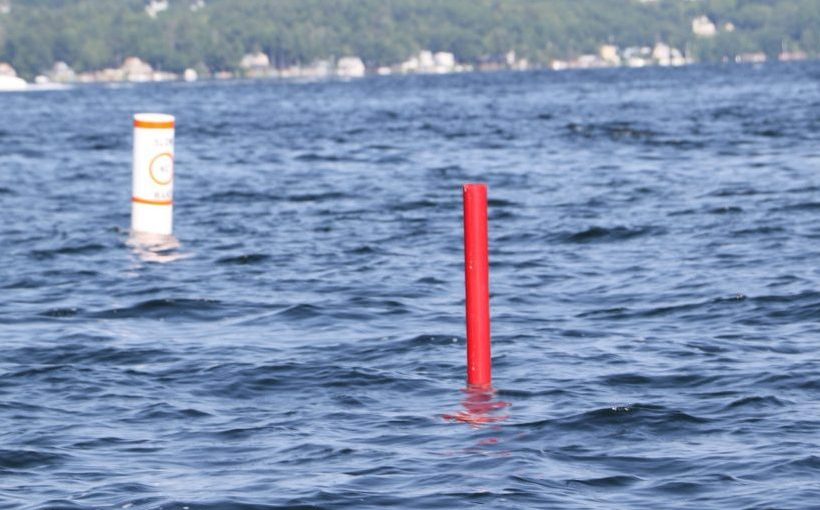
The Urban Legend is simple, and almost absurd. A man decides to build himself an island. He hauls rocks and fill onto frozen lake during the winter freeze (maybe more than one winter), dumping load after load onto the ice. When spring comes, the ice melts, the rocks sink, and the debris settles into a mound tall enough to crest the waterline. A private perch. A fishing platform. A tiny kingdom.
A Rock Island.
There are things buried in Chautauqua Lake, plenty of things. For instance, the Jamestown Water Works crib was built in 1885, a covered structure to supply Jamestown’s early municipal water system. It was 30 feet square, a tiny artificial island, timber‑framed, stone‑packed, and anchored offshore. It housed the intake pipe that fed the city’s pumps.
There are old steamboat moorings closer to shore; timber and stone structures used to anchor docks. Old ice-harvest platforms are out there; structures built on the ice that sometimes were left too long after the thaw, collapsed and left debris. Private duck blinds are buried in the shallows, built on pilings or rubble.
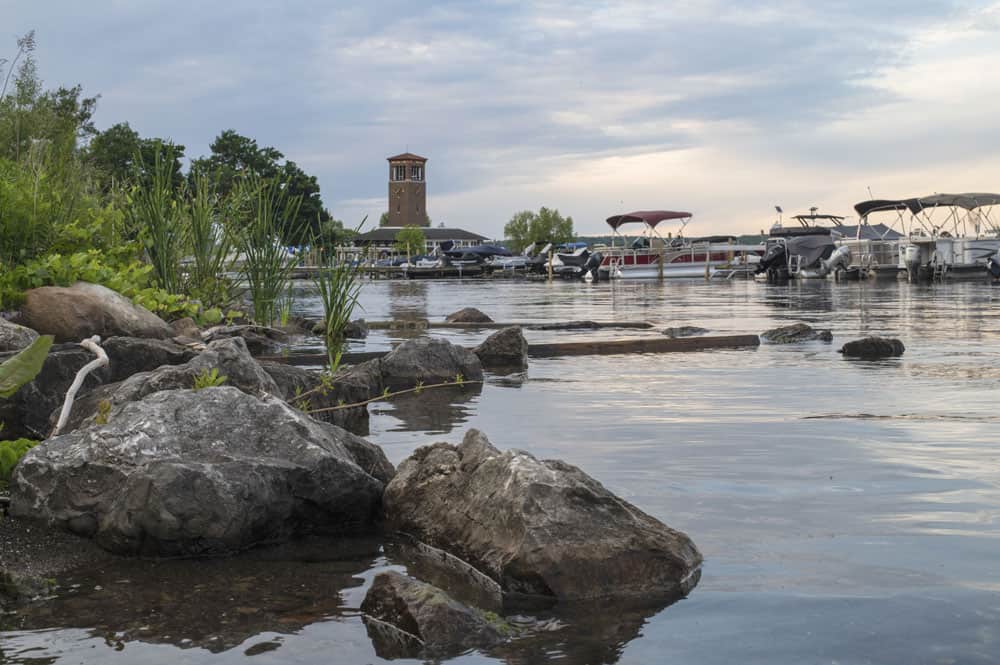
Docks and Wood Moorings in Chautauqua Lake
And there’s a Rock Island, an expanse of landfill spread over a few hundred square yards buried in the lower part of Chautauqua Lake that rises abruptly from the basin floor, where the water widens into a shallow, silty bowl. The United States Coast Guard Light List and Notices to Mariners does not map a named structure there, but they do show that the area is bordered by special‑purpose hazard markers. Sonar shows a steep‑sided mound with a flat top. That shape is the giveaway. It is not a natural shoal; the lower lake basin is too uniform, too silty, too geologically uneventful. It is not a collapsed crib; those leave rectangular footprints and predictable debris fields. It is not dredge spoil; dredging produces broad fans that spread with the current. It’s too far from shore to be a duck blind, or fishing perch. And it is not a remnant of the Jamestown Water Works crib, that structure sat further down-lake and was meticulously documented.
It is exactly the kind of footprint a failed island‑builder would leave behind.
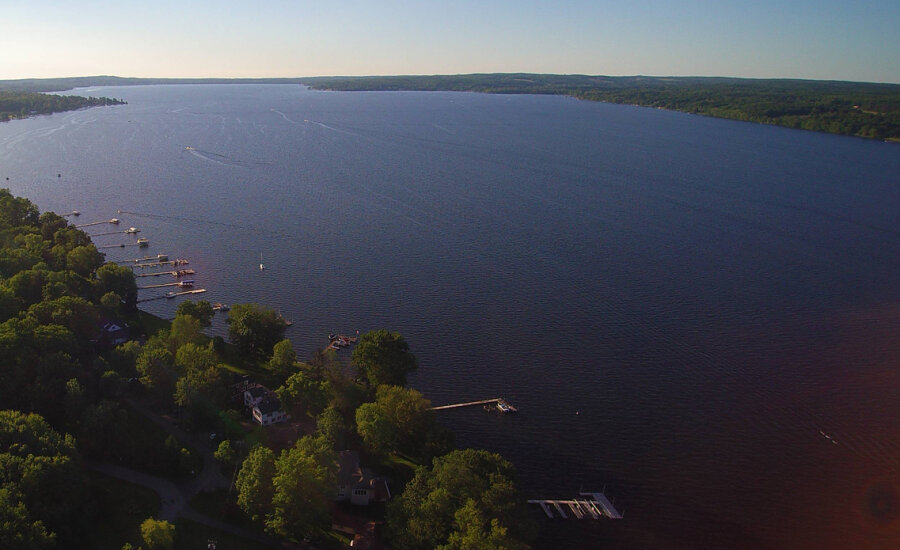
The Southern Basin of Chautauqua Lake
Boaters call it Rock Island, though no island ever broke the surface. It’s a relatively inexplicable phenomenon, a deliberate pile of stone, placed where no official record says stone should be.
The idea of an “Island Builder” is one of those half‑remembered Chautauqua Lake legends. Searches turn up no formal record, newspaper article, or historical entry about anyone successfully (or unsuccessfully) building an island on Chautauqua Lake. No Chautauqua County Historical Society archives mention a man attempting to build a rock island. No Post‑Journal or WKBW coverage (which would absolutely have covered a stunt like that) contains anything about a rock island project. No state, Corps of Engineers, or environmental reports mention any artificial island attempt on the lake, even a small, unauthorized fill would trigger regulatory attention.
The legend doesn’t include a timestamp, but it’s known that in the 1950’s through the 1980’s shoreline owners routinely dumped fieldstone, broken concrete, and construction debris into the shallows to extend their yards or build makeshift fishing perches. These projects were almost always unpermitted, short‑lived, and inevitably destroyed by ice; anything not heavily anchored with engineering rigor is crushed, shifted, or busted up and sent into the Chadakoin canal. Chautauqua Lake’s freeze–thaw cycles would have destroyed a small rock pile in one winter.
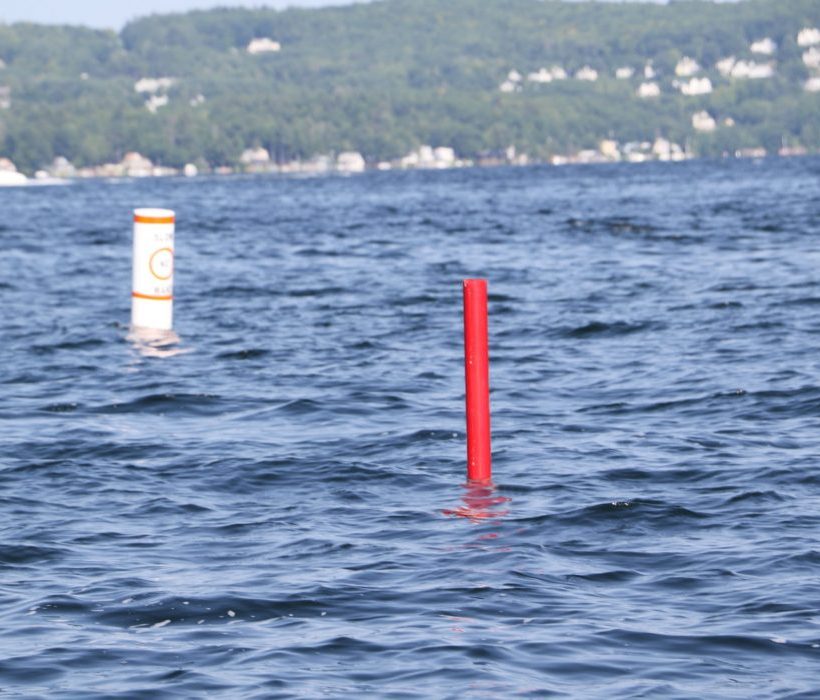
Buoys in the Lower Basin of Chautauqua Lake
The legend persists, not because it is proven, but because the lake itself seems to confirm it. The buoys float above a mystery that behaves exactly like the legend says it should. The hazard is real (as more than a few ruined propellers can attest). The mound is real. The absence of records is real.
And the lake, as always, keeps its own counsel.


