Mason Winfield’s

SPIRIT WAY PROJECT

© MASON WINFIELD 2023 SPIRIT WAY PROJECT 2023:

The paranormal expert/examiner/medium/TV personality steps boldly into the house/barn/cellar/church, the one that locals say is haunted, the site that bumps in the night. An audio-visual crew follows diligently. They pack equipment designed to detect the undetectable, to record the mysteries within; a ghostly apparition, a supernatural aura, a sixth sense.

And…CUT

PRINT

Mason Winfield has a deep and abiding interest in the paranormal. It’s been his life work (as evidenced by his vitae on his website http://www.masonwinfield.com). He’s a lecturer, author, storyteller, scientist. He is not, by his own reconning, a “ghost-hunter.” If there’s a profession that informs and directs his attention and talents, it’s probably best described as “Truth Seeker”.     

He believes it’s time for the industry to innovate, to broaden its influence. “If there’s a possible way to the truth, you have to take it, don’t you?” he says.

To accomplish this, Winfield seeks to employ a field of multidisciplinary professionals, people different in cultural and thematic sensibilities, to explore ancient spaces, areas of the northeastern United States that have universally experienced what he calls “EHE”, Exceptional Human Experiences. “Why do people say they see the thigs in the paces they do?” Winfield asks.    

It’s a query he hopes to answer with The Spirit Way Project.

Designed like the popular European group The Dragon Project, The Spirit Way uses the resources of scientific and paranormal disciplines to research the undeniably interesting and real world of EHE.

Winfield says, “The reality-TV paranormal industry typically studies buildings no more than a century-old–as though haunted sites are sensational and rare, no more original ones can be found, and paranormal sightings occur only indoors. It also barrages us with two perspectives, either intuitive–psychic–insights or surveillance ghost-hunting, as though using electronic and digital instruments as a glorified Ouija board is some objective avenue to the truth–and no other avenues of insight are available.”

Differentiating from the television shows you night have seen, The Spirit Way is basically a two-fold approach to supernatural investigation; using ancient resources to identify sites of EHE that have survived and inspired humans for centuries (think Native American history and collective consciousness), and to coordinate with any and every discipline to develop a coherent and multi-faceted theory of those experiences. So far, the group has employed:

A Feng-Shui Master, an Algonquin Elder, an African-American psychic medium, an author/researcher/paranormalist, a psychologist, two master dowsers, local scholars, historians, anthropologists, geologists, First Nations leaders, aerial surveillance experts, and team of paranormal investigators.

The goal of the team is to examine sites of reported Exceptional Human Experiences through the disciplines of geometry, shape (symbolic form), geology (earth-energies), archaeo-astronomy (an awareness of sunrises, moonrises, equinoxes, and solstices), and alignments across broad stretches of landscape to suggest codes if not messages.

“It’s been a challenge. There are no upstate surveys of supernatural events; national, but not local. All anyone can agree on is that these monuments had sacred function–and that, like Stonehenge and the Great Pyramid and a worldwide league of others, they are paranormal sites. In their proximity, people report exceptional experiences. Just like a haunted house–though vastly grander and more profound–these ancient American sacred sites get a lot of ghost stories.”

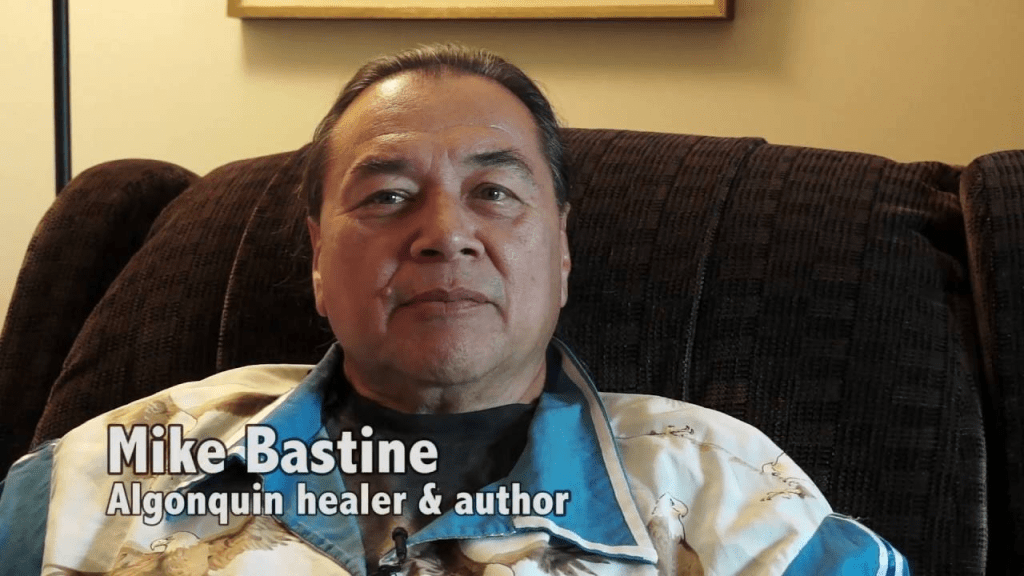
Winfield lives in East Aurora, and understands the newer supernatural phenomenon in Western, New York. Along with his partner, and co-founder of The Spirit Way project, Algonquin Elder Michael Bastine, who Winfield calls one of the best teachers in the world on the subject of native supernatural history, the goal is to broaden the scope of their studies to the ancient world.

“The ancient monuments of the British Isles have been preserved and studied,” Winfield says,” We want to start a new model of north American haunted sites, ancient places, not buildings, hut rather the outdoor sites, real study from different perspectives.”

The Spirit Way will start with a program of fifteen YouTube episodes in New York State.

Winfield concludes, “There is more to the paranormal. The Spirit Way Project (SWP) believes it’s time for a revolution. We think the public thirsts it.”

Mars Inc. And Culture Wars

A cultural question of stereotypes and branding for you.

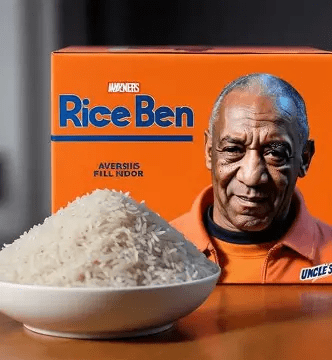
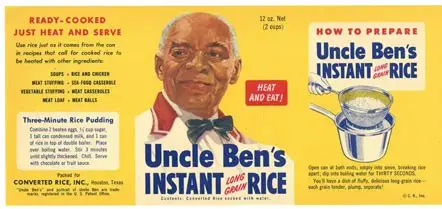
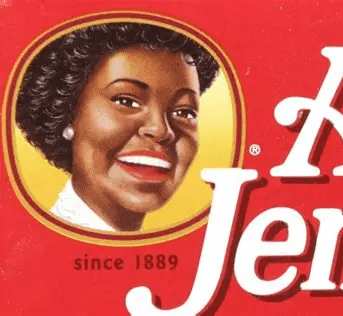
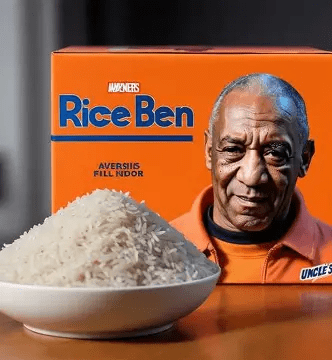
A while ago Quaker Oats and Mars Inc. rebranded their two most iconic brands, Aunt Jemima, and Uncle Ben in direct response to the 2020 George Floyd choking tragedy. The legacies of those brands are both widely considered to be Antebellum representations of slavery (calling freed slaves aunt and uncle was a way to avoid having to call them Mr. or Mrs.). The trademark pictures evoke vision of blacks as servants, Jemima in a scarf, Ben in a bow tie. Removing those characters from public consumption, can be considered a reasonable reaction.

It doesn’t seem complicated, but it is. The topic is incredibly nuanced. But I do believe the discourse surrounding the controversy can raise some pointed questions for reasonable discussion. My thoughts, admittedly brief in the lines I here, are these.

-Does the statute of limitations run out on racial stereotypes? I have a solid sense that those icons have historically dubious implications. But my children don’t. Their children won’t. To them, the characters on the box mean pancakes and something they don’t like for dinner (rice); they are vague pictures on packaging that triggers the idea of quality. Do we who know the story have an obligation to relate what those icons might mean? To what end?

-Is racism, or bigotry a deeply personal thing, or can it be the purview of another person or body politic. Can you outsource offense? Isn’t that a mild form of bigotry in itself?

     What if bigotry against me (in my case, think ageism) doesn’t bother me but offends others. In that case, what do I owe my station (my old brothers and sisters)? Should I pre-empt intolerance that might some day affect me? Do I need to get involved? If so, when, and for whom? Do I owe that feeling of offense to other groups that are discriminated against?

-The Aunt Jemima and Uncle Ben’s brands (along with others like Cream of Wheat, and Mrs. Butterworth’s), have for years been accused of using racial stereotypes to sell food. It shouldn’t have taken Floyd’s murder, caught on camera, for Quaker Oats to decide their brand were racially nuanced.

     I assume multi-billion-dollar corporations follow paths of least resistance for the sale of their products; they rarely set cultural or moral ideals, they follow them in the market. Changing the logo on a brand, and claiming it has something to do with a social contract, while possibly coincidentally true, isn’t a driving force for such a business transaction as the sale of food product. Quaker Oats and Mars, Inc. didn’t change logos because those icons had basic racial overtones. They changed because they believed it would sell more syrup and oats to more people (or at least that they’d sell the same amount and get some publicity and social credit in the balance).

     But what if the face of that brand doesn’t believe that the brand they represent is a racial offense, or that at least a discussion about it is warranted?

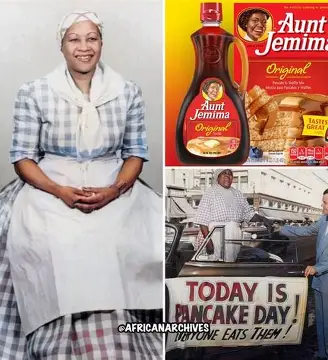
     The family of the Lillian Richard, who portrayed Aunt Jemima, has a different take. While they support the Black Lives Matter movement that generated the brand change, they would still like to celebrate the idea that their ancestor played an important part of history.

     “All of the people in my family are happy and proud of Aunt Lillian and what she accomplished,” says Vera Harris, Richard’s niece. “Erasing my Aunt Lillian Richard would erase a part of history.”

     In the case of Quaker Oats, the Harris family has an idea that would satisfy a desire to maintain the legacy of their aunt, and to deliver a message of education and reverence to the women who came before her. They suggest a commemorative box to recognize the many women who portrayed Aunt Jemima over the years. A box that would include a photo of her aunt dressed as Aunt Jemima with the scarf, along with a photo of Richard looking like herself to show people a complete picture.

Seems like asking the people involved is a good place to start.

The Princess Chautauqua

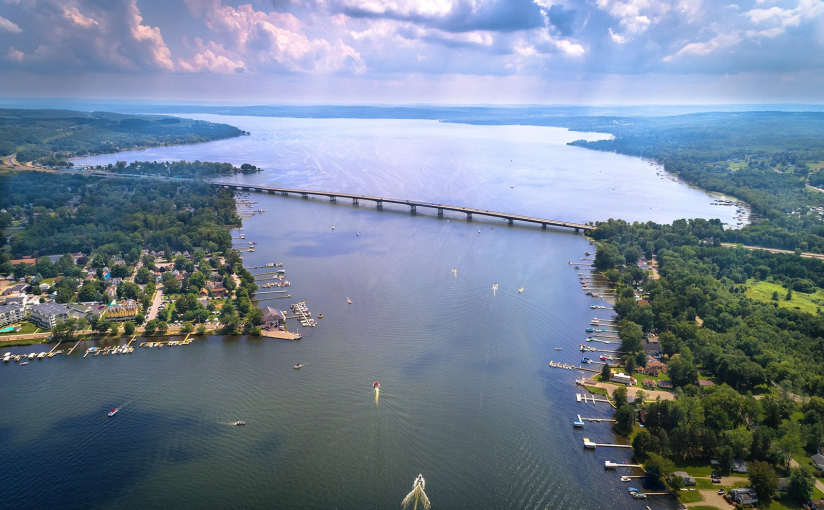
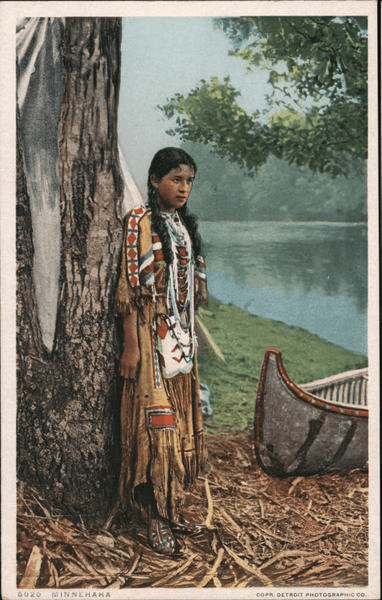
She knelt by the water, where the tip of Long Point State Park reaches out into Chautauqua Lake. In the small hills behind the peninsula, up where what is now Ellery Center, fires burned, screams and whoops echoed up and down the bluff. This was the end, the dying gasp of a people, of an identity, of her tribe. Anyone who survived the slaughter would be taken into slavery by the marauders.

She was trapped on this narrow spit of land. She could swim across the narrows to the other side of the lake, but there was really no escape, they’d be waiting by the time she reached shore. She couldn’t go back the way she came, there was only one path that led to the opening of the point.

She waded into the shallows.

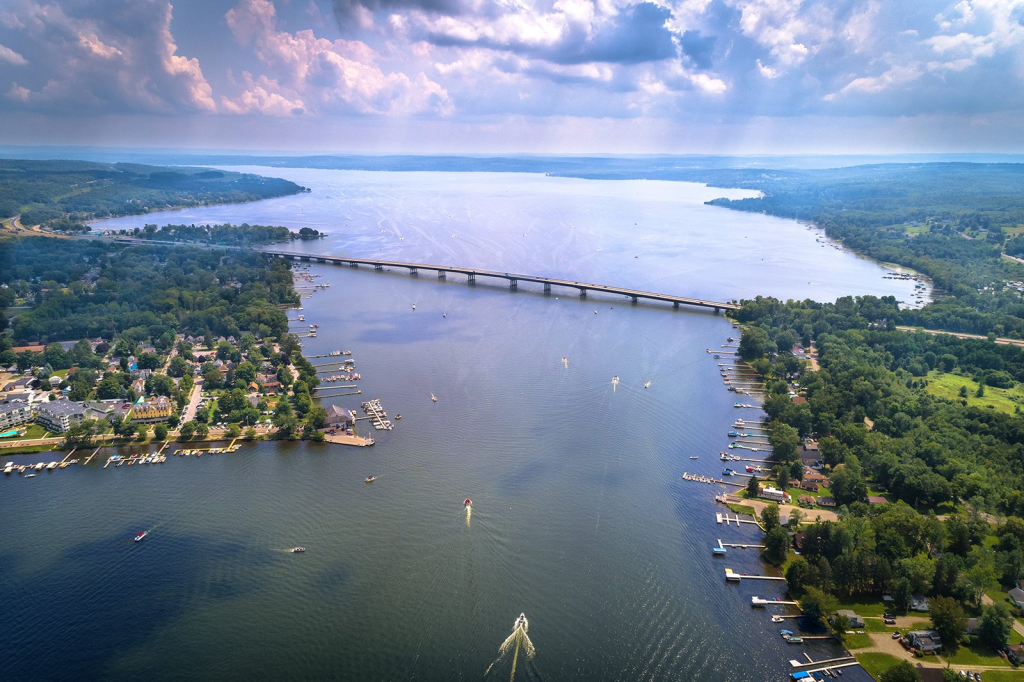
In a world where information is ubiquitous, literally at the tip of the finger in quantity, it’s amazing that the word Chautauqua doesn’t have an authentic, agreed-upon translation. An etymological search will tell you it has Haudenosaunee origins -Haudenosaunee being another name for the Iroquois nation- describing something “tied in the middle”, like a bag, or a pair of shoes by the laces, the general shape of Lake Chautauqua with its northern and southern basins separated by the narrows at Bemus Point and Stow. That crossing is measured in yards, while the widest places, both north and south are around two miles from shore to shore (the lake itself is about seventeen miles end to end). Chautauqua can also refer to everything from indigenous lands in Colorado, to a cultural and educational movement from the late 1800s. That’s a wide swath of interpretation for a single word.

     What’s known is that the Erie Indians who occupied our current borders, the original Chautauqua Lakers, were wiped out of existence (along with no fewer than eight other native tribes), by the French and the Iroquois Nation in the Beaver Wars, massacred or taken hostage by the martial factions. Before the people of Europe settled here, the bucolic landscape we know as Chautauqua County saw a fair share of carnage and bloodshed.

     The speed with which the Iroquois engulfed regional Indian communities meant that no one had time to do an extensive study of the Erie language, and their native tongue died with them. What’s left are loose translations adopted from leftover Iroquois dialect, hence the word Chautauqua has renditions sweeping from the above mentioned “bag tied in the middle” to the vastly different “place where fish are taken.”

Then there’s the romantic, tragic myth of the Erie Indian Princess.

Legend has it her name was Chautauqua. Chat was a French supplied nickname for the Erie people, meaning “cat”, and Taquan which means “spiritually aware and prone to self-sacrifice”. When her people chose to fight the Iroquois rather than surrender, fool’s errand for the agrarian, mostly peaceful Erie tribe, they were destroyed by the fierce and combinative nation, eradicated as a show of force to discourage other tribes from resisting.

Wikipedia says: The Iroquois League was known for adopting captives and refugees into their tribes. Any surviving Erie were absorbed by other Iroquoian tribes, particularly families of the Seneca, the westernmost of the Five Nations. Susquehannock families may also have adopted some Erie, as the tribes had shared the hunting grounds of the Allegheny Plateau and Amerindian paths that passed through the gaps of the Allegheny. The members of remnant tribes living among the Iroquois gradually assimilated to the majority cultures, losing their independent tribal identities.

The Erie Indian people simply went away, and with them any coherent, stipulatory meaning of the word Chautauqua.

The Erie Princess Chautauqua waded deeper into cool waters off Long Point. She looked back at the land she knew, her birthplace and home. She pictured the faces of her family, her father, mother, brave brothers, and sisters. All gone now. She knew they wouldn’t survive the slaughter. There was nothing left for her but to commit the ultimate act of Indian royalty, the last great measure. 

     As the Iroquois warriors (along with French and Haitian mercenaries) approached from land, she turned and walked into the depths of the lake. In an act of defiance and sacrifice she drown herself. And thereby christened the body of water Chautauqua.

SPORT IN JAMAICA

(First published March 2018)

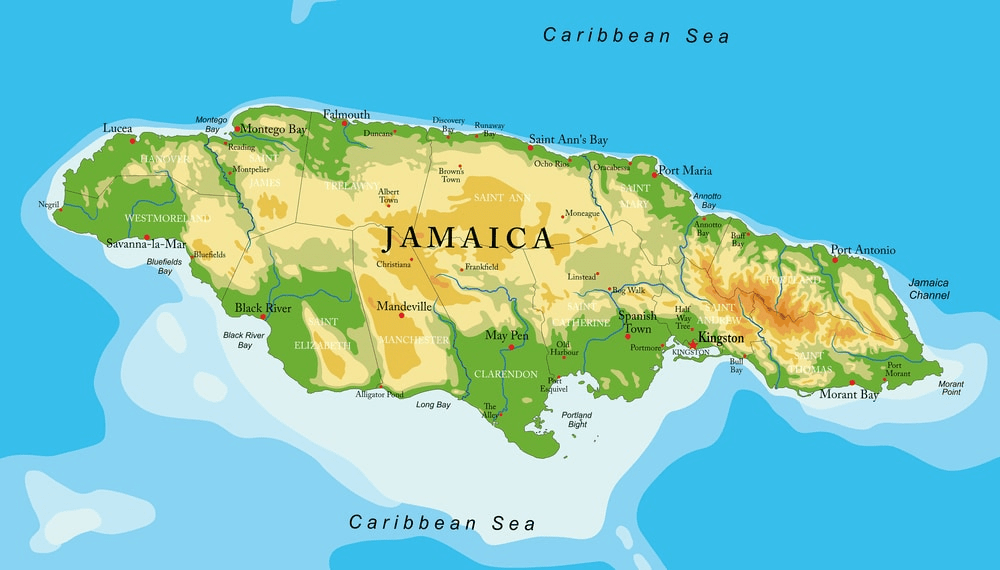
If you ever doubt the global blanket of sports television, just know there’s something called ESPN Caribbean.  There’s and ESPN Asia, Australia, Brazil, and ESPN-UK too.  To my research there is no ESPN-Siberia yet. The ESPN Caribbean network airs in 32 countries, including one I visited recently.  ESPN Caribbean SportsCenter in Jamaica features sports like America’s Cup yacht racing, grand slam tennis, a little golf, something called Netball (the “Jamaican Sunshine Girls” team is currently ranked third in the world), and a whole lot of soccer and cricket.  There is most certainly MLB, NBA and NFL action, but not before you wade through scores and highlights of the Caribbean Premier League, the Caribbean Super 50, the Karbonn Smart League, the English Premier League, German Bundesliga, Spanish La Liga, Italian Serie A Soccer, and the uber-important International Cricket Council with its wickets, nurdles, and wicked googlies.  If I could name a single famous cricketer, Jamaican or otherwise, I would do it here.  I can’t, but I do know that Patrick Ewing was born in Kingston, Jamaica and excelled at that game along with soccer.  Jamaican icon Bob Marley was supposed to be excellent on a football pitch.

Usain Bolt currently dominates the Jamaican sports scene, as much as a single athlete can; the fastest human in the history of the world will tend to capture the attention of the nation in which he has born. 

He is relatively absent in the media, as Jamaicans seem to love their sports and sporting action more than they worship their sportsmen and women.  Bolt adorns a few roadside billboards, shilling for cell services and energy drinks, but other than that he’s not as ubiquitous as you’d think.  Opposite of the U.S. where we tend to define the performance by the performer, and an athlete like LeBron James can shake the rust off the belt of a once-proud city like Cleveland with one moving van full of sneakers, tank tops, and elbow pads (c’mon Buckeyes, he didn’t cure cancer, he plays basketball).  On a short bus trip from Montego Bay (the inspiration of The Beach Boys, Bobby Bloom and Jimmy Buffet) to Falmouth in Trelawny Parish (where James Bond jumped a speed boat onto a cop car) our tour group passed Bolt’s high school, what are the odds? Ben Johnson, incidentally is infamously from Falmouth also, must be something FAST in the water there.  The fact of that coincidence was startling until you realize that there are only 2.7 million-some people on the island spread out over 4,244 square miles, a good two-thirds of it coastal and accessed from the main highway; not exactly like landing in Los Angeles and randomly driving by the White House.

The Jamaican Bobsled team famously competed in the 1988 Calgary Olympics Winter Games.  Disney made a movie about them called Cool Runnings, and that name is plastered on everything from convenience stores to jet-ski rentals shops. 

Side note, renting jet-skis is against the law in Jamaica because tourists kept smashing into each other on them.  As you’d imagine on a Caribbean island (where the ocean water temperature in August is a squishy 97 degrees by the way), water sports are plenty, the moratorium on wave-runners notwithstanding; scuba diving, windsurfing, sailing, waterskiing, snorkeling, parasailing, and deep sea fishing.

The poverty in a Caribbean country like Jamaica registers when you internalize the fact that it can’t snow there.  No population could survive a frigid climate in homes with so few amenities, like running water, a workable furnace and, often, walls and floors.  I found myself and my family being escorted up the North Coastal Highway in a local taxi, from Negril to Mon-Bay.  We were escorted by friends of a friend, real Rasta’s, dreads and all.  The view was postcard tropical, blue-green ocean waves crashing on beach-heads and cliff sides.  We stopped at a roadside shack, one of many, for something cold to cut into into the tropical heat.  Our guides knew the place.  They talk with the proprietor.  Jamaicans speak English, until they don’t want you to understand them, then they speak something that isn’t English.  Soon were sipping water from a raw coconut, and a mango concoction from a plastic cup.

I wander out of the broken-down bar, all particle board and corrugated tin.  There along the roadway two kids are kicking a half flat soccer ball in a dirt driveway. Yeah, they like their sports in Jamaica.  I lace up my shoes and join in.