CHAUTAUQUA BRIDGE

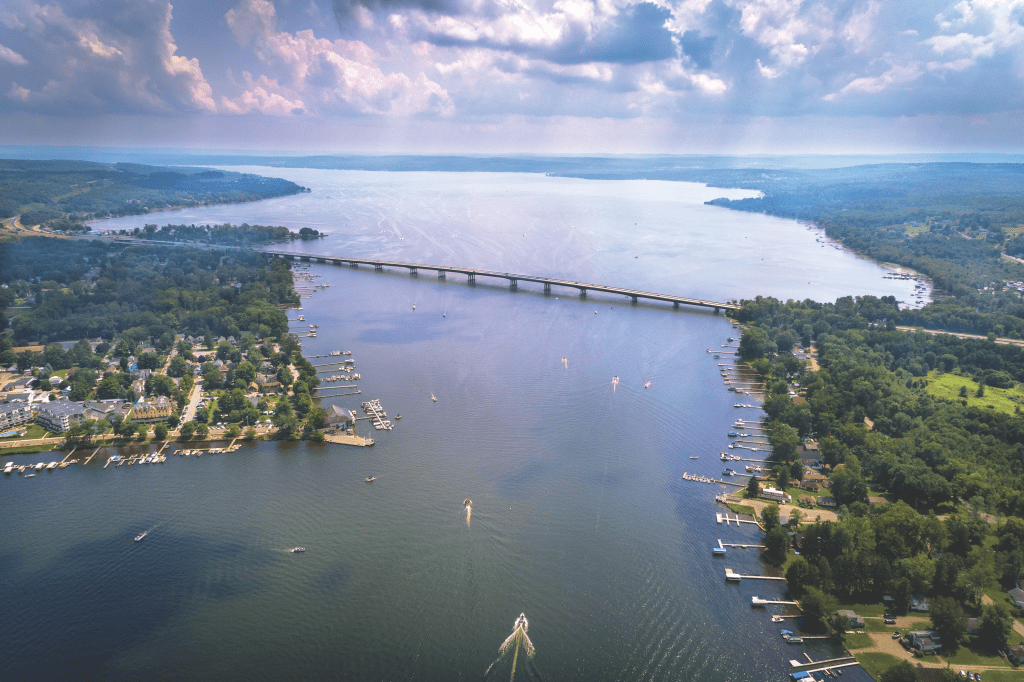
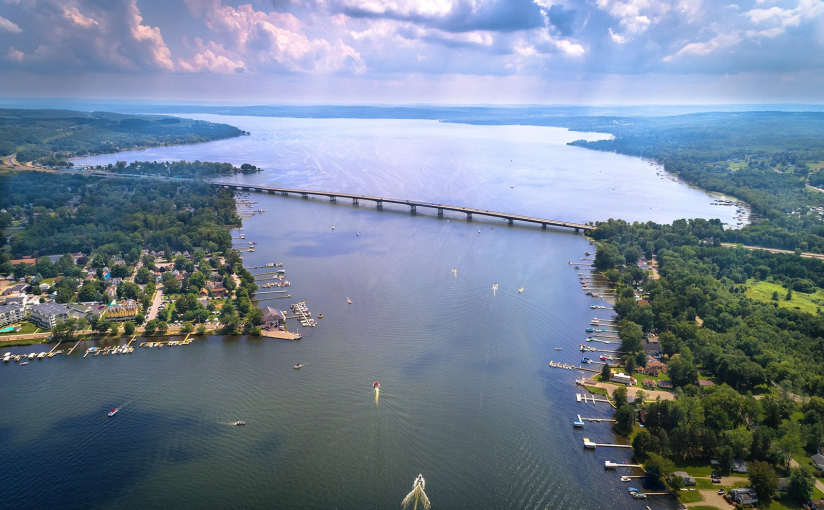
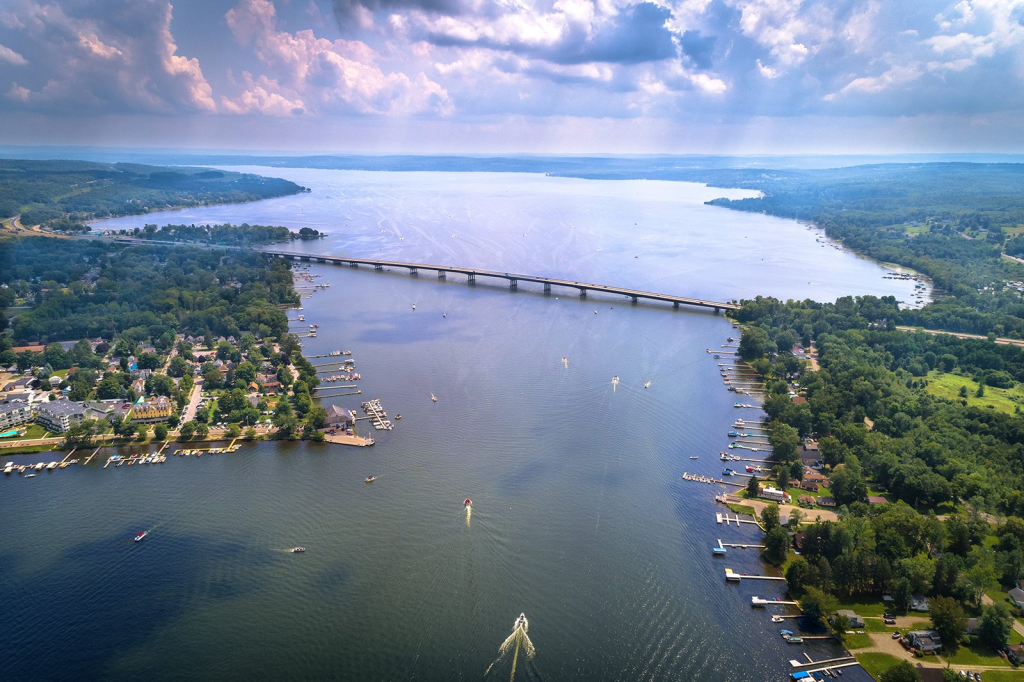
In October of 1982, 726 athletes lined up in Bemus Point with the goal of crossing the lake and back. The lake was much too cold for a swim. The Bemus Pint Ferry was not an option for a Fall 10K race. Fortunately, these runners had a fresh path, brand spanking new pavement, the Chautauqua County Veterans Memorial Bridge.

There was a time when getting from the southern part of Chautauqua Lake to the upper lake was a logistical chore, Mayville to Jamestown was a journey, more than a grocery run. Routes 394 and 430 wrapped the lake, picturesque to be sure, but cumbersome for anyone in a hurry. This was prior to 1982. A drive from Jamestown to Long Point State Park was a common trip, fifteen miles or so up the north side of the lake.

If you then wanted to tour the southwestern coast, Stowe, Chautauqua Institution, or points south, you had one of three options:

  1. Circumnavigate the lake, back through Jamestown, or north around Mayville.
  2. Drive into Bemus, hope to catch the ferry.
    1. The ferry had to be running that day.
    1. The ferry had to be on your side, ready to go to the other side.
    1. You had to be the one of the first ten or so cars in line.

For an intrastate trip through New York, from the west to east you used the I-90 corridor along Lake Erie, all southern cities, Jamestown, Olean, Corning, and east, were accessible by backroads only. What is now Route I86 as a developed interstate highway wasn’t a priority because of that pesky lake blocking any straight run west to east.

That changed in 1982 with the building of the Chautauqua County Veterans Memorial Bridge.

That Fall 10K race in Bemus, launching the opening of the first non-stop vehicle option for getting from one side of the lake to the other, was forty-two years ago, a long time for a bridge. Now it’s in need of a facelift. Or in lieu of a cosmetic revival, some body work.

Enter New York State Department of Transportation and their checkbook.

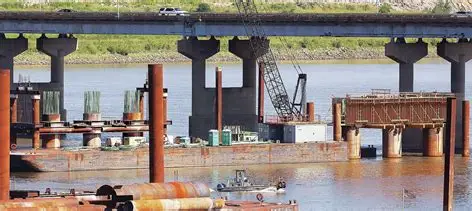
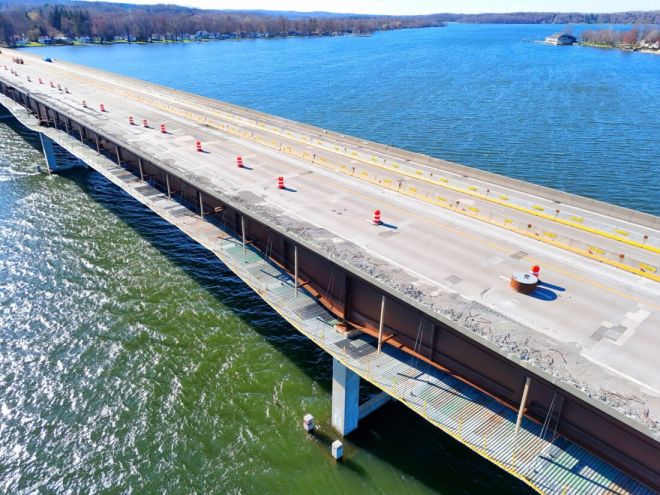
The state has earmarked $78 million for renovations and structural work on the Chautauqua County Veteran’s Bridge. Another $4.7 million for the local success routes to the bridge off routes 430 and 394. Work began on the main part of the 3,790-foot main span last summer (2023). It’s expected to be completed fall of 2026.

New York State DOT Commissioner Marie Therese-Dominguez was in Chautauqua recently to oversee the start of the project. “It’s going to enhance safety, it’s going to ease travel and it going to extend the service life of these bridges by another 40 years,” she said.

The work being done probably won’t show itself to the casual observer -new bridge joints, fresh decks, bearings, and repaired steel. The roadway will be resurfaced. On and off ramps will have new barriers.

The noticeable part will be the closures and re-routing of traffic to get the job completed. The plan is to work one set of lanes at a time, and only close the entire bridge for short periods during nighttime. Local officials are of course asking people to be patient with the process and disruptions in traffic.

Commissioner Therese-Dominguez says, “It’s going to take a lot of patience but in the end, I think it’s going to be well worth it.”

Governor Hochul released a statement saying, “To ensure that our communities and our economy in all regions of the state continue to grow and prosper, New York state is making investments to strengthen and harden our infrastructure to meet and exceed the challenges of the 21st Century.”

State Sen. George Borrello, R-Irving, thanked Hochul for recognizing the importance of the bridge and the need to bolster the structure. “She is no stranger to Chautauqua County, no stranger to Chautauqua Lake and she knows the importance of it,” he said. “I want to truly thank her for investing in infrastructure around Chautauqua County, particular, this major, major investment in this bridge over Chautauqua Lake.”

Mason Winfield’s

SPIRIT WAY PROJECT

© MASON WINFIELD 2023 SPIRIT WAY PROJECT 2023:

The paranormal expert/examiner/medium/TV personality steps boldly into the house/barn/cellar/church, the one that locals say is haunted, the site that bumps in the night. An audio-visual crew follows diligently. They pack equipment designed to detect the undetectable, to record the mysteries within; a ghostly apparition, a supernatural aura, a sixth sense.

And…CUT

PRINT

Mason Winfield has a deep and abiding interest in the paranormal. It’s been his life work (as evidenced by his vitae on his website http://www.masonwinfield.com). He’s a lecturer, author, storyteller, scientist. He is not, by his own reconning, a “ghost-hunter.” If there’s a profession that informs and directs his attention and talents, it’s probably best described as “Truth Seeker”.     

He believes it’s time for the industry to innovate, to broaden its influence. “If there’s a possible way to the truth, you have to take it, don’t you?” he says.

To accomplish this, Winfield seeks to employ a field of multidisciplinary professionals, people different in cultural and thematic sensibilities, to explore ancient spaces, areas of the northeastern United States that have universally experienced what he calls “EHE”, Exceptional Human Experiences. “Why do people say they see the thigs in the paces they do?” Winfield asks.    

It’s a query he hopes to answer with The Spirit Way Project.

Designed like the popular European group The Dragon Project, The Spirit Way uses the resources of scientific and paranormal disciplines to research the undeniably interesting and real world of EHE.

Winfield says, “The reality-TV paranormal industry typically studies buildings no more than a century-old–as though haunted sites are sensational and rare, no more original ones can be found, and paranormal sightings occur only indoors. It also barrages us with two perspectives, either intuitive–psychic–insights or surveillance ghost-hunting, as though using electronic and digital instruments as a glorified Ouija board is some objective avenue to the truth–and no other avenues of insight are available.”

Differentiating from the television shows you night have seen, The Spirit Way is basically a two-fold approach to supernatural investigation; using ancient resources to identify sites of EHE that have survived and inspired humans for centuries (think Native American history and collective consciousness), and to coordinate with any and every discipline to develop a coherent and multi-faceted theory of those experiences. So far, the group has employed:

A Feng-Shui Master, an Algonquin Elder, an African-American psychic medium, an author/researcher/paranormalist, a psychologist, two master dowsers, local scholars, historians, anthropologists, geologists, First Nations leaders, aerial surveillance experts, and team of paranormal investigators.

The goal of the team is to examine sites of reported Exceptional Human Experiences through the disciplines of geometry, shape (symbolic form), geology (earth-energies), archaeo-astronomy (an awareness of sunrises, moonrises, equinoxes, and solstices), and alignments across broad stretches of landscape to suggest codes if not messages.

“It’s been a challenge. There are no upstate surveys of supernatural events; national, but not local. All anyone can agree on is that these monuments had sacred function–and that, like Stonehenge and the Great Pyramid and a worldwide league of others, they are paranormal sites. In their proximity, people report exceptional experiences. Just like a haunted house–though vastly grander and more profound–these ancient American sacred sites get a lot of ghost stories.”

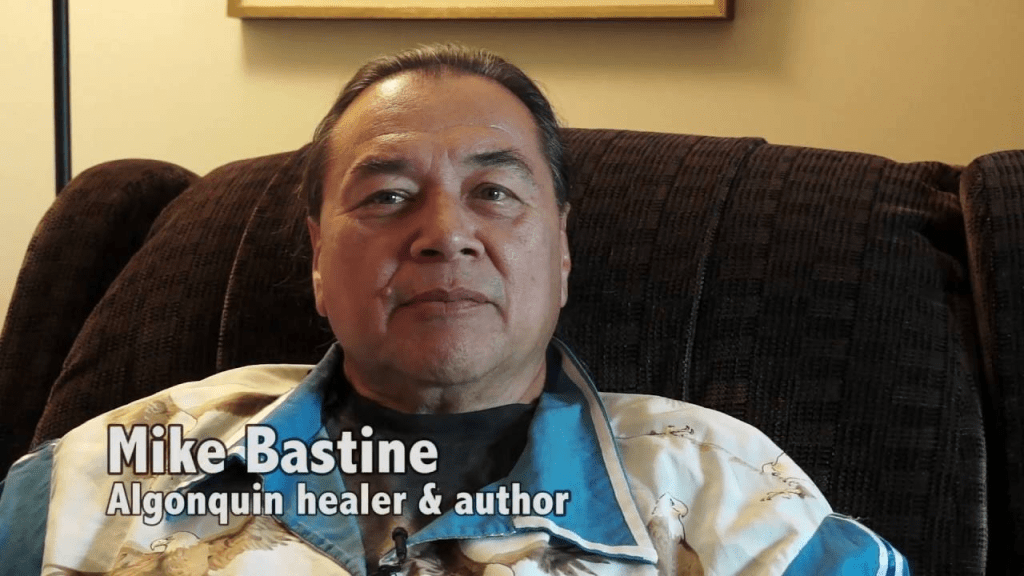
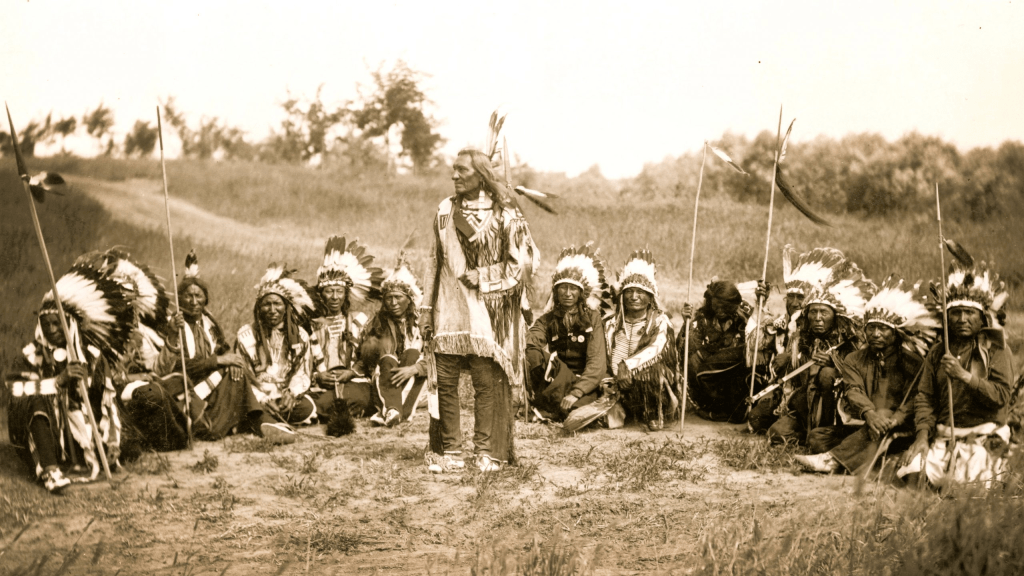
Winfield lives in East Aurora, and understands the newer supernatural phenomenon in Western, New York. Along with his partner, and co-founder of The Spirit Way project, Algonquin Elder Michael Bastine, who Winfield calls one of the best teachers in the world on the subject of native supernatural history, the goal is to broaden the scope of their studies to the ancient world.

“The ancient monuments of the British Isles have been preserved and studied,” Winfield says,” We want to start a new model of north American haunted sites, ancient places, not buildings, hut rather the outdoor sites, real study from different perspectives.”

The Spirit Way will start with a program of fifteen YouTube episodes in New York State.

Winfield concludes, “There is more to the paranormal. The Spirit Way Project (SWP) believes it’s time for a revolution. We think the public thirsts it.”

The Princess Chautauqua

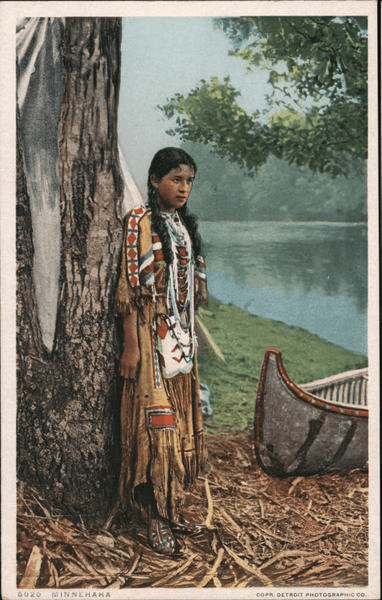
She knelt by the water, where the tip of Long Point State Park reaches out into Chautauqua Lake. In the small hills behind the peninsula, up where what is now Ellery Center, fires burned, screams and whoops echoed up and down the bluff. This was the end, the dying gasp of a people, of an identity, of her tribe. Anyone who survived the slaughter would be taken into slavery by the marauders.

She was trapped on this narrow spit of land. She could swim across the narrows to the other side of the lake, but there was really no escape, they’d be waiting by the time she reached shore. She couldn’t go back the way she came, there was only one path that led to the opening of the point.

She waded into the shallows.

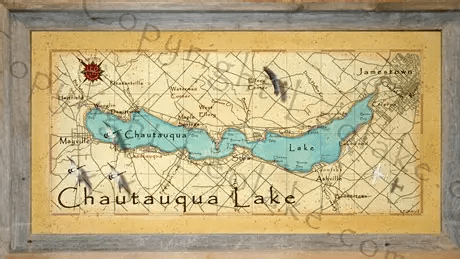
In a world where information is ubiquitous, literally at the tip of the finger in quantity, it’s amazing that the word Chautauqua doesn’t have an authentic, agreed-upon translation. An etymological search will tell you it has Haudenosaunee origins -Haudenosaunee being another name for the Iroquois nation- describing something “tied in the middle”, like a bag, or a pair of shoes by the laces, the general shape of Lake Chautauqua with its northern and southern basins separated by the narrows at Bemus Point and Stow. That crossing is measured in yards, while the widest places, both north and south are around two miles from shore to shore (the lake itself is about seventeen miles end to end). Chautauqua can also refer to everything from indigenous lands in Colorado, to a cultural and educational movement from the late 1800s. That’s a wide swath of interpretation for a single word.

     What’s known is that the Erie Indians who occupied our current borders, the original Chautauqua Lakers, were wiped out of existence (along with no fewer than eight other native tribes), by the French and the Iroquois Nation in the Beaver Wars, massacred or taken hostage by the martial factions. Before the people of Europe settled here, the bucolic landscape we know as Chautauqua County saw a fair share of carnage and bloodshed.

     The speed with which the Iroquois engulfed regional Indian communities meant that no one had time to do an extensive study of the Erie language, and their native tongue died with them. What’s left are loose translations adopted from leftover Iroquois dialect, hence the word Chautauqua has renditions sweeping from the above mentioned “bag tied in the middle” to the vastly different “place where fish are taken.”

Then there’s the romantic, tragic myth of the Erie Indian Princess.

Legend has it her name was Chautauqua. Chat was a French supplied nickname for the Erie people, meaning “cat”, and Taquan which means “spiritually aware and prone to self-sacrifice”. When her people chose to fight the Iroquois rather than surrender, fool’s errand for the agrarian, mostly peaceful Erie tribe, they were destroyed by the fierce and combinative nation, eradicated as a show of force to discourage other tribes from resisting.

Wikipedia says: The Iroquois League was known for adopting captives and refugees into their tribes. Any surviving Erie were absorbed by other Iroquoian tribes, particularly families of the Seneca, the westernmost of the Five Nations. Susquehannock families may also have adopted some Erie, as the tribes had shared the hunting grounds of the Allegheny Plateau and Amerindian paths that passed through the gaps of the Allegheny. The members of remnant tribes living among the Iroquois gradually assimilated to the majority cultures, losing their independent tribal identities.

The Erie Indian people simply went away, and with them any coherent, stipulatory meaning of the word Chautauqua.

The Erie Princess Chautauqua waded deeper into cool waters off Long Point. She looked back at the land she knew, her birthplace and home. She pictured the faces of her family, her father, mother, brave brothers, and sisters. All gone now. She knew they wouldn’t survive the slaughter. There was nothing left for her but to commit the ultimate act of Indian royalty, the last great measure. 

     As the Iroquois warriors (along with French and Haitian mercenaries) approached from land, she turned and walked into the depths of the lake. In an act of defiance and sacrifice she drown herself. And thereby christened the body of water Chautauqua.

Ellicottville, N.Y; An Abolitionist Story

In 1836, the formation of the Cattaraugus County Anti-Slavery Society in Ellicottville marked a bold stand against slavery, reflecting growing abolitionist sentiment in rural western New York.

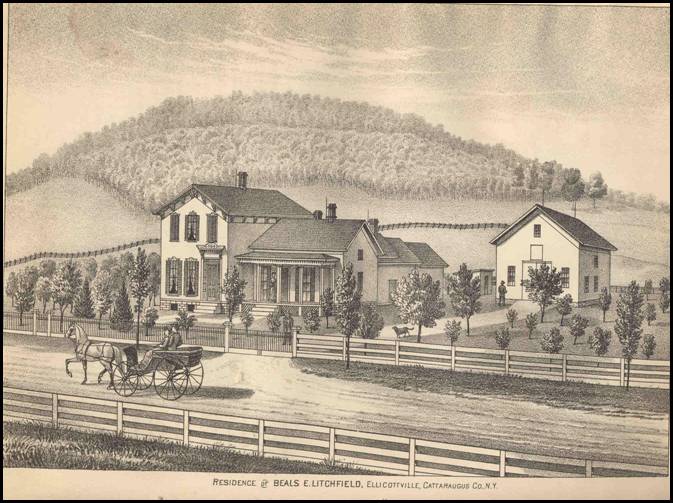
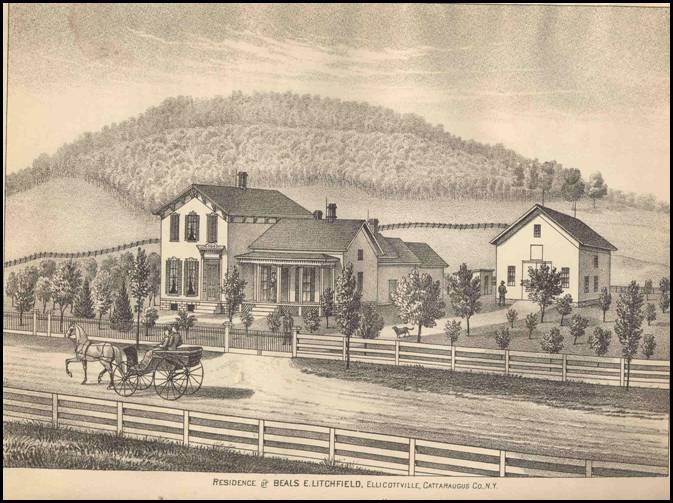
Ellicottville circa 1879

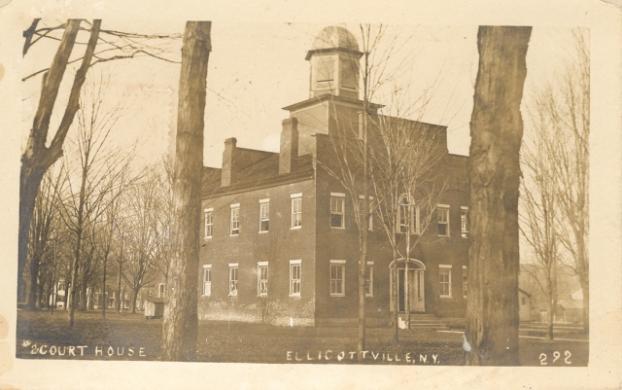
In 1836 Ellicottville was as a bona fide town in the state of New York, and recognized as the county seat of Cattaraugus County. It has a population of approximately 635 people, pioneers who carved the small burgh out of the wilderness, buying up acreage from the infamous Holland Land Company starting in 1815. The citizens are industrious and self-sufficient. The town boasts a hotel, a school, a church and a tannery. By the 1870s, Ellicottville will have everything a thriving community needs including stores, banks, and professionals like doctors and lawyers.

The citizens are also socially broadminded with foresight and a progressive resolve that makes them distinctive for such a small community. In 1835 the community opened The Ellicottville Female Seminary, one of the first religious schools for women in the United States, a radical cause célèbres that marked Ellicottville as a pocket of liberal activism in southwestern New York.

The Ellicottville School

In the Spring of 1836, a small group of Ellicottville citizens met in the refectory of St. John’s Episcopal Church on the public square. St. John’s was the first Episcopal in Cattaraugus County, a sterling example of early Gothic Revival Church Architecture, uncommon in this region.

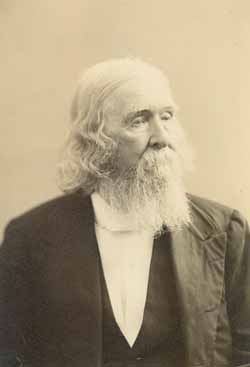
     They arrived to hear a lecture from abolitionist speaker Huntington Lyman. He was there on behalf of northern abolitionists, specifically American Anti-Slavery Society, to speak about the evils of slavery. The meeting wasn’t without controversy. Lyman’s talks stirred strong emotions within the burgeoning community.

Lyman studied at Lane Seminary, where he joined the Lane Rebels, a group of students who left the seminary in protest after being banned from discussing slavery. He graduated from Oberlin Seminary in 1836, a hub for progressive thought and abolitionist activism. From there he began his lecture tour, stopping in Ellicottville in April of that year.

Huntington Lyman

Abolitionist sentiment was growing in the North. Organizations like the American Anti-Slavery Society, founded in 1833, were distributing pamphlets, organizing lectures, and flooding Congress with petitions demanding the end of slavery. This was met with fierce resistance from pro-slavery politicians and citizens, especially in the South. This was, after all, the precursor to the bloody Civil War. Slavery was obviously deeply entrenched in the southern United States, and even though it wasn’t a known practice in Ellicottville, it was still legal. At the 1836 meetings some Ellicottville residents supported Lyman, others viewed his presence with trepidation and skepticism, as a threat to public peace. Local debate was intense. The Ellicottville Republican called his lectures “exciting and dangerous,” but Lyman himself was described as a “disturber of the peace”.

     More meetings, more lectures were scheduled, and Lyman persisted. After a few weeks of attracting only a handful of people, a larger gathering was held at the local schoolhouse on April 23, 1836. It was at this assembly, amid heated discussion and public tension, that the Cattaraugus County Anti-Slavery Society was officially formed.

     The impetus and mission of Society was not only to broadcast a very public ethical stance on the practice of slavery, but to communicate and coordinate with the Underground Railroad that passed through the Buffalo-Niagara region.

It is a credible achievement that the people of Ellicottville had the moral capacity to embrace the anti-slavery movement even in small towns far from the political spotlight in big cities like Philadelphia and Chicago. The residents felt compelled to take a moral stand. Their actions reflected a growing awareness that slavery was not just a Southern issue, it was a national one, and silence was complicity.

This article and others can be found published in The Villager Magazine at https://thevillagerny.com/

THE POINT CHAUTATQUA GOLF SITE PROJECT

“I tell ya, country clubs and cemeteries are the biggest waste of prime real estate.”

Al Czervic

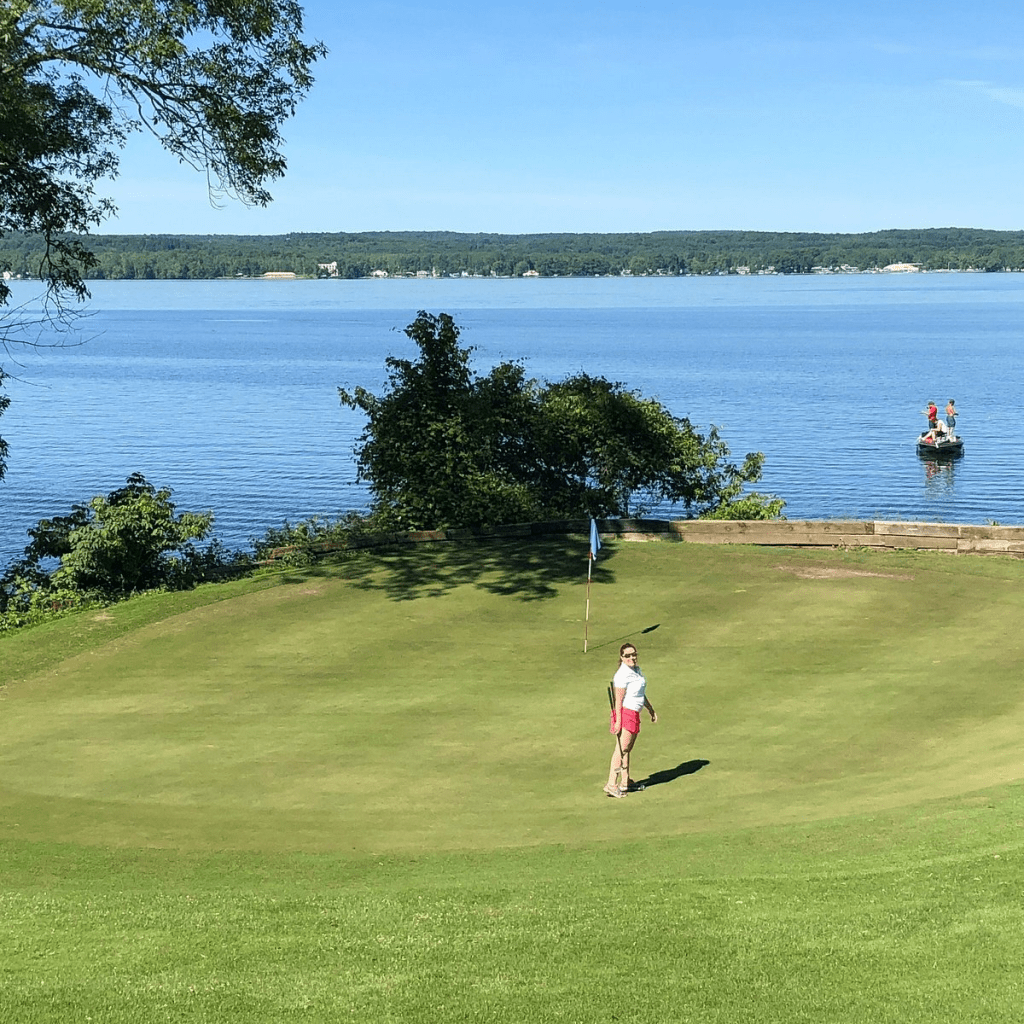
It was inevitable, like the waves that lap against the back of seventh green. The land is just too beautiful, just too perfect, just too valuable.

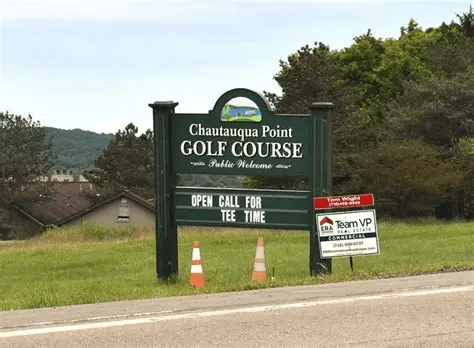
The Chautauqua Point Golf Course, at 5678 East Lake Road in Dewittville sold recently, the second time in just over two years. In February of 2022 The Chautauqua Lake Development LLC of Springville purchased the property for just over a million dollars. They re-listed the property and this past July 2023, The 1200 Group of Buffalo bought the three parcels that made up the golf course for $2.2 million (along with other East Lake Road real estate belonging to the James K. Webb Living Trust, and Webb’s Harbor Restaurant and Bowling Lanes, Inc.).

The 1200 Group is led by Bill Paladino, son of Carl Paladino the ubiquitous Buffalo developer and politician.

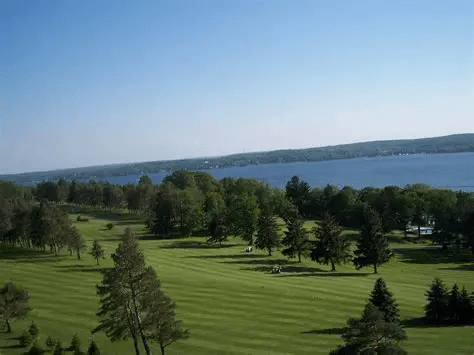
The first sale brought to an end a century-long run for the local recreational treasure. With origins dating to 1907, or 1914, depending on which source you reference, the course was the oldest in the county, predating it’s younger, more famous and broader brother from across the lake, The Chautauqua Golf Club by at least ten years. The history of the golf course is a little muddy, but it’s generally agreed that the land was obtained by Henry Clay Fownes, designer of Oakmont Country Club in Pittsburgh, ostensibly to cater to Pittsburgh and Cleveland golfers looking to work on their game while summering on the lake. Oakmont, established in 1903, is regarded as the oldest top-ranked golf course in the United States, and has hosted 20 national golf championships; the U.S, Open is scheduled there in 2025; Chautauqua Point, overlooking the northern basin of the lake had some impressive pedigree. There is a rumor that the famed golf architect Donald Ross had a hand in designing the course, but there’s no indication from The Ross Society that this was the case (he did help design The Chautauqua Golf Club, so it’s possible he took a swing by the point to take a look). The course evolved over the years  into a 9-hole gem, the only golf course that touches the lake, though condominium development over the years squeezed that lakefront border down to a few precious feet directly behind the seventh green.

The weather-dependence and uncertainty of making a golf course profitable, especially in this climate, finally gave way to the economics of developing prime real estate into a more profitable venture; East Lake Road on the lake side land is simply too valuable to leave unused under snow for five months a year. The course has been closed since the sale in 2022, the repurposing of the land unavoidable.

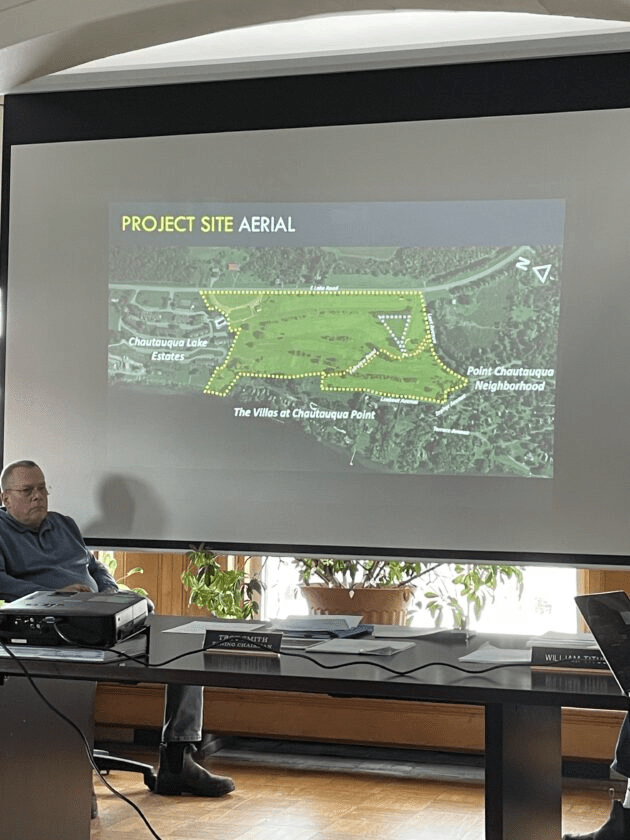
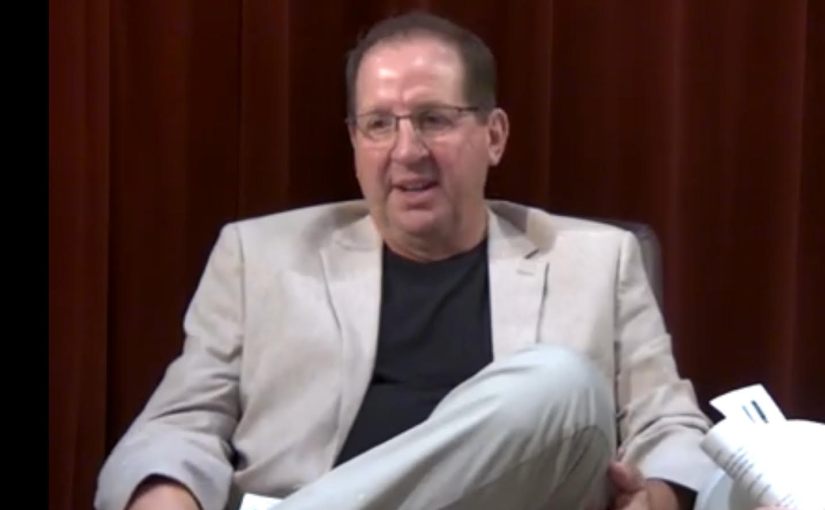
Tom Fox is the Director of Development for the Ellicott Development Company. He is heading up the group looking to turn the old Point Chautauqua Golf Course into a housing community. The project, tentatively called Sunset View at Point Chautauqua, has three distinct sections including single family homes, town houses, and condominium-style residential units.

Ellicott Development Company is out of Buffalo and stands as a prominent figure in Buffalo’s real estate sector. Founded in 1975 by William Paladino, this company has played a pivotal role in transforming Buffalo’s urban landscape through a strategic blend of development, redevelopment, and management. With a focus on enhancing both commercial and residential properties, Ellicott Development has significantly influenced the city’s economic and architectural evolution.

     Ellicott Development Company’s origins are deeply intertwined with the historical development of Buffalo, New York. Established during a period when Buffalo was grappling with economic challenges and urban decay, the company emerged as a beacon of revitalization. The founder, William Paladino, envisioned a future where Buffalo’s historic structures could be repurposed to meet contemporary needs while preserving their architectural integrity. This vision has guided the company’s projects and strategy over the decades.

Mr. Fox recently hosted a meeting for the community. I followed up with Mr. Fox recently on his reaction to that meeting, and how the project will develop in the future.

Q: Your initial meeting with the community got mixed reviews. Some of the locals seemed against the development. Is that how you saw it?

Tom Fox (TF): We were happy to see a big turnout at the recent informational meeting we held on Sunset View.  In our experience, active community interest and input results in a better project.  There were many valid concerns that were raised, many of which will be reflected in revised and more developed plans as we further pursue the required approvals to move the project forward.  Despite a general sense of negativity in the feedback at the meeting, we’ve heard a great deal of positive response as well since that time from those in support and with great interest in the success of our project.  Our vision is to redevelop the property in a way that thoughtfully weaves into the existing community surrounding the former golf course property.

Q: That property served well as a golf course. How do you see it as a housing development?

TF: With its dynamic topography, the property has the benefit of incredible lake views including an orientation to the sunset, hence the development naming.  Sunset View will offer a range of high-quality housing options in an amenity-rich resort-style environment that will be home to year-round residents and weekend vacationers alike.

Q: What are your next steps?

TF: Pending receipt of the necessary approvals, which we will continue to pursue following the mentioned plan revisions, we hope to start work on the initial phase of Sunset View next year.  Completion of all project phases will be guided by market demand.  We anticipate that the completion of all project phases could take several years.

Q: How do people find out more?

TF: Here is our project website, where we have project information posted along a video presentation and an opportunity for those interested to reach out with comments and questions…. Sunset View CLC – A Chautauqua Lake Community

To be sure, though there will continue to be a constituency that will miss the rolling fairways, pristine green space, and quaint clubhouse that was the legendary Chautauqua Point Golf Course.

A Really Good (not Great) Lake

In the northern part of Chautauqua County, between the lake there and the Great Lake Erie, there’s a place where the earth curves. Actually, there’s many such hills, but this one’s special.

The Chautauqua Ridge is a demarcation of confluence. It plays a small part in splitting the continent in half, between north and south. It’s a rare geological marvel, and it’s right here, where we live. The old saw goes that if there was a building built in the middle of the ridge, that rain falling on the north side would end up in the Atlantic Ocean (Lake Erie to the Saint Lawrence Seaway), and a rain falling on the south side would eventually be deposited in the Gulf of Mexico (Chadakoin to Conewango Creek, Allegheny, Ohio and Mississippi Rivers, past New Orleans into the gulf).

Along that southern route is Lake Chautauqua.

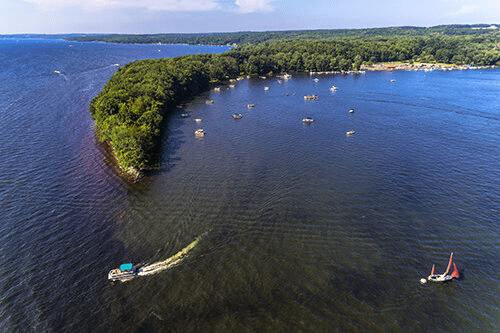
Chautauqua is fed by a dozen or so arterial creeks (Ball, Bemus, Big Inlet, Dewittville, Dutch Hollow, Goose, Lighthouse, Little Inlet, Maple Springs, Mud and Prendergast). At its widest Chautauqua is about two miles. It has a northern and southern basin that squeeze together roughly in the middle. The narrows at Stow and Bemus Point is where the lake is most bridgeable, crossed now New York Interstate 86, and by the Bemus Point ferry on the water. The lake is 17-miles long, a straight-line run from Mayville to Celoron. About forty-one miles is lakefront property, all but about three miles of that privately owned.

     Most people who live on the lake have an attitude of stewardship toward this valuable local resource. It is a prized geological, glacial-built wonder. It is a beacon, and a challenge. The beacon part is obvious, a recreation designation for boaters, fishermen and fisherwomen, and all the entertainment that goes with an easily navigable, accessible body of water.

The challenge? Well, that’s a little more complicated.

The reliance on a lake for the overall financial health of a population can be tenuous. Currently Chautauqua Lake provides the money, the resources, the sustenance of life for much of the south-county population (intermixed with agriculture and manufacturing to be sure). According to the Chautauqua County Office for Media Information, sixty-six percent of visitors to the county use the lake, raising just over $282 million a year. Lakeside municipalities reinvest about $3.2 million back into the lake. The rest of the revenue helps keep businesses open and food on tables via hospitality commerce, and taxes (about 47% of county sales tax is generated annually by lake-border municipalities).

The natural evolution of lakes, what becomes of them in geological timeframes, is that they become forests. Just as water seeks its level, so does the earth. It’s a function of gravity pulling everything down to the lowest points available. Lakes fill in, that’s their natural lifecycle. Runoff from watersheds brings silt and seeds and debris. It settles into the deeper parts of any body of water. Human beings have always been hard on lakes. They invariable get used by populations as depositories for waste. Developing land around lakes, usually the most attractive property, strips a lake of its watershed vegetation and replaces it with construction and chemical residuals. Man-made chemicals cultivate lake weeds that are usually harmful to lake-life.

But as much as man can contribute to the decline of a lake, so can we delay that process, and Chautauqua has champions, people who care for it. Randy Holcomb has been professionally involved with the area around the lake for 47 years (38 in the town assessor’s office and the past nine on the Lakewood Village board). Safe to say he has a feel for the health of the lake, and he is confident in the future of the lower basin as an entertainment and recreation resource. “We welcome the challenge of maintaining lake as a great place to live and visit, Lakewood and Celoron in particular.” His enthusiasm for the future of the lower basin is infectious. “Last year was one of the best we’ve had on the lake in a few years. We’re looking forward to another great summer.”

Chautauqua Lake isn’t in jeopardy of filling in any time soon.

The Grape Discovery Center of Westfield, N.Y.

“Studying wine taught me that there was a very big difference between soil and dirt; dirt is to soul what zombies are to humans. Soil is full of life, while dirt is devoid of it.”

Oliver Magny – Wine expert, author and entrepeneur

Wine making depends on soil quality; you know where the good soil is by what you can grow. Different soils lend themselves to different vintages of wine. Places like NAPA Valley, with its diverse climate, 68 square miles tucked between the Mayacamas Range to the west and the Vaca Mountains on the east is an obvious choice. So too the Finger Lakes in central New York.

On the coast of Lake Erie generally, and in Chautauqua County between Dunkirk and Ripley specifically, the soil is prime for the concord grape, and the wine you can make from it.

The Lake Erie wine region is a hidden gem in American viticulture. Spanning parts of Ohio, Pennsylvania, and New York, hugging the coast of the great lake, it’s distinguished by its unique climate, soil composition, and geographical location, creating an ideal environment for wine production. The concord grape, with its deep root system thrives here. Lake Erie keeps the local weather from extreme fluctuations (though you would be hard pressed to convince local snow-belt survivors of that), which allows for a longer growing season and relatively stable conditions for the concord grape.

In recognition of the importance, and economic impact of this region as a wine mecca, the Grape Heritage Foundation constructed The Grape Discovery Center In February 2010.

“We consider ourselves the educational and historical center of the Lake Erie grape corridor,” says Deb Howser. “There are thirty-thousand acres of vineyards in a hundred-fifty miles along the lake.” Deb is the manager of the Discovery Center. “Here we have representations of most of the products from those vineyards. We are able to sell quite a few of the wines from New York State, and we showcase those from Pennsylvania.”

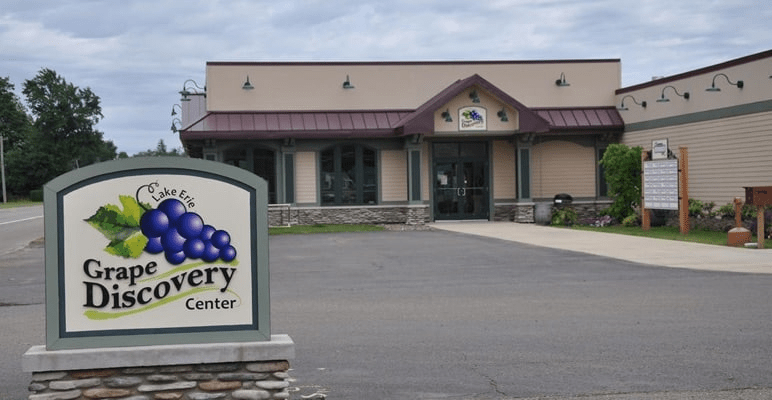
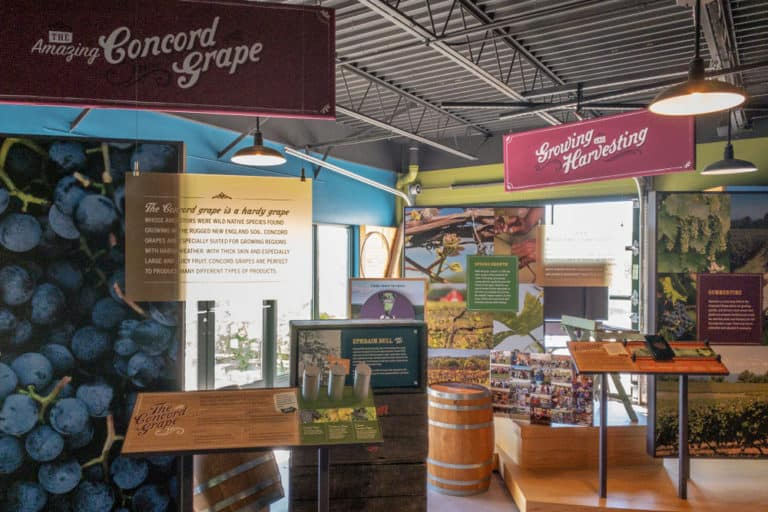
The Center is an inauspicious building, located slightly off the beaten path on Route 20 off New York State 90 between Westfield and Ripley, N.Y. From the roadside it’s an unassuming building, but a revelation inside. It features a tasting bar with wines from the area, an exhibit room, interactive learning displays, and a souvenir shop with apparel, food, and art from local artisans.

The economic impact of the industry is undeniable. With a worldwide distribution of the products from the area, the grape district supports almost 2,000 jobs. The total economic impact is $340 million, which includes sales generated by juice processors, growers, wine production, and and other businesses from whom the vineyards purchase. About $54 million is paid out in wages from over 800 producers on those 30,000 acres of vineyards. Total sales approaches $210 million, with $17.5 from wine production. Some 35,000 tourists visit annually. The center is celebrating its ten-year anniversary.

A premier event for the center is the Westfield Grape and Wine Festival, held at Moore Park in Westfield, N.Y., coming September 7th and 8th. This is the second year of the festival, that has something for the whole family all centered around the grape. “There are grape pies and ice cream as well as the wines and juice.” Howser says. “We’ll have vineyard tours and feature antique equipment.”

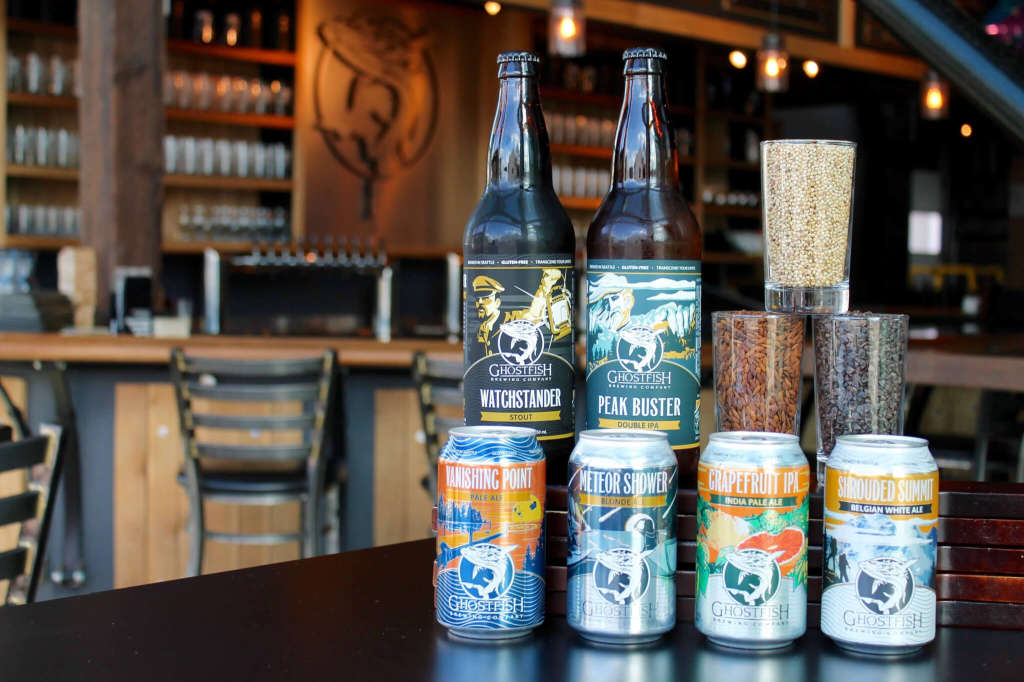
Most recently the Center has housed brewing operations for Ghostfish Brewing Company. The Seattle based company has one of the premier gluten free craft beers on the market. The Center will be selling that unique product soon.

Meanwhile, there’s plenty of wine.