The Princess Chautauqua

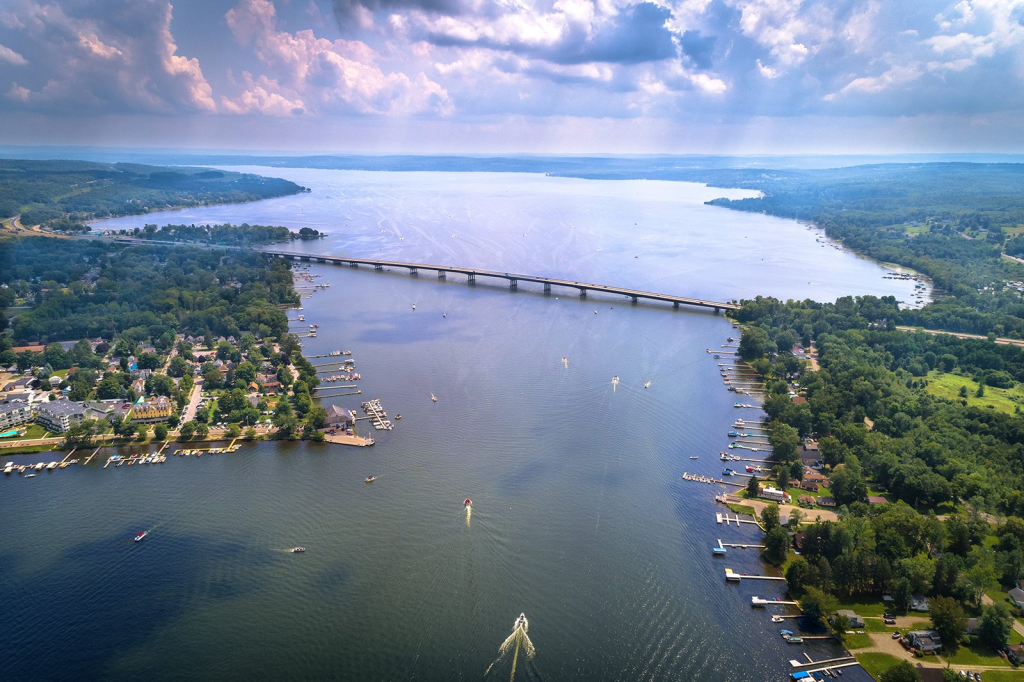
She knelt by the water, where the tip of Long Point State Park reaches out into Chautauqua Lake. In the small hills behind the peninsula, up where what is now Ellery Center, fires burned, screams and whoops echoed up and down the bluff. This was the end, the dying gasp of a people, of an identity, of her tribe. Anyone who survived the slaughter would be taken into slavery by the marauders.

She was trapped on this narrow spit of land. She could swim across the narrows to the other side of the lake, but there was really no escape, they’d be waiting by the time she reached shore. She couldn’t go back the way she came, there was only one path that led to the opening of the point.

She waded into the shallows.

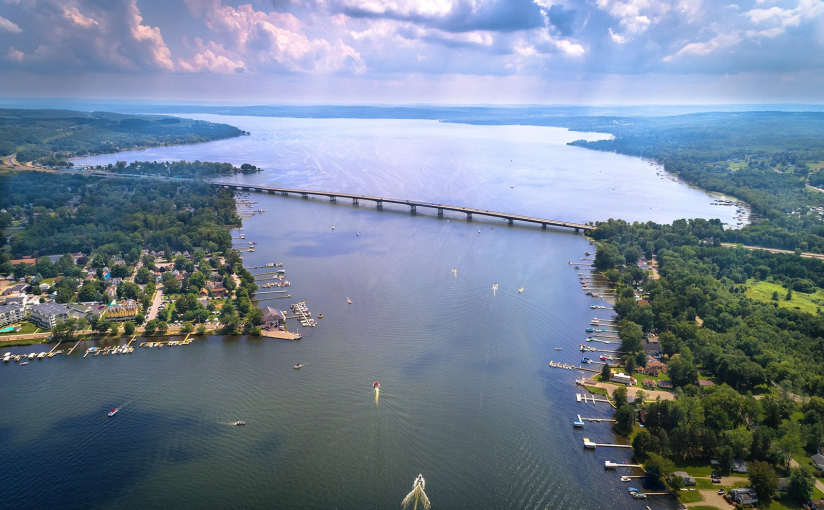
In a world where information is ubiquitous, literally at the tip of the finger in quantity, it’s amazing that the word Chautauqua doesn’t have an authentic, agreed-upon translation. An etymological search will tell you it has Haudenosaunee origins -Haudenosaunee being another name for the Iroquois nation- describing something “tied in the middle”, like a bag, or a pair of shoes by the laces, the general shape of Lake Chautauqua with its northern and southern basins separated by the narrows at Bemus Point and Stow. That crossing is measured in yards, while the widest places, both north and south are around two miles from shore to shore (the lake itself is about seventeen miles end to end). Chautauqua can also refer to everything from indigenous lands in Colorado, to a cultural and educational movement from the late 1800s. That’s a wide swath of interpretation for a single word.

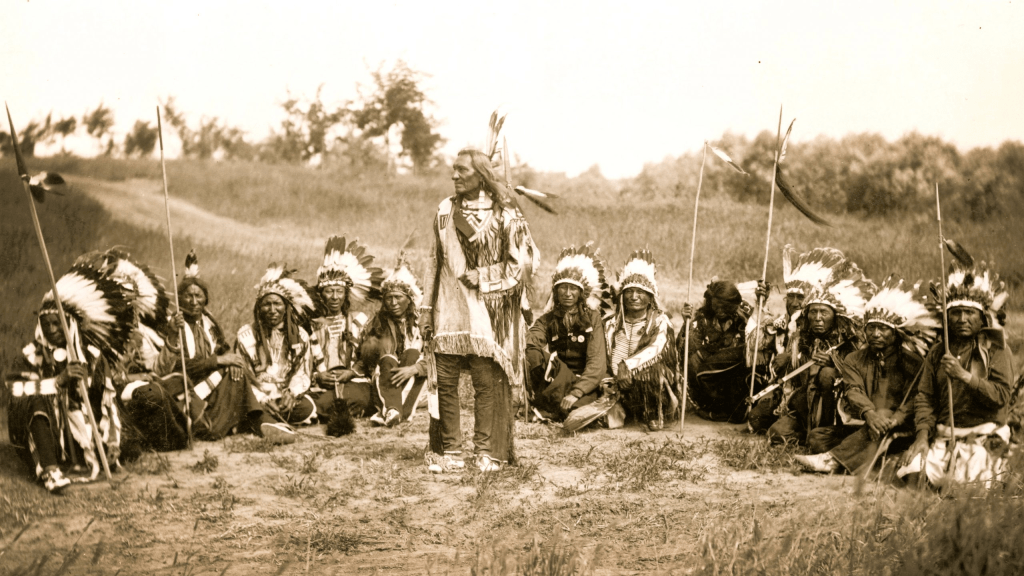
     What’s known is that the Erie Indians who occupied our current borders, the original Chautauqua Lakers, were wiped out of existence (along with no fewer than eight other native tribes), by the French and the Iroquois Nation in the Beaver Wars, massacred or taken hostage by the martial factions. Before the people of Europe settled here, the bucolic landscape we know as Chautauqua County saw a fair share of carnage and bloodshed.

     The speed with which the Iroquois engulfed regional Indian communities meant that no one had time to do an extensive study of the Erie language, and their native tongue died with them. What’s left are loose translations adopted from leftover Iroquois dialect, hence the word Chautauqua has renditions sweeping from the above mentioned “bag tied in the middle” to the vastly different “place where fish are taken.”

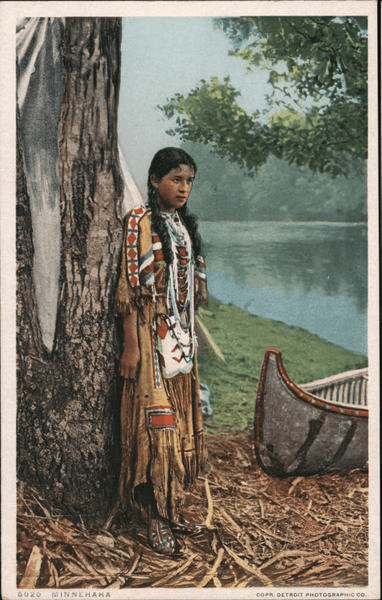
Then there’s the romantic, tragic myth of the Erie Indian Princess.

Legend has it her name was Chautauqua. Chat was a French supplied nickname for the Erie people, meaning “cat”, and Taquan which means “spiritually aware and prone to self-sacrifice”. When her people chose to fight the Iroquois rather than surrender, fool’s errand for the agrarian, mostly peaceful Erie tribe, they were destroyed by the fierce and combinative nation, eradicated as a show of force to discourage other tribes from resisting.

Wikipedia says: The Iroquois League was known for adopting captives and refugees into their tribes. Any surviving Erie were absorbed by other Iroquoian tribes, particularly families of the Seneca, the westernmost of the Five Nations. Susquehannock families may also have adopted some Erie, as the tribes had shared the hunting grounds of the Allegheny Plateau and Amerindian paths that passed through the gaps of the Allegheny. The members of remnant tribes living among the Iroquois gradually assimilated to the majority cultures, losing their independent tribal identities.

The Erie Indian people simply went away, and with them any coherent, stipulatory meaning of the word Chautauqua.

The Erie Princess Chautauqua waded deeper into cool waters off Long Point. She looked back at the land she knew, her birthplace and home. She pictured the faces of her family, her father, mother, brave brothers, and sisters. All gone now. She knew they wouldn’t survive the slaughter. There was nothing left for her but to commit the ultimate act of Indian royalty, the last great measure. 

     As the Iroquois warriors (along with French and Haitian mercenaries) approached from land, she turned and walked into the depths of the lake. In an act of defiance and sacrifice she drown herself. And thereby christened the body of water Chautauqua.

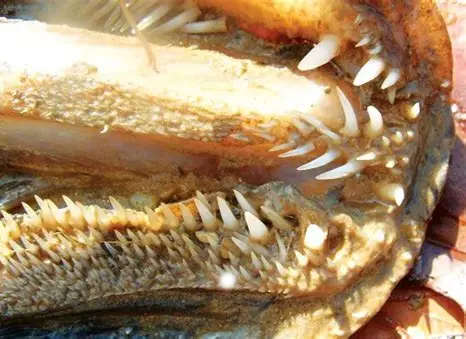
IT’S THE TEETH!!

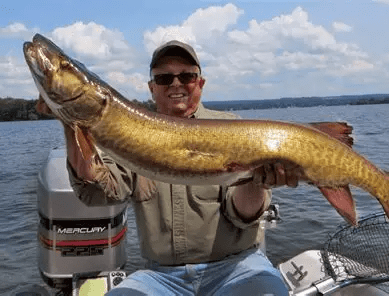
It’s the teeth. And that jutting jaw, the epitome of arrogance and brutish malice. Long muscular torso, thick in the middle, piercing, uncaring eyes. Bigger, stronger, faster than everyone else.

But the teeth. You notice immediately, five hundred at least, more in some of the larger beasts. The fangs are tightly positioned, small and needle-like, angled inward to keep prey from escape, razor sharp to shred live food that struggles.

     Then there’s the behavior, predatory, vicious, lurking, springing from the weeds, leaping to attack and eat the first thing that moves, carnivorous, cannibalistic, devouring its own kind if opportunity presents, even the metal of something man-made, it simply doesn’t care in its frenzy to feed. There’s no discretion, no apologies. It’s hungry, it eats, a notoriously fierce fish (anglers say it will attack the propeller of a trolling motor, while every other life form in the lake will swim from it.

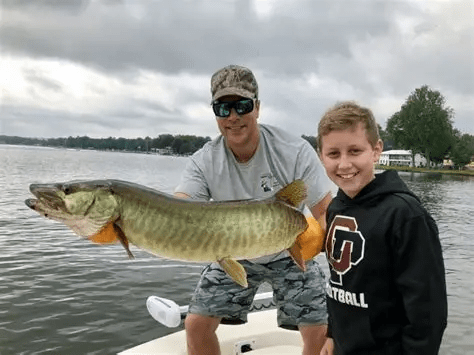
Todd Young has been chartering muskie expeditions on Chautauqua Lake for eighteen years, hosting bucket-list enthusiasts from all over the country looking to battle the largest member of the pike family; catching a muskellunge is that much of an adventure on Chautauqua Lake. It’s a daunting, wildly rewarding industry (the nickname of the muskie is “The Fish of 10,000 Casts”). Todd knows every square quad of Chautauqua Lake. He knows the water; he knows the fish.      

     “We go where the fish are, lower lake, upper basin. I’ve taken hundreds of people onto the lake to catch muskie.”

Dude knows his fish, especially the prize catch on Chautauqua Lake, the muskellunge.

Muskie are intentionally established on Chautauqua Lake (one subspecies is named The Chautauqua Muskellunge). Muskie management became a thing in the late 1800s, when the first hatcheries in the country were built along the shores near Bemus Point. The local hatchery effort, overseen by the state DEC, is now located at Prendergast Point. It’s a calculated process stocking the lake with an apex predator. In 2022, 13,000 fingerlings from six to nine inches long were released into the lake, understanding that about a third of those will survive a season; too many muskie eating the fish supply could seriously disrupt the lake ecosystem. That management, and the general stewardship from fishing charters like Todd’s Muddy Creek Fishing Guides has made the 13,000 acres of Chautauqua Lake a premier muskie fishing destination.

     “We are completely catch and release,” Todd says. “There are fish we catch that I recognize that I’ve caught before. We’re very careful about bringing them onto the boat. We only fight them for a few minutes, it can be a great battle they’re so big and strong, but if you exhaust them you might kill them.”

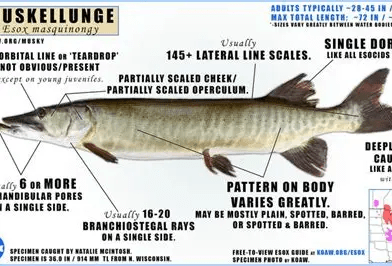
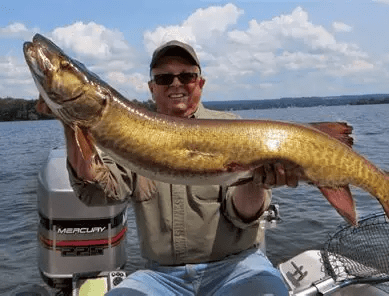
And muskie get big, it’s not uncommon to pull in one thirty-five pounds or more. The largest on record was sixty-nine pounds, fifteen ounces, average usually less than forty inches long and might weigh from seven to fifteen pounds. Muskie can live up to thirty years.

     “We use heavy equipment, put six lines in the water, and hope to average two catches a day.  There’s a small window for catching them when they are in a feeding cycle. Once they’ve eaten, sometimes up to twenty percent of their body weight, they sit still for up to five days digesting. But when they eat, they are very aggressive.

     During their feeding cycle, they’ll eat other fish up to a third of their own size. More than once I’ve seen one floating on the lake that tried to eat another fish that was just too big. They’re not particularly smart fish, when it’s time to eat they don’t much care what they go after.”

Todd thinks the lake has seen a bit of a resurgence, more fish are living longer, getting bigger. “We were seeing red spots on the fish the past few years, an unhealthy sign. We don’t see that on catches now. A four-footer can be twenty years old. That takes a lot of care from fishing to get one to be that old. But that’s the future of our lake, fishing for sport and letting them go.”

You could spend a worse day on Chautauqua Lake than in the care of Muddy Creek Fishing Guides. Check them out at https://mcfishnguides.com), or give Todd a call at 724 674-3839.