The Princess Chautauqua

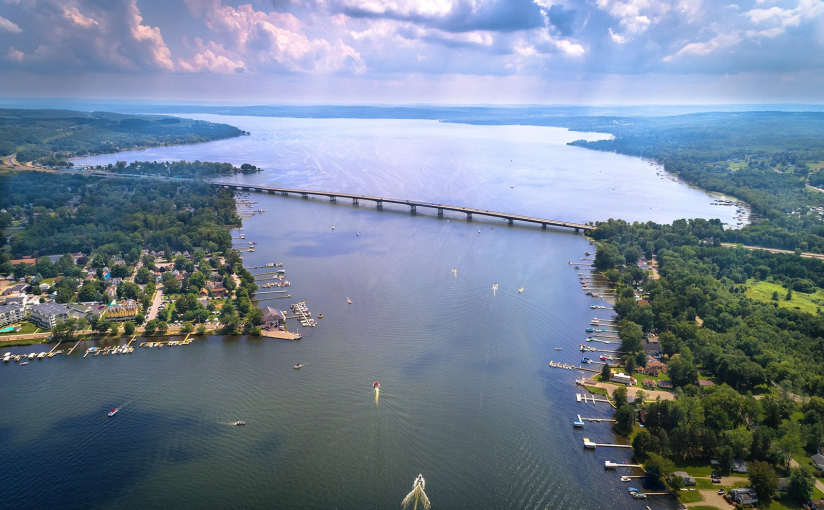
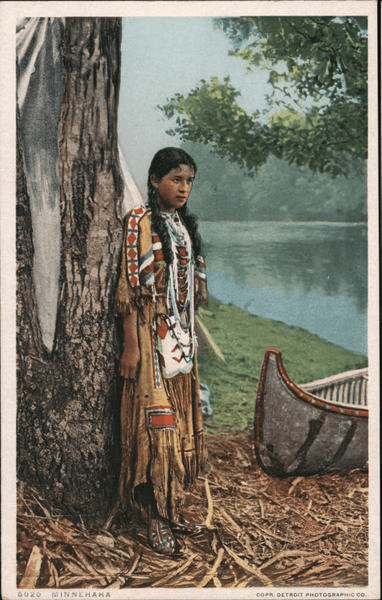
She knelt by the water, where the tip of Long Point State Park reaches out into Chautauqua Lake. In the small hills behind the peninsula, up where what is now Ellery Center, fires burned, screams and whoops echoed up and down the bluff. This was the end, the dying gasp of a people, of an identity, of her tribe. Anyone who survived the slaughter would be taken into slavery by the marauders.

She was trapped on this narrow spit of land. She could swim across the narrows to the other side of the lake, but there was really no escape, they’d be waiting by the time she reached shore. She couldn’t go back the way she came, there was only one path that led to the opening of the point.

She waded into the shallows.

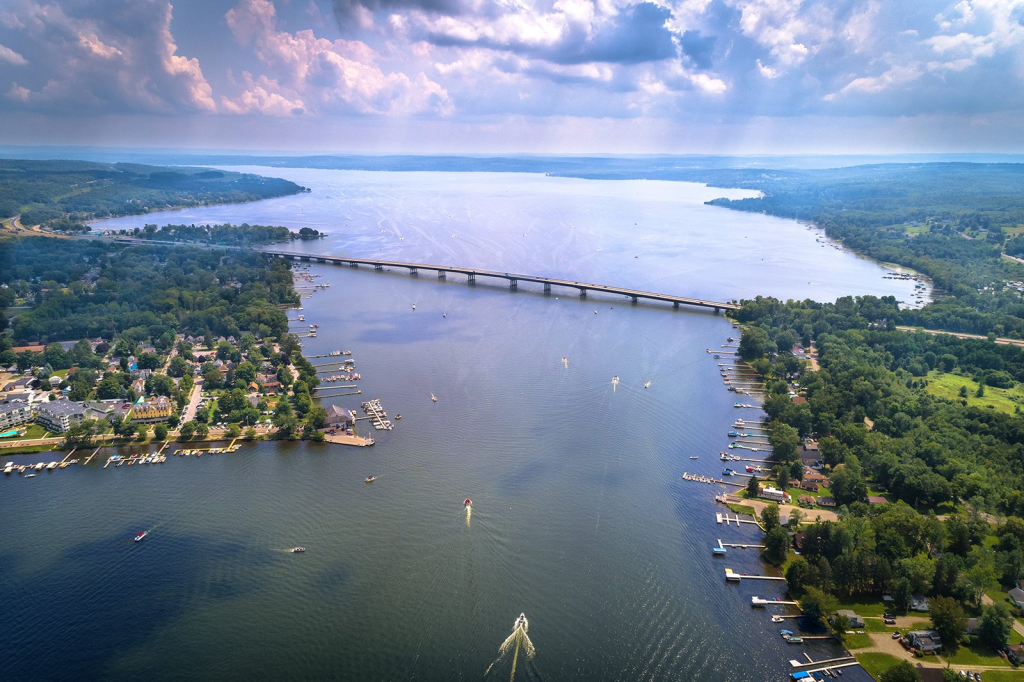
In a world where information is ubiquitous, literally at the tip of the finger in quantity, it’s amazing that the word Chautauqua doesn’t have an authentic, agreed-upon translation. An etymological search will tell you it has Haudenosaunee origins -Haudenosaunee being another name for the Iroquois nation- describing something “tied in the middle”, like a bag, or a pair of shoes by the laces, the general shape of Lake Chautauqua with its northern and southern basins separated by the narrows at Bemus Point and Stow. That crossing is measured in yards, while the widest places, both north and south are around two miles from shore to shore (the lake itself is about seventeen miles end to end). Chautauqua can also refer to everything from indigenous lands in Colorado, to a cultural and educational movement from the late 1800s. That’s a wide swath of interpretation for a single word.

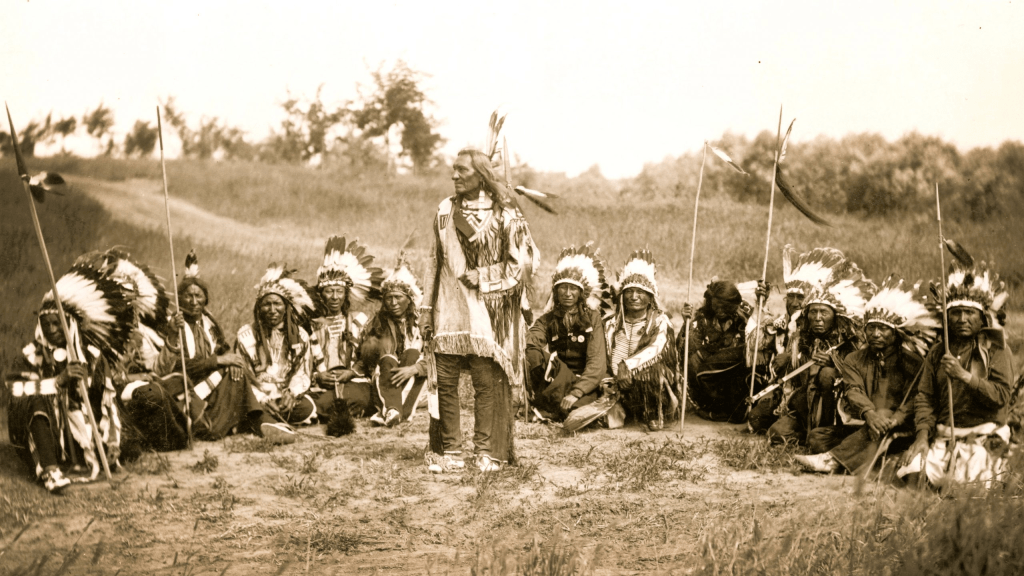
     What’s known is that the Erie Indians who occupied our current borders, the original Chautauqua Lakers, were wiped out of existence (along with no fewer than eight other native tribes), by the French and the Iroquois Nation in the Beaver Wars, massacred or taken hostage by the martial factions. Before the people of Europe settled here, the bucolic landscape we know as Chautauqua County saw a fair share of carnage and bloodshed.

     The speed with which the Iroquois engulfed regional Indian communities meant that no one had time to do an extensive study of the Erie language, and their native tongue died with them. What’s left are loose translations adopted from leftover Iroquois dialect, hence the word Chautauqua has renditions sweeping from the above mentioned “bag tied in the middle” to the vastly different “place where fish are taken.”

Then there’s the romantic, tragic myth of the Erie Indian Princess.

Legend has it her name was Chautauqua. Chat was a French supplied nickname for the Erie people, meaning “cat”, and Taquan which means “spiritually aware and prone to self-sacrifice”. When her people chose to fight the Iroquois rather than surrender, fool’s errand for the agrarian, mostly peaceful Erie tribe, they were destroyed by the fierce and combinative nation, eradicated as a show of force to discourage other tribes from resisting.

Wikipedia says: The Iroquois League was known for adopting captives and refugees into their tribes. Any surviving Erie were absorbed by other Iroquoian tribes, particularly families of the Seneca, the westernmost of the Five Nations. Susquehannock families may also have adopted some Erie, as the tribes had shared the hunting grounds of the Allegheny Plateau and Amerindian paths that passed through the gaps of the Allegheny. The members of remnant tribes living among the Iroquois gradually assimilated to the majority cultures, losing their independent tribal identities.

The Erie Indian people simply went away, and with them any coherent, stipulatory meaning of the word Chautauqua.

The Erie Princess Chautauqua waded deeper into cool waters off Long Point. She looked back at the land she knew, her birthplace and home. She pictured the faces of her family, her father, mother, brave brothers, and sisters. All gone now. She knew they wouldn’t survive the slaughter. There was nothing left for her but to commit the ultimate act of Indian royalty, the last great measure. 

     As the Iroquois warriors (along with French and Haitian mercenaries) approached from land, she turned and walked into the depths of the lake. In an act of defiance and sacrifice she drown herself. And thereby christened the body of water Chautauqua.

SPORT IN JAMAICA

(First published March 2018)

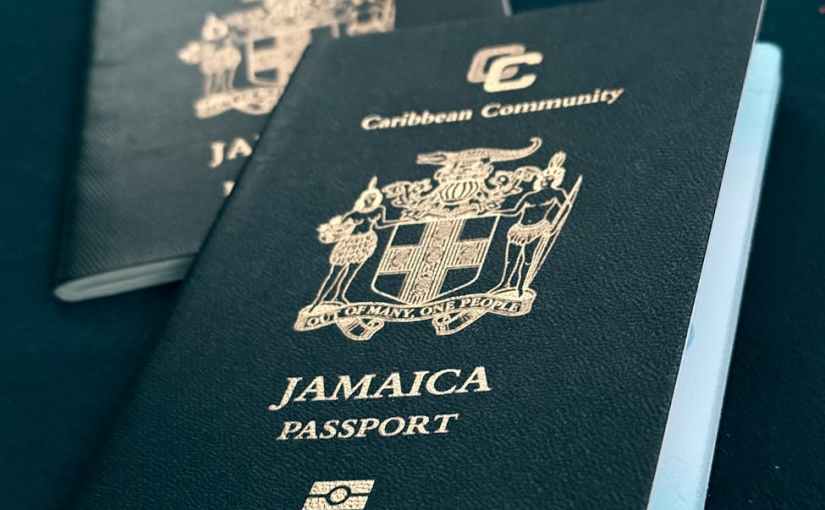
If you ever doubt the global blanket of sports television, just know there’s something called ESPN Caribbean.  There’s and ESPN Asia, Australia, Brazil, and ESPN-UK too.  To my research there is no ESPN-Siberia yet. The ESPN Caribbean network airs in 32 countries, including one I visited recently.  ESPN Caribbean SportsCenter in Jamaica features sports like America’s Cup yacht racing, grand slam tennis, a little golf, something called Netball (the “Jamaican Sunshine Girls” team is currently ranked third in the world), and a whole lot of soccer and cricket.  There is most certainly MLB, NBA and NFL action, but not before you wade through scores and highlights of the Caribbean Premier League, the Caribbean Super 50, the Karbonn Smart League, the English Premier League, German Bundesliga, Spanish La Liga, Italian Serie A Soccer, and the uber-important International Cricket Council with its wickets, nurdles, and wicked googlies.  If I could name a single famous cricketer, Jamaican or otherwise, I would do it here.  I can’t, but I do know that Patrick Ewing was born in Kingston, Jamaica and excelled at that game along with soccer.  Jamaican icon Bob Marley was supposed to be excellent on a football pitch.

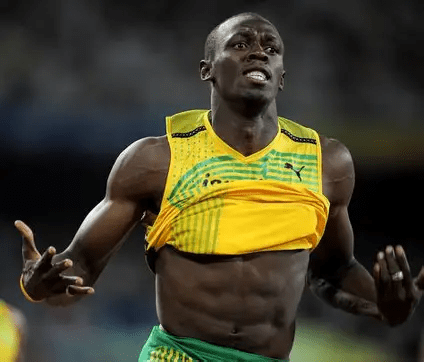
Usain Bolt currently dominates the Jamaican sports scene, as much as a single athlete can; the fastest human in the history of the world will tend to capture the attention of the nation in which he has born. 

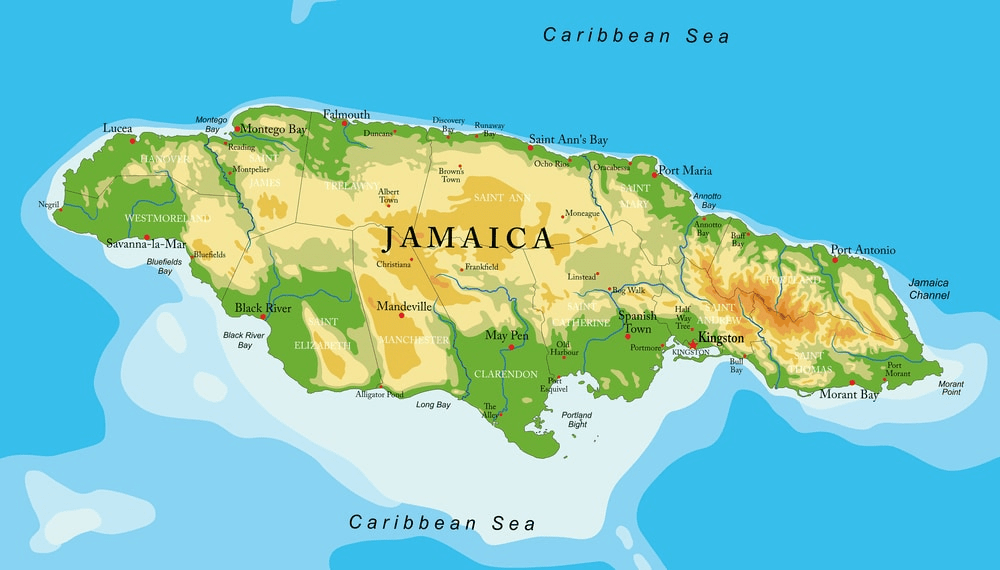
He is relatively absent in the media, as Jamaicans seem to love their sports and sporting action more than they worship their sportsmen and women.  Bolt adorns a few roadside billboards, shilling for cell services and energy drinks, but other than that he’s not as ubiquitous as you’d think.  Opposite of the U.S. where we tend to define the performance by the performer, and an athlete like LeBron James can shake the rust off the belt of a once-proud city like Cleveland with one moving van full of sneakers, tank tops, and elbow pads (c’mon Buckeyes, he didn’t cure cancer, he plays basketball).  On a short bus trip from Montego Bay (the inspiration of The Beach Boys, Bobby Bloom and Jimmy Buffet) to Falmouth in Trelawny Parish (where James Bond jumped a speed boat onto a cop car) our tour group passed Bolt’s high school, what are the odds? Ben Johnson, incidentally is infamously from Falmouth also, must be something FAST in the water there.  The fact of that coincidence was startling until you realize that there are only 2.7 million-some people on the island spread out over 4,244 square miles, a good two-thirds of it coastal and accessed from the main highway; not exactly like landing in Los Angeles and randomly driving by the White House.

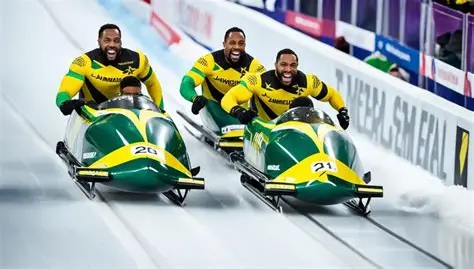
The Jamaican Bobsled team famously competed in the 1988 Calgary Olympics Winter Games.  Disney made a movie about them called Cool Runnings, and that name is plastered on everything from convenience stores to jet-ski rentals shops. 

Side note, renting jet-skis is against the law in Jamaica because tourists kept smashing into each other on them.  As you’d imagine on a Caribbean island (where the ocean water temperature in August is a squishy 97 degrees by the way), water sports are plenty, the moratorium on wave-runners notwithstanding; scuba diving, windsurfing, sailing, waterskiing, snorkeling, parasailing, and deep sea fishing.

The poverty in a Caribbean country like Jamaica registers when you internalize the fact that it can’t snow there.  No population could survive a frigid climate in homes with so few amenities, like running water, a workable furnace and, often, walls and floors.  I found myself and my family being escorted up the North Coastal Highway in a local taxi, from Negril to Mon-Bay.  We were escorted by friends of a friend, real Rasta’s, dreads and all.  The view was postcard tropical, blue-green ocean waves crashing on beach-heads and cliff sides.  We stopped at a roadside shack, one of many, for something cold to cut into into the tropical heat.  Our guides knew the place.  They talk with the proprietor.  Jamaicans speak English, until they don’t want you to understand them, then they speak something that isn’t English.  Soon were sipping water from a raw coconut, and a mango concoction from a plastic cup.

I wander out of the broken-down bar, all particle board and corrugated tin.  There along the roadway two kids are kicking a half flat soccer ball in a dirt driveway. Yeah, they like their sports in Jamaica.  I lace up my shoes and join in.