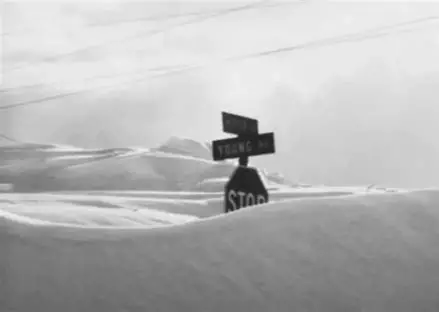
The BLIZZARD Of 1977

A winter like the old days.

Lake Erie froze solid December 16th, 1976. That’s early. It happens, earlier some years, but the lake almost always thaws after that at some point. We use Lake Erie’s surface status as a snowfall predictor. A solid Lake Erie usually means a milder winter; annual nor-eastern winds skim over the ice instead of pulling moisture and turning it into pregnant snow bands. A liquid Erie generates familiar snow bands and squalls, winters that turn a hundred inches of snow into two hundred.
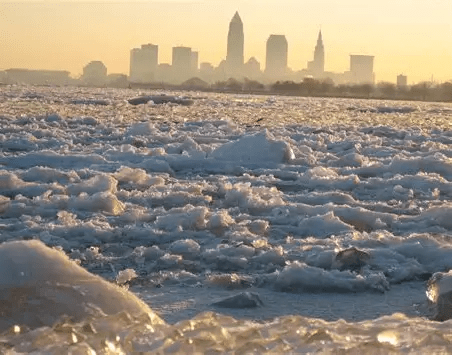
In 1976 the lake froze and stayed that way, the traditional harbinger of relatively mild snowfall for counties bordering the great lake. The difference in ‘76 was an unusually heavy snowfall over the lake. Precipitation that would normally melt, accumulated on the lake’s surface, deep, wispy, light snow.

January of 1977 was the coldest month on record in Western New York to that date, averaging 13.8 °F. There was no melt, anywhere, and snowfall throughout the month, though not overwhelming, was steady. Bufalo had fifty-nine inches by the middle of January. There is no reported total snowfall for Jamestown, Dunkirk or Olean prior to the storm, but all three cities had over a hundred forty inches after the blizzard hit.

And the snow on Lake Erie was piled high…too high.

Thursday, January 27th. An arctic front builds a wall of snow that passes through Indianapolis, then Columbus, Toledo and Cleveland, Ohio. By evening the wall arrives in Erie, Pennsylvania (Erie will report more than five hundred vehicles accidents that morning). Winds scoop up all that snow off Lake Erie and carry it east with the already-packed clouds. Thursday night winds hit forty-nine miles per hour, driving a once in a century blizzard toward Western, New York.

Friday, January 28th. Witnesses describe what looks like a grey mist moving toward the southeastern cities bordering Lake Erie. Lightning flashes inside the maelstrom.
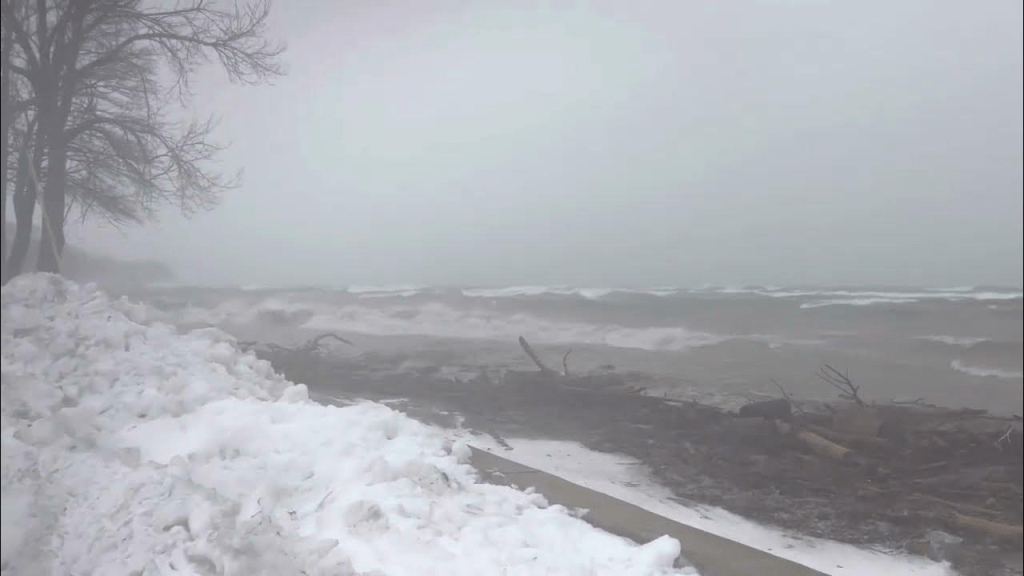
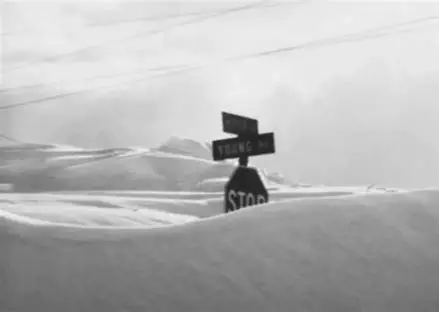
The mist turns into a menacing wall of white as it closes on the southern tier of New York, a blanket is thrown over the world. Visibility is nonexistent inside the white hurricane. The mass of snow from Lake Erie is dropped randomly all over Chautauqua, Cattaraugus, Erie, and Wyoming counties. By 1:00 pm snow begins to cover cars, first bumper high, then up to the windows. By evening drifts fifteen feet high are scattered throughout the region. The wind whips and shapes the snow without discrimination. Mounds of snow are picked up and randomly dropped, then moved again. A road that is bare one minute is impassable the next, shocking travelers with the arbitrary intensity.

Friday evening, winds gust to almost seventy miles per hour. Wind chills drop to sixty degrees below zero.By midnight, Buffalo, New York is crippled, an estimated two thousand cars are stranded on Main Street and about eight thousand on streets throughout the city. The south towns are frozen solid, covered in drifts.
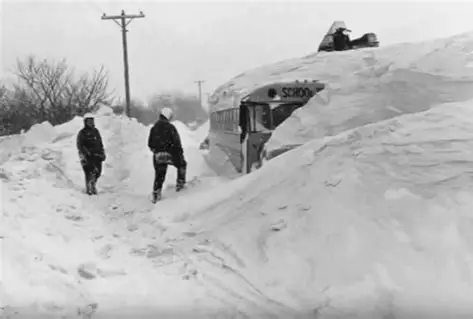
Saturday, January 29th. Visibility improves in the morning, and municipalities send their plows and emergency crews out to clean up and assess damage. Abandoned cars are a major impediment to the effort. In Buffalo, trucks and payloaders dump snow into the Niagara River. In the south towns of Chautauqua and Cattaraugus counties area roads have become wintry tunnels, and parking lots are filled with banks of snow removed from roads.
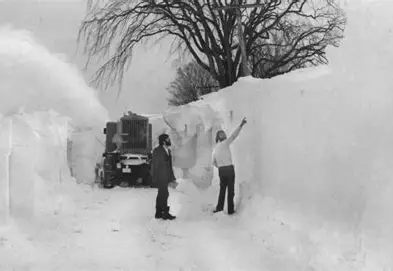
Sunday, January 30th.  The wind and snow subside, and the sun comes out briefly. Towns come alive. Major roads are cleared.

With the weather softening and single lanes on major roads clearing, people head out into the world, to run errands, to witness the marvels of the blizzard.

     But the wind isn’t done with New York. At 3:00 pm, the wind increases and blowing snow once again turns visibility to nil. Driving becomes treacherous. Vehicles are stranded anew and abandoned cars block roads that had just been freed. A peak gust of 58 mph is recorded at the Buffalo airport. That night the wind chill falls to minus forty degrees.

Monday, January 31st. Most roads are closed by overnight snow. Fire departments spend time checking houses snow-covered to their roofs to make sure nobody is freezing or suffocating.

The blizzard has blown itself out. The effects of its carnage are just being realized.
Chautuaqua Lake Sailing Challenges

Printed in The Villager May 2024

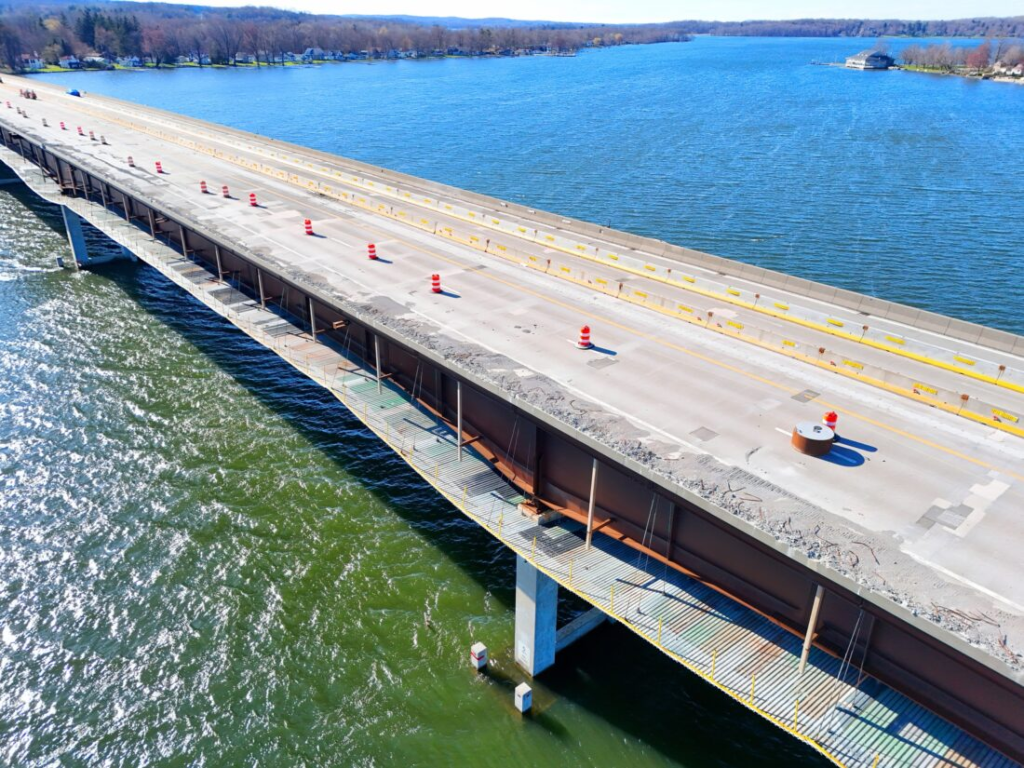
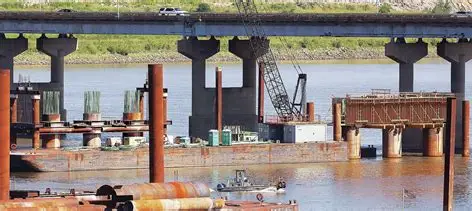
Were you passing on I-86 across the Chautauqua Memorial bridge last Monday morning, you would have been challenged to keep your vehicle between the narrow cement barriers that funnel traffic from the work being done on the overpass. In the water, the scene looked like the run-up to a catastrophe.

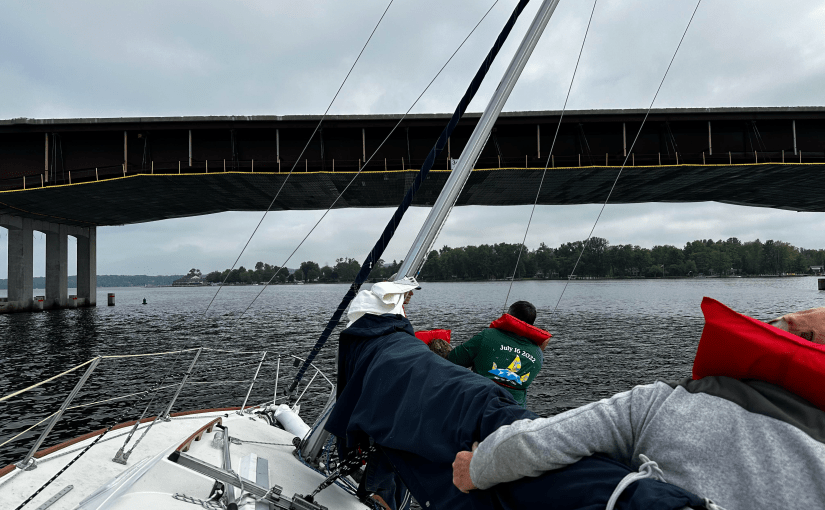
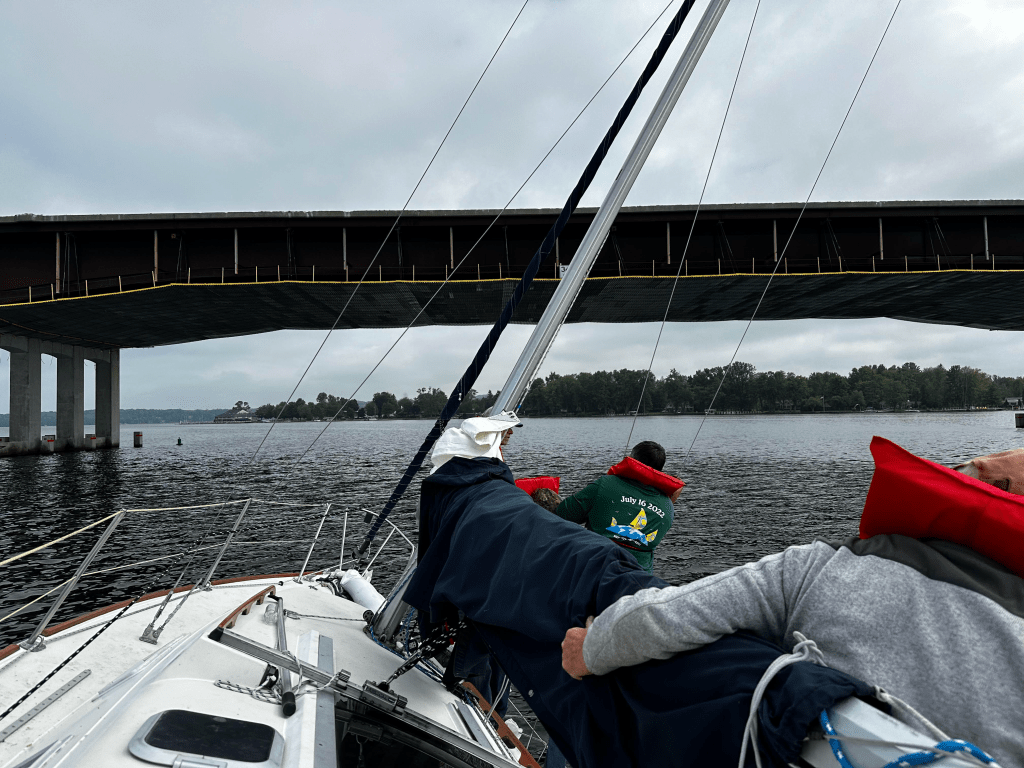
A large sailboat, named Trumpeter, sails stowed, steamed toward the center underpass, the highest point of passage under the bridge. The boat listed precariously to the starboard. If you weren’t familiar with the design of sailboats, their ability to heel at severe angles balancing tall masts with underwater keel and rudder, you’d be forgiven for believing you were about to witness the capsizing of the vessel.

But Trumpeter was under complete control by her captain, Greg Swan, principal owner of Ready About Sailing, the marina and boat sale business based in Celoron. She was tipped on her side intentionally, using 1,100 pounds of sandbags and four hearty shipmates to pass under the bridge whose clearance has now been reduced to 34’8” from its original 40’2”.

“Most of the twenty or so larger sailboats on Lake Chautauqua are stored at Ready About Sailing marina in Celoron during the winter,” Greg says. “In the Spring, we launch the boats, raise the masts, and then the boats are transported to the north basin where they are moored or docked for the summer. These sailors have always enjoyed free passage beneath the bridge.”

Deadheading sailboats from one basin of the lake to the other used to be a relatively easy process. Not anymore.

“The bottom line here is that the engineers that designed the bridge reconstruction project apparently failed to do their due diligence when deciding how the safety netting would be erected under the bridge to catch anything that might otherwise fall into the lake. They apparently did not consider sailboats during the design phase.”

The safety netting has lowered the clearance under the bridge by nearly 5 ½ feet. A sailboat that once had six feet of room under the bridge at flood level, now has less than one. And it will take some brilliant and daring seamanship to get from one side to the other until that clearance is lifted, which, according to New York State, won’t happen until the bridge is completed, a two-to-three-year period if every single thing goes according to plan.

Greg says,” What we are left with is an obstruction to sailing the full length of the lake for the duration of the bridge project.”

In order to transport his larger sailboat, Greg had to be creative and rely on his considerable boating skills to get Trumpeter to the north basin mooring. This was with the lake about two feet below flood level. A higher lake level or more wave and wind action would make the maneuver nearly impossible. “You’ve essentially taken half the lake away for use from these size boats,” Greg says.

     There are twenty or so such sailing vessels he knows of that use the lake (well, now, half the lake). “The obstruction at the bridge has already caused multiple long-time Lake Chautauqua sailors to decide to sell their boats and give up the sport. This is tragic, especially since it could have been prevented if the right questions were asked to the right people before starting construction.”

The netting was a multi-million-dollar part of the overall bridge project, a necessary safety design to keep boaters safe from inevitable falling debris. Greg contacted the Department of Transportation in Buffalo to look for a solution. They were receptive, empathetic, but no help. “As the netting system was designed, there would be no way to remove the netting from even a single span to allow for sailboats to pass. And, the DOT has decided that it would be too expensive to retrofit.”

The NYS DOT was contacted for clarification. Here is the response from Susan Surdej, Assistant to Regional Director and Regional Public Information Officer for New York State Department of Transportation, Region 5:

The bridges carrying Interstate 86 over Chautauqua Lake are 100 percent safe for motorists.  Out of an abundance of caution, the Department is re-evaluating plans for the safest, most efficient removal of concrete from the bridges carrying Interstate 86 over Chautauqua Lake. Occasional overnight closures are expected with a project of this size, but there are currently no plans for long-term closures. NYSDOT will keep the public apprised on any changes in the construction schedule once the evaluation is complete. 

There was no response addressing the sailboat issue.