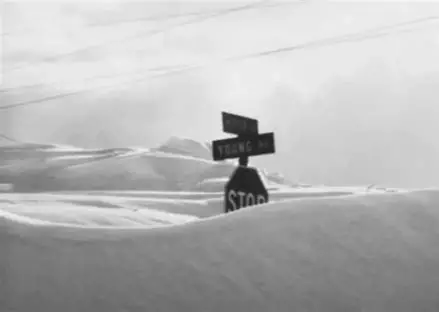
A winter like the old days.
Lake Erie froze solid December 16th, 1976. That’s early. It happens, earlier some years, but the lake almost always thaws after that at some point. We use Lake Erie’s surface status as a snowfall predictor. A solid Lake Erie usually means a milder winter; annual nor-eastern winds skim over the ice instead of pulling moisture and turning it into pregnant snow bands. A liquid Erie generates familiar snow bands and squalls, winters that turn a hundred inches of snow into two hundred.
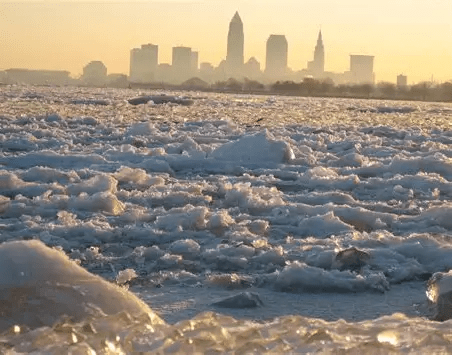
In 1976 the lake froze and stayed that way, the traditional harbinger of relatively mild snowfall for counties bordering the great lake. The difference in ‘76 was an unusually heavy snowfall over the lake. Precipitation that would normally melt, accumulated on the lake’s surface, deep, wispy, light snow.
January of 1977 was the coldest month on record in Western New York to that date, averaging 13.8 °F. There was no melt, anywhere, and snowfall throughout the month, though not overwhelming, was steady. Bufalo had fifty-nine inches by the middle of January. There is no reported total snowfall for Jamestown, Dunkirk or Olean prior to the storm, but all three cities had over a hundred forty inches after the blizzard hit.
And the snow on Lake Erie was piled high…too high.
Thursday, January 27th. An arctic front builds a wall of snow that passes through Indianapolis, then Columbus, Toledo and Cleveland, Ohio. By evening the wall arrives in Erie, Pennsylvania (Erie will report more than five hundred vehicles accidents that morning). Winds scoop up all that snow off Lake Erie and carry it east with the already-packed clouds. Thursday night winds hit forty-nine miles per hour, driving a once in a century blizzard toward Western, New York.
Friday, January 28th. Witnesses describe what looks like a grey mist moving toward the southeastern cities bordering Lake Erie. Lightning flashes inside the maelstrom.
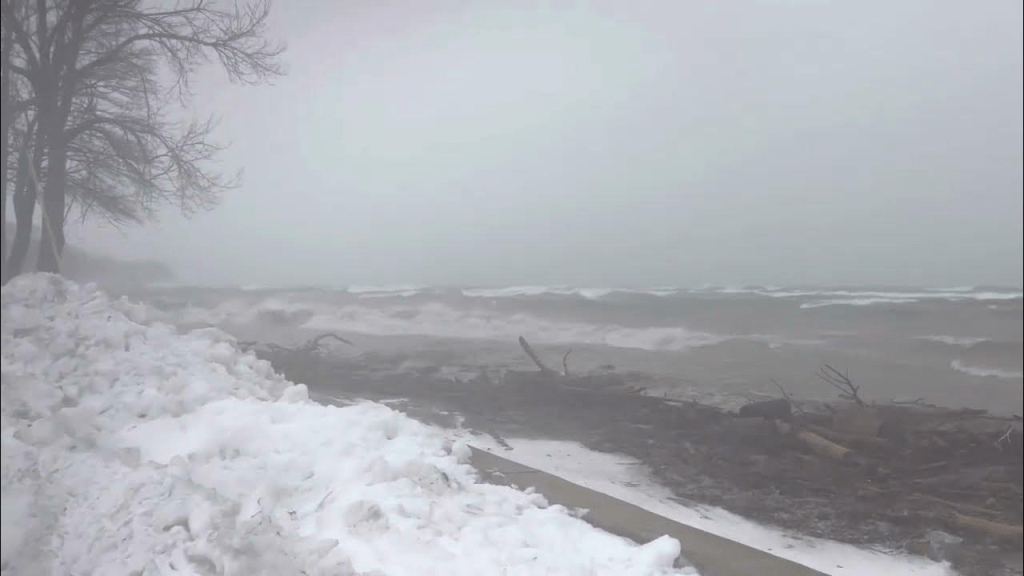
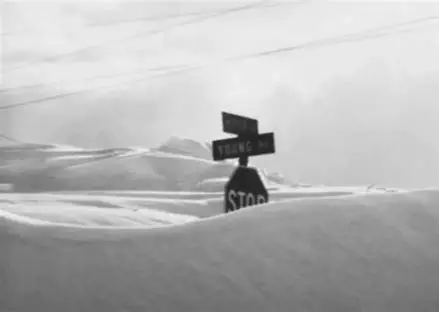
The mist turns into a menacing wall of white as it closes on the southern tier of New York, a blanket is thrown over the world. Visibility is nonexistent inside the white hurricane. The mass of snow from Lake Erie is dropped randomly all over Chautauqua, Cattaraugus, Erie, and Wyoming counties. By 1:00 pm snow begins to cover cars, first bumper high, then up to the windows. By evening drifts fifteen feet high are scattered throughout the region. The wind whips and shapes the snow without discrimination. Mounds of snow are picked up and randomly dropped, then moved again. A road that is bare one minute is impassable the next, shocking travelers with the arbitrary intensity.
Friday evening, winds gust to almost seventy miles per hour. Wind chills drop to sixty degrees below zero.By midnight, Buffalo, New York is crippled, an estimated two thousand cars are stranded on Main Street and about eight thousand on streets throughout the city. The south towns are frozen solid, covered in drifts.
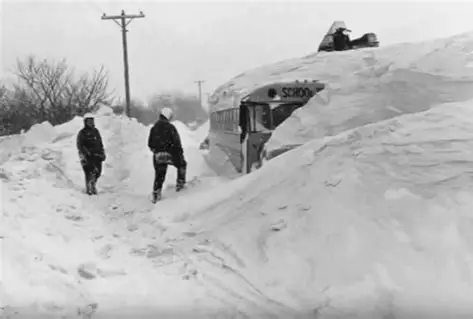
Saturday, January 29th. Visibility improves in the morning, and municipalities send their plows and emergency crews out to clean up and assess damage. Abandoned cars are a major impediment to the effort. In Buffalo, trucks and payloaders dump snow into the Niagara River. In the south towns of Chautauqua and Cattaraugus counties area roads have become wintry tunnels, and parking lots are filled with banks of snow removed from roads.
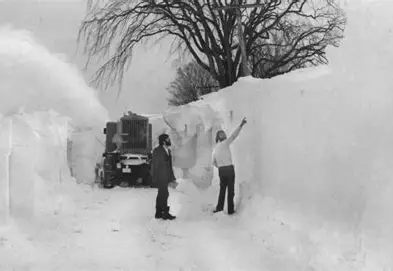
Sunday, January 30th. The wind and snow subside, and the sun comes out briefly. Towns come alive. Major roads are cleared.
With the weather softening and single lanes on major roads clearing, people head out into the world, to run errands, to witness the marvels of the blizzard.
But the wind isn’t done with New York. At 3:00 pm, the wind increases and blowing snow once again turns visibility to nil. Driving becomes treacherous. Vehicles are stranded anew and abandoned cars block roads that had just been freed. A peak gust of 58 mph is recorded at the Buffalo airport. That night the wind chill falls to minus forty degrees.
Monday, January 31st. Most roads are closed by overnight snow. Fire departments spend time checking houses snow-covered to their roofs to make sure nobody is freezing or suffocating.
The blizzard has blown itself out. The effects of its carnage are just being realized.

 Bill Burk's collective writing...and some other stuff.