PART II
“What the…what are you doing?”
Me and my friends track snow through the front door, up the stairs to the second floor. “We’re playing.”
“Why are you in the house? You’re making a mess!” My mother closes the door against the snow that drifts into the living room, knuckles on hips, lip pursed. “And you’re letting the heat out!”
I stop in my tracks. I know that tone. It’s the “Turn off the lights, do you work for the electric company?” “Eat your dinner, kids somewhere are starving.” “If you’re friends jumped off a roof, would you?” voice.
Those friends (who I’d naturally follow off a bridge) run into my bedroom on the second floor, throw open the window that overlooks the porch roof, and climb out.
“Mo-om… we have to jump from up here. The snow’s too high.”
“You’re jumping from…upstairs!?”
“The roof.”
“The roof?”
You’re a kid and you don’t have to go anywhere or work a shovel -except to build snow forts and uncover your sled. So, you wrap up in as many layers as your mother can load on you, and you go outside and play, comfortable in the fact that you’re allowed to come right back inside when your fingers and toes turn blue and your runny nose freezes in your scarf. When you’re a kid, a blizzard is a trip through a Narnian wardrobe. It’s not a lethal weather distaster.
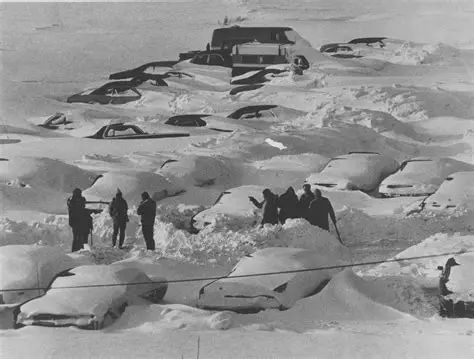
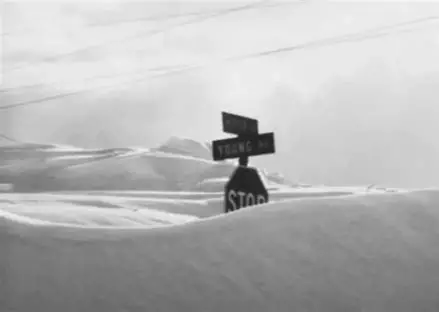
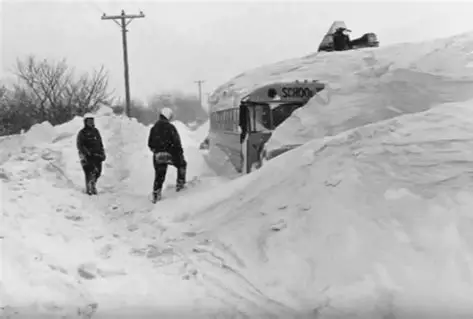
The blizzard of 1977 was a catastrophic weather event for western, New York. Twenty-eight people died from exposure, entrapment and vehicle incidents. Highways and airports shut down, stranding thousands, keeping commerce and emergency aid from moving anywhere. Homes were buried in forty-foot drifts, outages and blocked roads created shortages. There were significant livestock deaths and agricultural losses. Anything that needed to be delivered (especially milk from local dairy farmers) wasn’t. Power failed. Remote areas were cut off for days.
Buffalo took the brunt of the storm, but the entire southern tier was burdened by the wall of white that spent three days dumping snow. The snowfall amounts had been (and has been) matched, but the combination of freezing temperatures and unpredictable winds were incomparable.
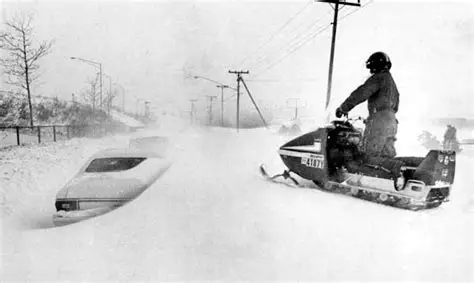
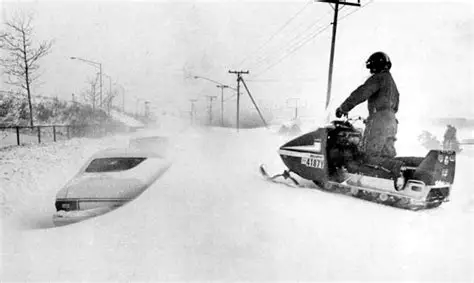
Some thirteen-thousand people were stranded in Buffalo, ten-thousand cars abandoned. Snow mobiles became the only viable, reliable mode of transportation, but even these had to be limited when they ran into covered vehicles, then building tops, then power lines.
Staying inside and riding the storm out, without a plan, was dangerous as well. Houses were covered, with no way to vent noxious fumes that built up from heating systems, strangling utilities.
The city of Buffalo dominated the national narrative of the blizzard. Chautauqua and Cattaraugus Counties experienced the storm the same, on a miniature scale, smaller populations, with corresponding resources. Both counties rely heavily on a network of rural roads and state highways, most notably Route 60 and the New York State Thruway (I-90). Within hours of the storm’s onset, these arteries were clogged with abandoned vehicles. The storm warranted a complete ban on driving, but the independent and rural character of the population made many people try to commute. It quickly became impossible. Motorists, blinded by whiteout conditions, drove into ditches or simply stopped in the middle of a road, buried in drifts. Sheriff departments and local police had to recue people in vehicles that weren’t much more mobile than the stranded cars. They were overwhelmed. For days, the only functional vehicles were heavy military equipment and private snowmobiles, delivering medicine and food.
A federal state of emergency was declared -the first time ever for a snowstorm, and over five-hundred national guardsmen were deployed to Buffalo and surrounding towns. The Blizzard of 1977 set the standard for snow-related catastrophic emergency response protocol throughout the United States, specifically the severity and seriousness of bans on driving in affected areas.
My dad eventually brought a ladder to the yard, and we climbed to the porch roof from outside. We were kids with a week off school, jumping in piles of snow. We didn’t know we were in the middle of the Blizzard of 1977.
 Bill Burk's collective writing...and some other stuff.