And then one day you find
Ten years have got behind you
No one told you when to run
You missed the starting gun
Pink Floyd
But, it doesn’t stop completely, does it? It starts again. Hit reset, drop a new puck, throw a first pitch, toss the jump ball, fire the starter pistol.
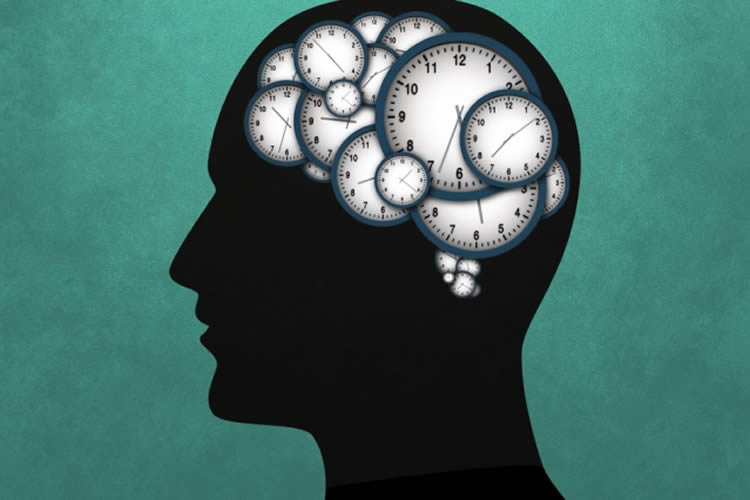
And let me tell you this, time really is relative, despite what a clock, or the sun, or the calendar tries to tell us. You tell me if your hour in the dentist chair is the same as your week at Disneyland. Just because we all agree sixty minutes makes and hour, doesn’t mean a minute can’t feel like a lifetime and an hour can flash by in an instant. Time is a function of your mind; we perceive time in terms of stimulus and experience. The more stimulus thrown at you, the more you have to attend, and time literally moves faster for you. The less stimulus, the slower it goes. According to neuroscientist Warren Meck, there isn’t a single “clock” that tells time in our brains: There are multiple brain clocks, all running at different speeds. They all coexist inside our heads and our brain decides which one to believe at any given time. Sit in a room and watch a stranger’s vacation pictures of the Grand Canyon, and you brain engages one clock, the slow one. Sit in the same room and watch Olympic downhill skiing and your brain engages another.
There’s a theory that we never truly experience the present, that it takes eighty milliseconds to process the information in front of us so that we are, in fact, constantly experiencing the past. This tape-delay is a product of gathering information with the senses, sending it through the nervous system, our brains doing something with it, then sending that product back out to whatever body parts need to react. What if you could cheat that gap in time? What if you could cut processing down to 70 milliseconds, or 60? Would it make a difference?
This is how superior athletes make the games look easy. They are able to look at the same stimulus as you and I and process it more quickly, to close that 80-millisecond gap, to move closer to the past…to slow time. You and I look at a hundred-mile-per-hour fastball and we’re overwhelmed by the stimulus, time speeds up and we don’t have time to swing the bat. The professional baseball player bunches the information from that same stimulus into a single process through experience and repetition, and handles it more efficiently. According to neuroscientist David Eagleman, that’s because your brain always tries to synchronize the sensory information that it gets from your body in a way that will make sense to you. It does this by nudging your consciousness ever-so-slightly into the past.
A bizarre real-world implication is that the taller you are, the further you live in the past, since it takes longer for the information to travel through your body. Shorter people actually experience a more accurate version of time, because there’s less of a delay in information getting to the brain. Chew on that for a few milliseconds.
A time to build up, a time to break down.
A time to dance, a time to mourn.
A time to cast away stones.
A time to gather stones together.
The Byrds …adapted from God (Book of Ecclesiastes)

 Bill Burk's collective writing...and some other stuff.